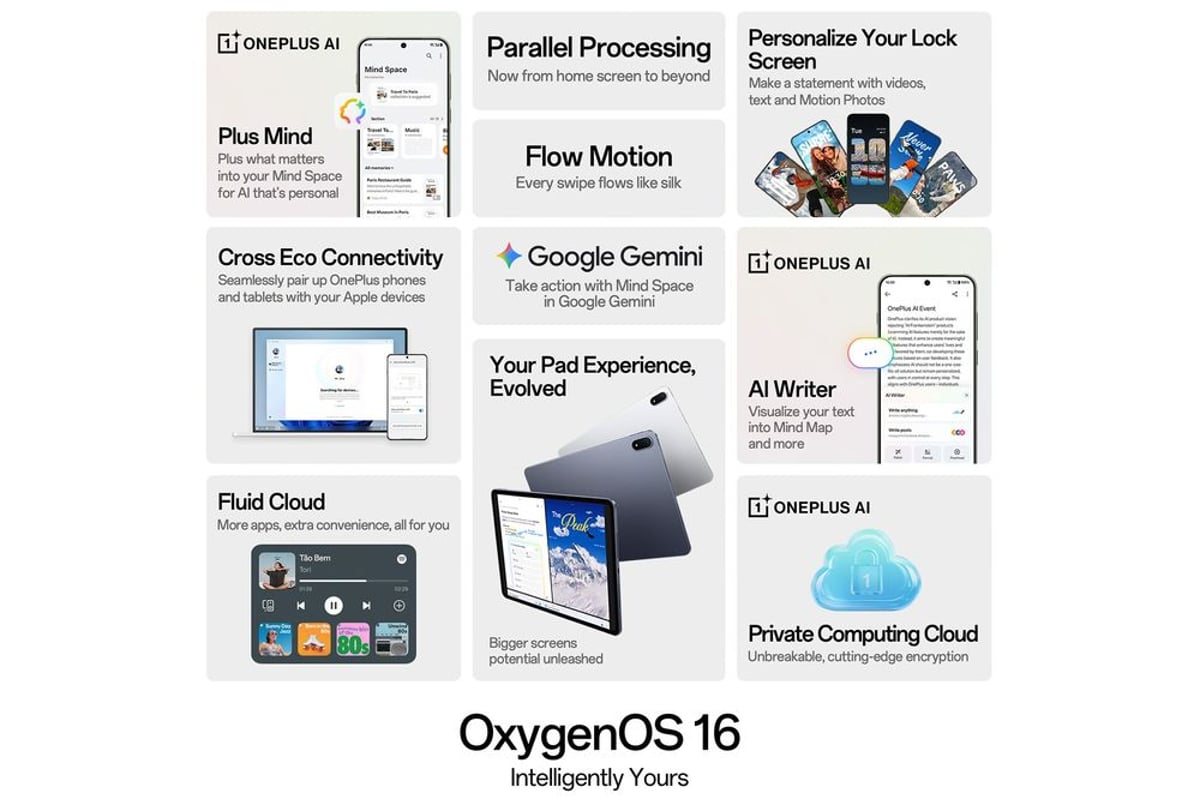
OnePlus just dropped a major AI upgrade that could change how you interact with your phone. The company's new OxygenOS 16 integrates Google's Gemini directly into its Mind Space feature, letting the AI assistant create travel itineraries, manage tasks, and analyze everything you've saved - from screenshots to voice memos. It's launching in beta tomorrow and hints at a new era of contextual AI assistance.
OnePlus is betting big on AI integration, and OxygenOS 16 shows exactly what that looks like in practice. The company just announced its Android 16-based operating system with a dramatically upgraded Mind Space feature that brings Google's Gemini assistant directly into the heart of the user experience.
Mind Space launched back in June as a relatively simple screenshot analyzer - save an image, and the AI would extract calendar events or contact information. But OnePlus has been quietly building something much more ambitious. The new version accepts 60-second voice memos and full scrolling screenshots, creating what amounts to a personal AI memory bank.
Here's where it gets interesting: Google worked directly with OnePlus to integrate Gemini's capabilities with this saved information. Planning a vacation? Save screenshots of hotels, flight options, and attractions, then ask Gemini to weave it all into a coherent travel itinerary. The AI doesn't just see individual pieces - it understands the context of everything you've collected.
"This represents a fundamental shift in how AI assistants work," explains the integration. Instead of starting fresh with each query, Gemini can reference your accumulated digital breadcrumbs to provide genuinely personalized responses.
The competitive implications are immediate. While Apple focuses on Siri improvements and Samsung pushes Galaxy AI, OnePlus is positioning itself as the platform where different AI systems actually talk to each other. That's a subtle but potentially powerful differentiator in an increasingly crowded market.
Beyond the AI upgrades, OxygenOS 16 borrows liberally from Apple's playbook with significantly more flexible lock screen customizations that mirror what we saw in iOS 16 back in 2022. The cross-platform connectivity features are particularly notable - OnePlus phones can now share photos with iPhones via tap, sync basic notifications with Apple Watches, and remote control both Mac and Windows PCs through the O Plus Connect app.
The "Optical Light" UI effect that OnePlus is touting bears more than a passing resemblance to Apple's Liquid Glass aesthetic, suggesting the company isn't shy about taking inspiration from Cupertino's design language. Most of these changes actually originate from Oppo's ColorOS 16, released simultaneously today alongside the Find X9 flagship phones.
Timing matters here. OxygenOS 16 enters open beta tomorrow, October 17th, and will debut officially with the upcoming OnePlus 15 before rolling out to existing devices. That puts it ahead of many Android manufacturers who are still working on their Android 16 implementations.
The broader Android ecosystem is watching this integration closely. If OnePlus can demonstrate that third-party AI services can meaningfully enhance Google's own assistant technology, it could open the door for more sophisticated partnerships across the platform. Samsung's reportedly been exploring similar integrations, while Chinese manufacturers like Xiaomi are developing their own AI ecosystems entirely.
What's particularly clever about OnePlus's approach is how it sidesteps the usual AI assistant competition. Instead of building yet another voice assistant to compete with Google, Siri, and Alexa, they're creating a complementary experience that makes existing assistants more useful. It's a partnership strategy that could pay dividends as AI capabilities continue expanding.
OnePlus is making a smart bet that the future of mobile AI isn't about replacing existing assistants, but making them contextually smarter. By letting Gemini access your saved screenshots and voice memos, OxygenOS 16 creates the kind of personalized AI experience that tech enthusiasts have been waiting for. Whether mainstream users embrace this level of AI integration remains to be seen, but OnePlus is clearly positioning itself at the forefront of the next wave of smartphone intelligence.