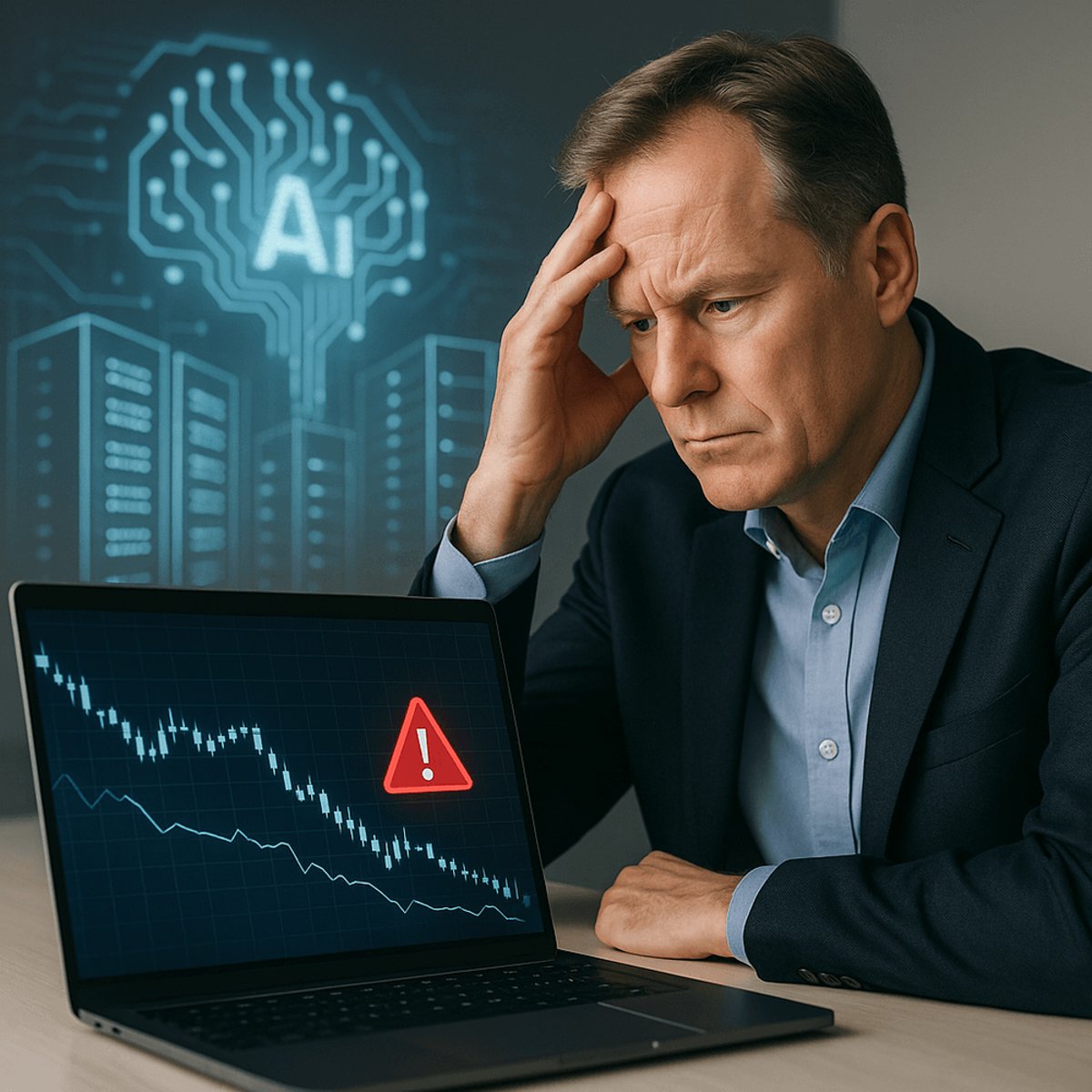
Former Meta executive Nick Clegg just delivered a reality check that's got Silicon Valley talking. The ex-British deputy PM turned tech policy guru warned that the chance of an AI market correction is "pretty high," citing "unbelievable, crazy valuations" across the sector. His timing couldn't be more pointed - as hyperscalers pour hundreds of billions into AI infrastructure with unclear returns.
The warning shot came from an unlikely source. Nick Clegg, who spent years navigating Meta's most challenging policy decisions before stepping down earlier this year, didn't mince words during a CNBC interview. "There's just absolute spasm of almost daily, hourly, deal making," he told viewers, describing an industry drunk on its own potential.
The former British deputy prime minister knows something about bubbles. He watched Meta emerge stronger from the dot-com crash, along with Amazon and Google. But this time feels different. "You've got to think, wow, this could be headed for a correction," Clegg said, putting the odds at "pretty high."
What's driving his concern isn't just frothy valuations - it's the fundamental math. Hyperscalers are "pouring hundreds of billions of dollars into the ground and building these data centers," as Clegg puts it. The question that keeps industry insiders awake: can they actually recoup these massive infrastructure bets? The sustainability of current business models remains unproven, even as companies race to build ever-larger AI capabilities.
Clegg's skepticism extends beyond balance sheets to the technology itself. He's pushing back hard against the superintelligence narrative that's captured Silicon Valley's imagination. While Meta CEO Mark Zuckerberg created an AI lab earlier this year to pursue artificial superintelligence, and SoftBank's Masayoshi Son has backed the concept, Clegg sees limits to current AI approaches.
"I think there are certain limits to that probabilistic AI technology, which means that it won't perhaps be quite as all singing and all dancing as people suggest," he explained. It's a direct challenge to the "holy grail" mentality driving current investments - the belief that AI will soon surpass human intelligence across all domains.
The reality check comes as other tech leaders voice similar concerns. Amazon founder Jeff Bezos recently described the current moment as an "industrial bubble," though he maintains that "AI is real, and it is going to change every industry." The distinction matters: bubbles can burst while the underlying technology continues advancing.
Clegg's experience at Meta gives his warnings particular weight. He guided the company through its most turbulent policy challenges, from content moderation battles to regulatory scrutiny. His departure earlier this year marked the end of an era for the social media giant's government relations strategy.
But he's not writing AI's obituary. Instead, Clegg argues for a more realistic timeline. "There's a lot of hype. People in Silicon Valley assume that if you invent a technology on Tuesday, everybody's going to use it on Thursday. It's not actually how it works at all," he said. His comparison to desktop computing adoption - which took 20 years to reach mass market - suggests current AI rollouts may follow a similar trajectory.
The venture capital world has heard this tune before. The best companies often emerge from downturns, when investors scrutinize business metrics more carefully and force entrepreneurs to prove sustainable models. Those who can "do more with less" funding typically outlive competitors when easy money disappears.
For now, the AI gold rush continues. But Clegg's warning carries extra weight given his insider perspective on how tech giants operate. His message is clear: the current pace of investment and valuation growth isn't sustainable, and the industry should prepare for a reckoning.
Clegg's warning lands at a crucial inflection point for the AI industry. While his concerns about inflated valuations and unsustainable infrastructure spending deserve serious consideration, his broader message is more nuanced than simple bubble-calling. The technology is real and transformative, but adoption will likely unfold more gradually than Silicon Valley's hype machine suggests. For investors and companies betting big on AI, Clegg's reality check serves as a timely reminder that even revolutionary technologies must eventually prove their worth through sustainable business models.