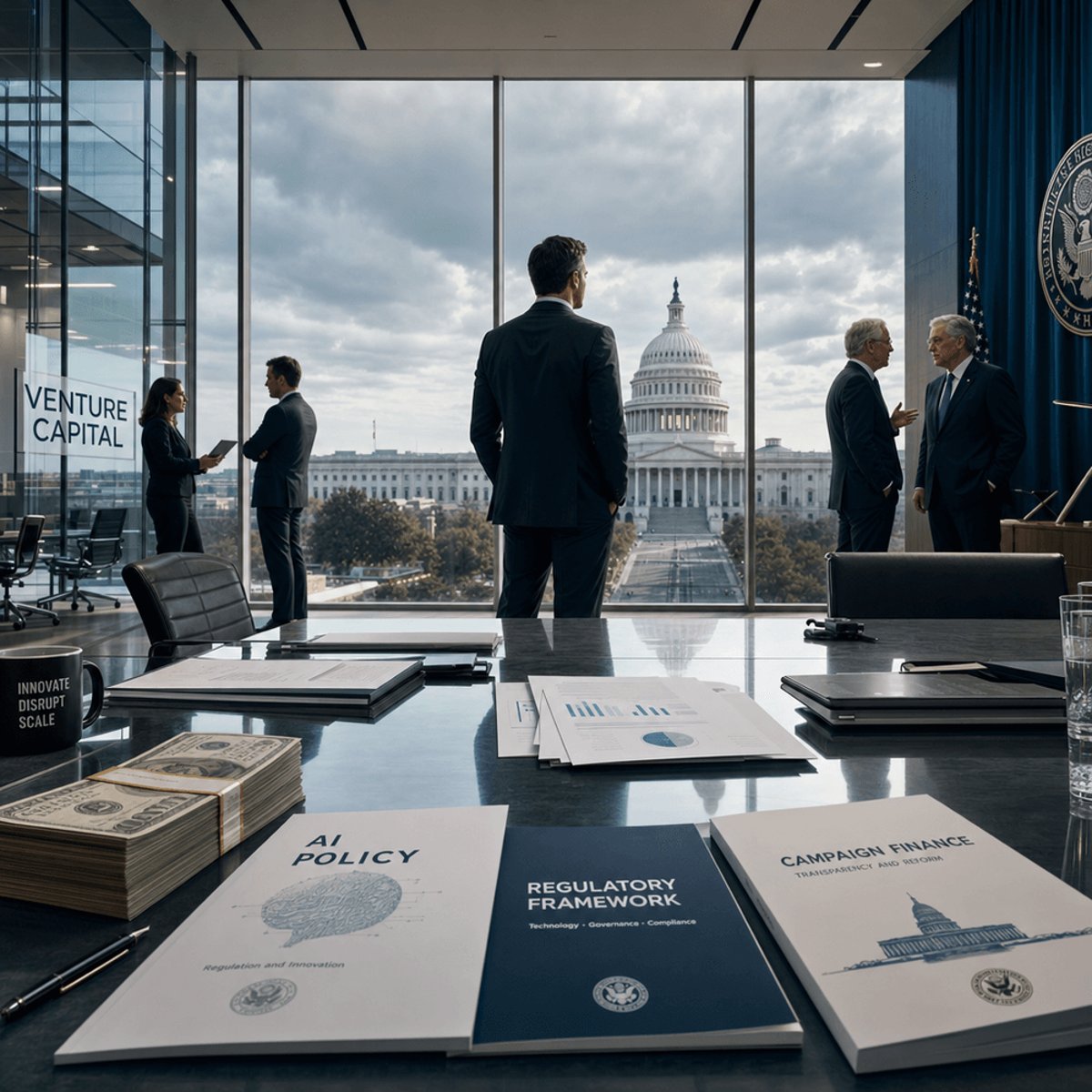
A rare public rebuke from inside Silicon Valley's power corridors: John O'Farrell, former partner at Andreessen Horowitz, is calling out his old firm and other top-tier VCs for what he describes as "political infiltration" around AI regulation. O'Farrell specifically targets Leading the Future, a political action committee backed by a16z, accusing it of trying to "intimidate politicians" who dare to question the AI industry's trajectory. The critique lands as venture capital's influence over Washington reaches unprecedented levels, with firms spending millions to shape AI policy.
John O'Farrell isn't holding back. The former Andreessen Horowitz partner, who spent years helping build one of Silicon Valley's most influential venture firms, just delivered a scathing critique of his old employer's political maneuvering around artificial intelligence. According to CNBC's reporting, O'Farrell specifically called out Leading the Future, a political action committee backed by a16z, accusing it of attempting to "intimidate politicians" who might support stronger AI oversight.
The timing couldn't be more significant. Washington is in the middle of heated debates over AI regulation, with lawmakers attempting to balance innovation against legitimate concerns about safety, bias, and societal disruption. Leading the Future has emerged as one of the most aggressive lobbying forces pushing back against proposed restrictions, positioning itself as the voice of technological progress against what it frames as regulatory overreach.
But O'Farrell sees something darker. His critique represents a rare break in venture capital's typically united front on policy matters. While many former tech executives eventually distance themselves from controversial industry practices, O'Farrell's willingness to name names and call out specific tactics marks an unusually direct challenge to one of the most powerful firms in venture capital.
Andreessen Horowitz has been one of the most vocal advocates for minimal AI regulation, with co-founder Marc Andreessen arguing that heavy-handed government intervention could stifle American innovation and hand competitive advantage to China. The firm has invested billions in AI companies ranging from infrastructure plays to consumer applications, giving it enormous financial stake in how the regulatory landscape evolves.
Leading the Future's approach has drawn scrutiny before, but criticism typically came from outside the venture capital ecosystem - policy advocates, academics, and politicians concerned about corporate capture of the regulatory process. O'Farrell's insider perspective adds weight to those concerns, suggesting that even some within the VC world view the tactics as crossing a line.
The PAC has reportedly spent millions on campaign contributions and advocacy efforts, targeting both federal and state-level politicians. According to campaign finance records, the organization has focused particularly on lawmakers serving on committees with jurisdiction over technology policy, raising questions about whether its goal is productive dialogue or something more coercive.
O'Farrell's critique extends beyond just a16z, noting that other major venture firms have engaged in similar "political infiltration" around AI. The comment points to a broader pattern where Silicon Valley money is increasingly flowing into political channels, often with explicit goals of shaping or blocking specific legislation.
The controversy highlights a fundamental tension in the AI debate. Venture capitalists argue they're defending innovation and American competitiveness against bureaucratic interference. Critics counter that the industry is trying to write its own rulebook, prioritizing profit over public safety and accountability.
For Andreessen Horowitz, the public criticism from a former partner represents an uncomfortable moment. The firm has cultivated an image as a thought leader in technology, publishing extensively on topics from crypto to AI to the future of software. Having that narrative challenged by someone who helped build the firm's reputation adds complexity to its public positioning.
The fallout from O'Farrell's comments is still unfolding. Neither a16z nor Leading the Future has issued a formal response, though sources familiar with the firm's thinking suggest they view their political engagement as legitimate advocacy, not intimidation. The distinction may ultimately matter less than the perception - and O'Farrell's critique has handed ammunition to those arguing that Big Tech's influence over AI policy has grown dangerously outsized.
As AI continues its rapid evolution, the battle over who gets to shape its regulatory framework is intensifying. O'Farrell's willingness to break ranks suggests that even within the venture capital world, there's growing discomfort with how aggressively some firms are working to influence the political process. Whether that discomfort translates into meaningful change in industry behavior remains to be seen, but the cracks in Silicon Valley's united front are starting to show.
O'Farrell's public break with his former firm exposes the escalating war over AI's future - one being fought not just in labs and boardrooms, but in the halls of Congress. His accusation that leading VCs are engaging in "political intimidation" rather than good-faith policy debate raises uncomfortable questions about how much influence venture capital should wield over technologies that will reshape society. As AI regulation moves from abstract debate to concrete legislation, the industry's aggressive lobbying tactics are drawing scrutiny from unexpected quarters - including from insiders who helped build Silicon Valley's most powerful institutions. Whether this rare moment of self-criticism leads to changed behavior or simply gets drowned out by the billions flowing into political influence campaigns will tell us a lot about who really controls AI's trajectory.