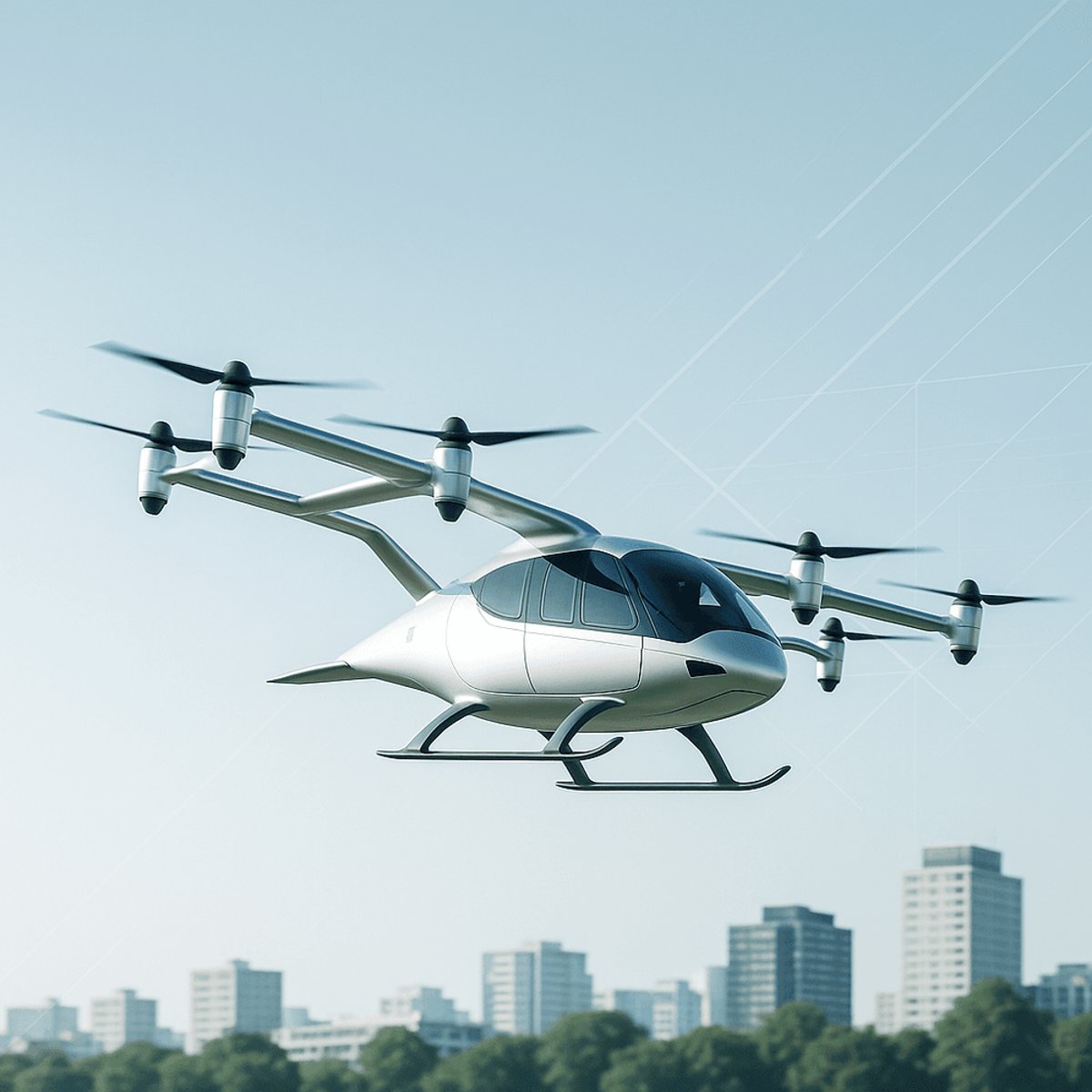
The Federal Aviation Administration just cracked open a regulatory door that could accelerate the electric air taxi industry by years. The agency's new pilot program lets eVTOL startups test real operations before full certification - a major shift from the limited test flights they're stuck with today. For companies like Joby and Archer that have burned through billions waiting for approval, this could be the breakthrough they desperately need.
The Federal Aviation Administration just delivered what could be the biggest regulatory breakthrough for electric air taxis since the industry took flight. The agency's new pilot program lets eVTOL startups test actual operations before receiving full certification - a seismic shift from the restrictive test flight regime that's kept these companies grounded for years.
The announcement sent ripples through an industry that's been burning cash while waiting for regulatory approval. Joby Aviation and Archer Aviation, two of the sector's biggest names, immediately signaled they'll apply for the program. The move comes as both companies have spent the last few years stuck in a regulatory holding pattern, conducting limited test flights while working toward FAA approval that seemed perpetually out of reach.
But there's a catch. Companies can't just apply solo - they need to partner with state, local, tribal, or territorial governments to even get in the door. The FAA plans to approve at least five projects that can run for up to three years, covering everything from short-range air taxis to longer-range fixed wing flights, cargo hauling, emergency medical services, and "increasing automation safety."
"These projects, once successful, are expected to deliver substantial data and lessons learned to inform the broader regulatory framework," the agency writes in its official solicitation paperwork. Translation: the FAA wants real-world data before it finalizes the rules that will govern this entire industry.
The timing couldn't be more critical. The eVTOL sector has been hemorrhaging investor confidence as certification timelines stretched far beyond initial projections. Joby Aviation, once valued at over $6 billion, has watched its stock price crater as commercial service dates kept sliding. Archer Aviation faces similar pressures, though its partnership with United Airlines provides some operational runway.
Industry insiders see this as the FAA finally acknowledging that its traditional certification approach - designed for conventional aircraft - doesn't fit the eVTOL model. "The agency is seeking applicants who can deliver successful outcomes by working cooperatively with a range of entities," according to the solicitation, signaling a more collaborative approach than the typical regulatory review process.
The program structure reveals the FAA's cautious optimism. By requiring government partnerships and limiting approvals to five projects, the agency maintains tight control while creating pathways for innovation. The three-year timeline gives companies meaningful operational experience while providing the FAA with the safety data it needs to craft permanent regulations.
For Archer Aviation, the announcement validates its strategy of building deep partnerships. The company noted it will work with existing partner and investor United Airlines in its application - a relationship that could prove crucial given the airline's operational expertise and government connections.
What makes this particularly significant is the operational scope. Unlike current test flights that happen in controlled environments, this program could allow passenger-carrying flights, cargo operations, and emergency services - real commercial activities that generate actual revenue and operational data.
Applications are due December 11, 2025, with operations potentially beginning as soon as 2026. That timeline represents a dramatic acceleration for an industry that's been told to wait indefinitely for full certification. The program could provide the proof-of-concept data that regulators worldwide are waiting for, potentially speeding up international approvals as well.
This pilot program represents the FAA's recognition that traditional certification processes can't keep pace with aviation innovation. By creating a controlled pathway for real-world testing, the agency is betting that operational data from actual flights will inform better regulations than theoretical safety assessments. For eVTOL startups, it's a chance to prove their technology works in practice, not just on paper - and potentially the lifeline an industry desperate for regulatory progress has been waiting for.