TL;DR:
• Foxconn's Q2 operating profit jumped 27% to NT$56.6 billion, beating estimates
• AI server revenue projected to grow 170% year-over-year in Q3
• Nvidia partnership driving server rack manufacturing boom
• Confirms AI infrastructure demand is translating to real financial impact
Foxconn just delivered the clearest signal yet that the AI infrastructure gold rush is reshaping global manufacturing. The world's largest contract electronics maker posted a stunning 27% surge in second-quarter operating profit, smashing analyst forecasts as demand for AI servers transforms the Apple supplier into an artificial intelligence powerhouse.
Foxconn just proved that the AI boom isn't just hype—it's cold, hard cash flowing through the global supply chain. The Taiwanese manufacturing giant reported operating profit of NT$56.596 billion ($1.89 billion) for the second quarter, demolishing analyst expectations of NT$49.767 billion and marking a 27% leap from the same period last year.
The numbers tell a story of dramatic transformation. While Foxconn built its empire assembling Apple's iPhones, it's now the AI server business driving the most explosive growth. The company forecasts its AI server revenue will skyrocket over 170% year-over-year in the current quarter—a projection that sent ripples through the broader tech manufacturing sector.
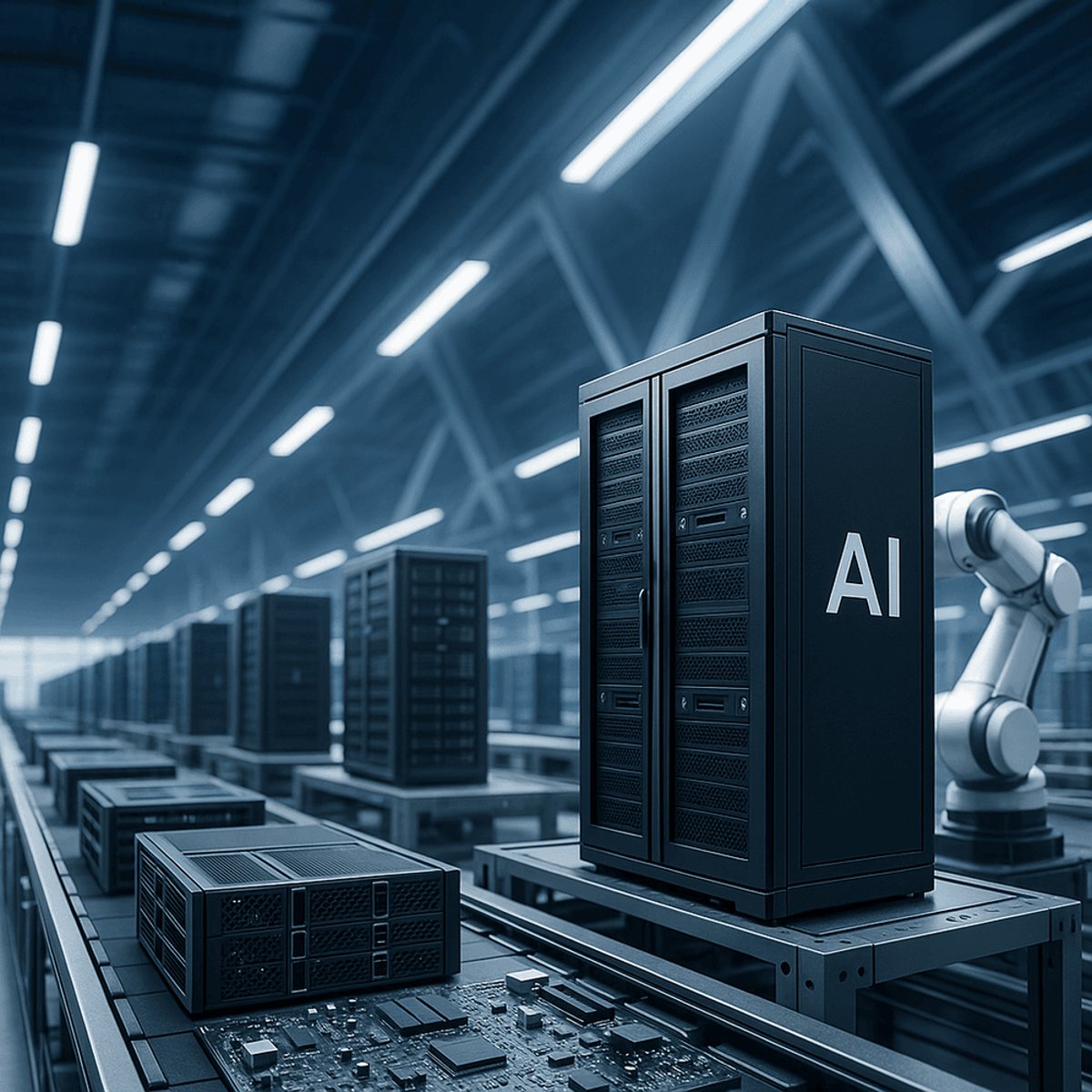
[embedded image: Foxconn facilities with AI server production lines]
Foxconn's pivot from consumer electronics to enterprise AI infrastructure represents one of the most successful diversification plays in recent tech history. The company has become a critical partner to Nvidia, manufacturing the specialized server racks that house the GPU clusters powering everything from OpenAI's ChatGPT to Google's Gemini.
Net profit hit NT$44.36 billion, crushing LSEG SmartEstimates of NT$38.81 billion. Revenue came in at NT$1.79 trillion ($59.73 billion), exactly meeting analyst projections but representing a fundamental shift in product mix toward higher-margin AI hardware.
The timing couldn't be more critical. As hyperscale data center operators like Microsoft, Amazon Web Services, and Google Cloud race to expand their AI infrastructure, Foxconn has positioned itself as the essential manufacturing partner bridging chip design and deployment at scale.
[video iframe: Foxconn AI server manufacturing process]
But Foxconn's AI ambitions extend far beyond contract manufacturing. On July 30, the company announced a strategic investment in industrial motor maker TECO Electric & Machinery, specifically to build AI data centers. This vertical integration play signals Foxconn's intention to capture more value across the AI infrastructure stack.
The broader manufacturing landscape is taking notice. Foxconn's success validates the massive capital expenditures flowing into AI infrastructure. Meta alone plans to spend up to $40 billion on AI infrastructure in 2024, while Google parent Alphabet allocated $12 billion in Q1 capital spending, primarily for data centers and servers.
Yet challenges loom on the horizon. Foxconn acknowledged on August 5 that it's closely monitoring "evolving global political and economic conditions." President Donald Trump's renewed tariff threats have already forced the company to relocate most US-bound iPhone production to India, and similar pressures could impact AI server manufacturing.
The geopolitical chess game adds complexity to Foxconn's AI server strategy. As US-China tech tensions escalate, American companies may pressure suppliers to establish AI infrastructure manufacturing closer to home, potentially fragmenting Foxconn's production efficiency.
Foxconn's explosive AI server growth validates the massive infrastructure buildout reshaping global tech manufacturing. With 170% projected revenue growth next quarter and strategic moves into data center ownership, the iPhone maker is successfully transforming into an AI infrastructure giant. However, geopolitical headwinds and tariff uncertainties could test the company's ability to maintain this momentum across increasingly fragmented global supply chains.