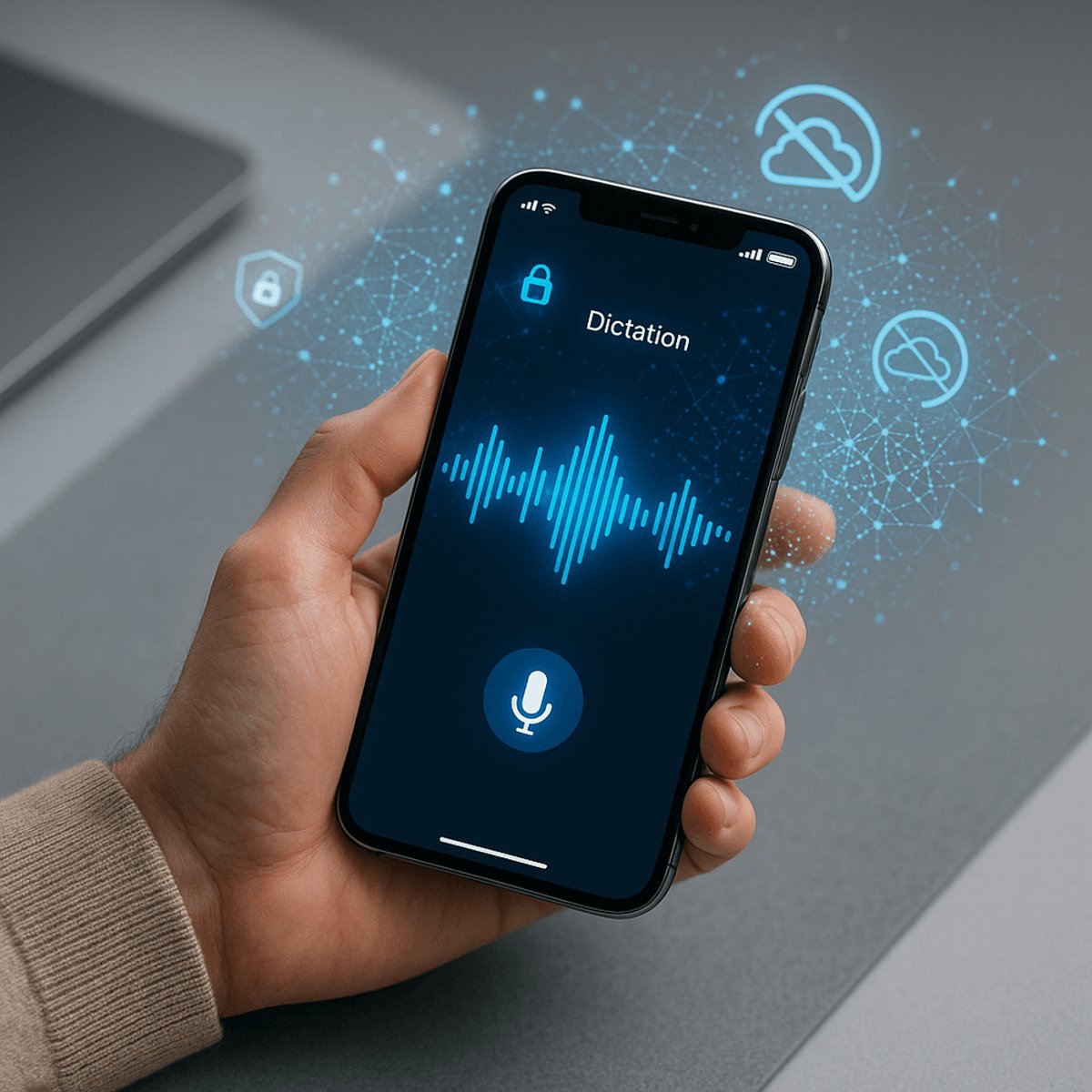
Google just made a surprise move into the AI dictation space with a quietly released iOS app that works entirely offline. The new app, powered by the company's lightweight Gemma AI models, puts the search giant in direct competition with rising players like Wispr Flow. According to TechCrunch, the app marks Google's latest push to bring on-device AI capabilities to mobile users without requiring constant cloud connectivity.
Google dropped a new AI dictation app on the App Store with almost no fanfare, but the implications are anything but quiet. The app leverages Google's Gemma AI models, the company's family of lightweight, open-source language models designed specifically for on-device deployment.
What makes this launch particularly interesting is the offline-first approach. While most AI-powered dictation tools rely on cloud processing, Google's betting that users want their voice data processed locally on their iPhones. It's a privacy play as much as a technical one, addressing growing concerns about sensitive information being transmitted to remote servers.
The app arrives at a moment when voice AI is heating up considerably. Startups like Wispr Flow have been gaining traction with their own AI-powered dictation solutions, proving there's real demand for smarter voice input that goes beyond basic speech-to-text. Google's entrance into this space suggests the tech giant sees the writing on the wall, or rather, the dictation in the air.
Gemma models were specifically designed for this kind of deployment. Google released the Gemma family earlier as a more accessible alternative to its larger Gemini models, optimized to run efficiently on consumer hardware without the computational overhead of cloud-based AI. By bringing Gemma to iOS through a dictation app, Google's showcasing what on-device AI can actually do in everyday scenarios.
The quiet launch strategy is worth noting. Instead of a splashy product announcement, Google simply published the app to the App Store and let it speak for itself. This mirrors how the company's been testing various AI applications lately, taking a more experimental approach rather than betting big on single products. It's a sharp contrast to how Apple typically launches new iOS features with considerable pageantry.
For users, the value proposition is straightforward. Dictate text anywhere on your iPhone without worrying about internet connectivity or data privacy. The AI processing happens entirely on the device, which also means faster response times since there's no round-trip to the cloud. Whether Google's implementation can match or exceed competitors remains to be seen, but the technical foundation is solid.
The competitive landscape just got more interesting. Voice AI has been dominated by established players like Apple's built-in dictation and third-party tools, but newcomers like Wispr Flow proved there's room for innovation. Now Google is leveraging its considerable AI expertise to claim a stake in this growing market.
This launch also signals where Google sees Gemma fitting in its broader AI strategy. Rather than just a developer tool or research project, Gemma's becoming the engine for consumer-facing applications. The offline-first dictation app could be the first of many Gemma-powered mobile apps from Google, testing the waters for what lightweight AI can deliver.
What happens next depends largely on user reception and how aggressively Google decides to promote the app. The quiet launch suggests this might be an experiment, but if it gains traction, expect Google to integrate similar capabilities across its product lineup. The company's already shown it can iterate quickly on AI features when something clicks with users.
Google's quiet release of an offline AI dictation app might seem like a small move, but it reveals bigger ambitions. By putting Gemma models directly into consumers' hands through practical applications, the company's testing how lightweight AI can compete in spaces dominated by cloud-based solutions. Whether this app becomes a sleeper hit or just another experiment, it shows Google's not sitting idle while competitors carve out niches in the voice AI landscape. For iPhone users looking for smarter dictation that respects privacy and works without connectivity, this could be the option they've been waiting for.