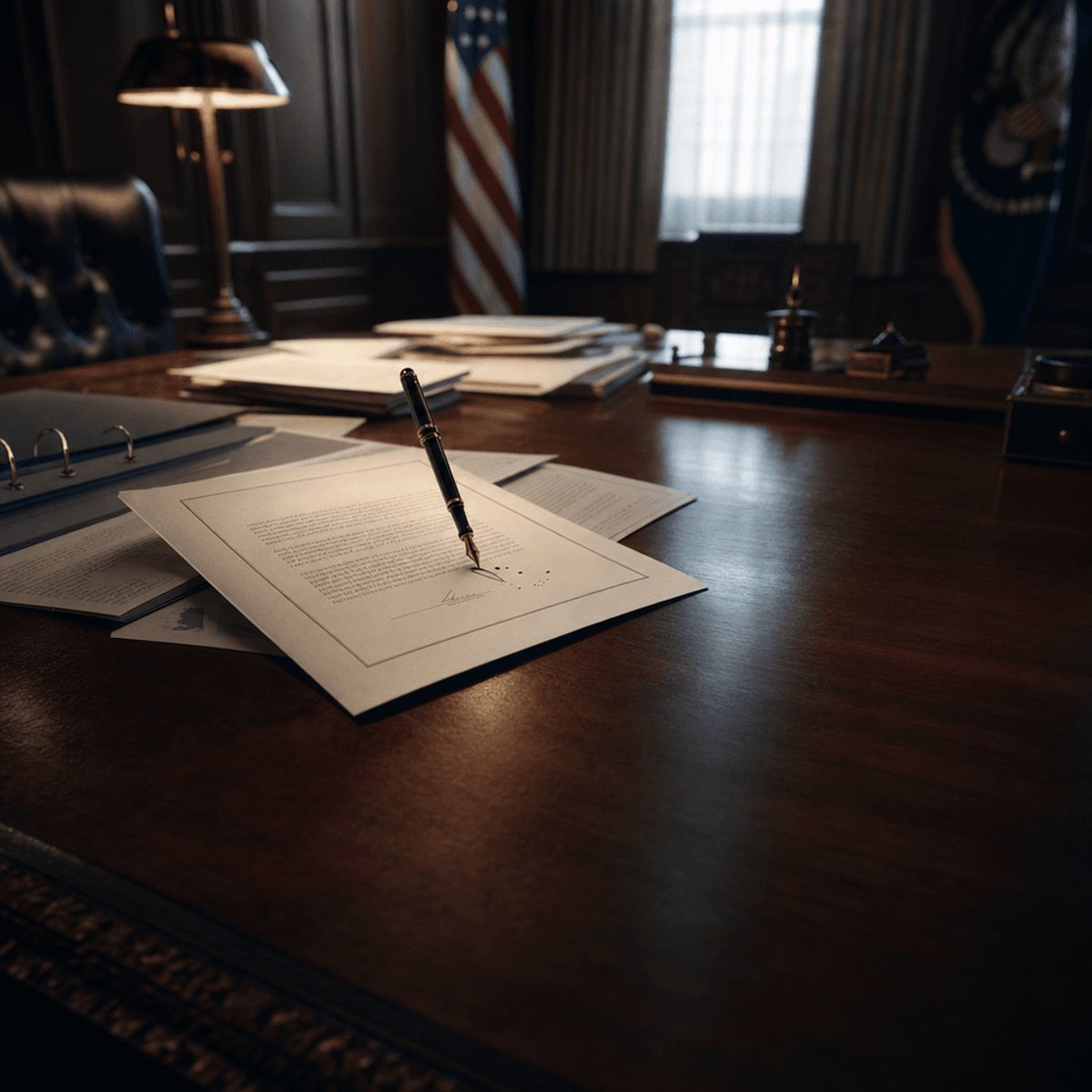
President Trump abruptly postponed signing a planned artificial intelligence executive order, telling reporters he had concerns about provisions that "could have been a blocker" to AI development. The last-minute decision injects fresh uncertainty into the federal government's approach to regulating the rapidly evolving technology, leaving major players like OpenAI, Google, and Microsoft in limbo over what rules might eventually govern their AI systems.
President Trump pulled back from signing a planned artificial intelligence executive order, injecting fresh uncertainty into Washington's approach to regulating the technology that's reshaping everything from search engines to drug discovery.
The president told reporters he "didn't like certain aspects" of the order and worried it "could have been a blocker" to AI innovation. Trump praised artificial intelligence as "causing tremendous good," suggesting his concerns centered on provisions he viewed as overly restrictive. The White House hasn't disclosed what specific language triggered the postponement or when a revised version might surface.
The abrupt decision leaves OpenAI, Google, Microsoft, Meta, and other AI giants operating without clear federal guardrails as they rush to deploy increasingly powerful models. The companies have collectively invested hundreds of billions in AI infrastructure while navigating a patchwork of state regulations and international frameworks like the EU's AI Act.
Trump's hesitation marks a stark contrast to the previous administration's approach. The Biden White House issued a sweeping AI executive order in October 2023 that required safety testing for powerful AI systems and established new standards for AI security. That order mandated that companies developing models posing risks to national security report their safety test results to the federal government.
The tech industry has been divided on regulation. OpenAI CEO Sam Altman has called for licensing requirements for advanced AI systems, while others argue excessive rules could hand China and other competitors a strategic advantage. The postponement suggests the Trump administration may be leaning toward a lighter regulatory touch that prioritizes American AI dominance over precautionary restrictions.
The regulatory vacuum comes as AI capabilities are accelerating. Google just rolled out Gemini models that can process hour-long videos, while OpenAI continues refining GPT-4 and working on more advanced successors. Meta is giving away powerful open-source models that anyone can download and modify, raising questions about how to govern AI systems that can't be controlled at the source.
Wall Street has taken notice of the regulatory uncertainty. AI chip maker Nvidia has seen its stock swing on policy signals from Washington, while enterprise AI startups are navigating customer concerns about compliance and liability without clear federal standards.
The postponement also affects government use of AI. Federal agencies have been waiting for clearer direction on how to deploy AI tools for everything from processing benefits claims to analyzing intelligence. Without an executive order, agencies will continue operating under fragmented guidance that varies across departments.
Industry insiders say the delay could actually benefit major tech companies by giving them more time to shape whatever regulations eventually emerge. The biggest players have been meeting regularly with White House officials and lawmakers, arguing their case for frameworks that don't kneecap American competitiveness. Smaller startups and open-source advocates worry that when rules do arrive, they'll be written by and for the giants.
The president's comments suggest the revised order, whenever it surfaces, will emphasize AI's economic benefits over potential risks. That framing aligns with the administration's broader tech policy, which has focused on beating China in emerging technologies and keeping regulatory burdens light. But it also raises questions about who'll set safety standards for AI systems that could eventually match or exceed human capabilities in critical domains.
Senators on both sides have been working on AI legislation, but progress has been slow amid disagreements over how much regulation is appropriate. The postponed executive order was seen as a way for the White House to act while Congress deliberates. Now the question is whether Trump will issue a significantly watered-down version or abandon the executive action entirely in favor of letting industry self-regulate.
Trump's last-minute pullback on the AI executive order leaves the industry in regulatory limbo at a critical moment. While tech giants may welcome the breathing room, the lack of federal guardrails means companies, developers, and government agencies are navigating AI deployment without clear rules of the road. The question now is whether the White House will issue a lighter-touch order focused on promoting innovation, or whether the postponement signals a broader retreat from AI regulation that leaves the field to states, international bodies, and industry self-governance. Either way, the decision reinforces that Washington is still figuring out how to govern a technology that's moving faster than policy can keep up.