Google is rapidly scaling its experimental AI creative tool Mixboard to over 180 additional countries, just two months after launch. The expansion comes as users embraced the platform for everything from party planning to DIY projects, prompting the company to quadruple board sizes and accelerate international rollout.
Google just pushed its experimental AI creative platform Mixboard into overdrive, expanding to over 180 new countries as the tech giant races to capture global creative markets. The move comes barely two months after Mixboard's September launch, suggesting the tool struck a nerve with early adopters.
The expansion represents one of the fastest international rollouts for a Google Labs experiment, underscoring how quickly AI-powered creative tools are finding their audience. Users have been leveraging Mixboard's AI-powered concepting boards for party planning, DIY projects, and storyboarding - use cases that apparently caught even Google by surprise.
"We've seen people use Mixboard to plan parties, design DIY projects, storyboard ideas and more," Google noted in today's announcement. The surge in creative applications prompted the company to quadruple board sizes based on user feedback, a rare mid-flight product adjustment that signals strong engagement metrics.
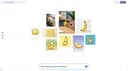
Mixboard operates as a digital canvas where users can combine their own images with AI-generated content. The platform's secret weapon is Nano Banana, Google's Gemini-powered image model that handles both creation and editing tasks. Users can generate text blocks, create images from scratch, or modify existing visuals - all within a single interface that feels more like Pinterest than traditional AI tools.
The timing couldn't be more strategic. While OpenAI focuses on text-based applications and Meta pushes AI into social feeds, Google is quietly building a creative ecosystem that could capture the design and planning workflows millions of users perform daily. The company's decision to expand so aggressively suggests internal metrics are beating projections.
What makes this expansion particularly interesting is the countries involved. Google's support documentation reveals the platform is targeting markets where creative AI adoption might accelerate fastest, potentially giving Google first-mover advantage in regions where competitors haven't established footholds.
The rapid scaling also highlights how Google Labs experiments are evolving. Unlike previous slow-burn projects that took years to gain traction, Mixboard's trajectory suggests Google has refined its ability to identify and scale promising AI applications quickly. This could signal a new playbook for how the company approaches experimental AI products.
For users, the expanded availability means more global collaboration possibilities. Creative teams spanning multiple continents can now work together on Mixboard projects, potentially making it a competitor to established design collaboration platforms like Figma or Miro - but with AI assistance baked in from the start.
The move comes as creative AI tools face increasing scrutiny over copyright and artistic authenticity. By positioning Mixboard as a concepting and planning tool rather than a pure content generator, Google may be threading the needle between AI capability and creative legitimacy.
Google's aggressive Mixboard expansion reveals the company's broader strategy to capture creative workflows before competitors establish dominance. By scaling fast and iterating based on user feedback, Google is positioning itself at the intersection of AI capability and practical creativity - a space that could prove far more valuable than pure content generation as AI tools mature.