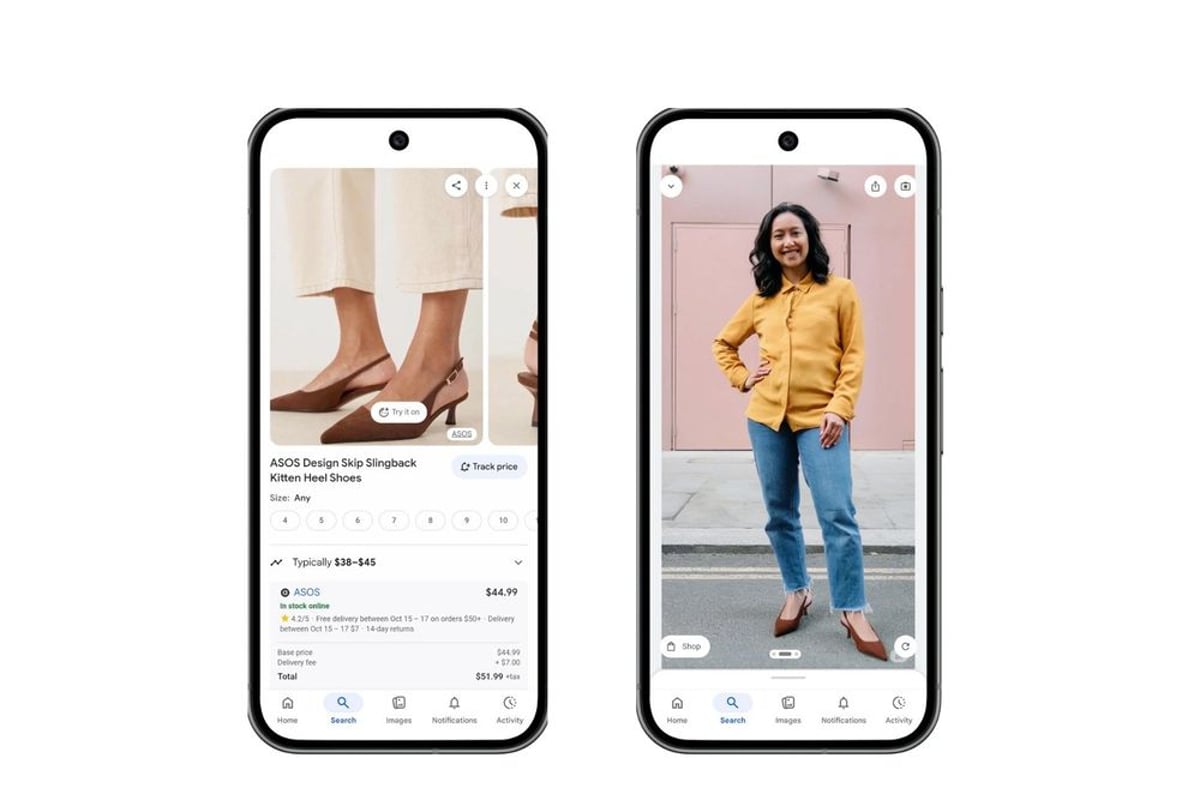
Google just rolled out AI-powered shoe try-ons through Google Shopping, letting shoppers virtually test heels, sneakers, and sandals without uploading foot photos. The feature uses computer vision to generate realistic feet and swap footwear on full-body photos, marking Google's biggest push yet into AI-driven e-commerce.
Google is betting that AI can solve online shopping's biggest problem - not knowing how something looks on you. The company's new shoe try-on feature, announced today, transforms any full-length photo into a virtual fitting room where AI swaps your existing footwear for whatever you're browsing.
The technology is surprisingly sophisticated. Instead of requiring foot measurements or photos, Google's AI analyzes your full-body image and generates synthetic feet that match your proportions. The system then seamlessly replaces your current shoes with the product you're considering, whether that's switching from white sneakers to black heels or trying different sandal styles.
This isn't Google's first dance with virtual try-ons. The company started testing AI clothing try-ons back in May, focusing on shirts, pants, dresses, and skirts before rolling the feature out nationwide in July. The shoe expansion represents the natural next step in building what's essentially a complete virtual dressing room.
The timing couldn't be better for Google's Shopping ambitions. Online return rates for footwear hover around 30%, largely because shoppers can't gauge fit or style from static product photos. By letting customers visualize how shoes actually look on their feet, Google's positioning itself as the go-to platform for confident online shoe purchases.
What's particularly clever about Google's approach is how it handles the technical challenge of foot generation. When testing the company's Doppl app earlier this year, Google demonstrated it could create realistic feet from scratch rather than requiring users to photograph their own. This eliminates privacy concerns while making the feature accessible to anyone with a full-body photo.
The competitive implications are significant. Amazon has been pushing its own virtual try-on features, while startups like Perfect Corp have built entire businesses around AR beauty and fashion testing. But Google's advantage lies in its massive Shopping platform reach and the seamless integration with search results.
For retailers, this represents both opportunity and disruption. Brands that optimize their product listings for Google's AI try-on feature could see higher conversion rates and lower return rates. But the technology also gives Google more control over the shopping experience, potentially reducing direct traffic to retailer websites.
The international rollout strategy reveals Google's confidence in the technology. Expanding to Australia, Canada, and Japan "in the coming weeks" suggests the AI performs well across different body types and fashion preferences, crucial for global adoption.
What's next for Google's virtual try-on ambitions? The logical progression would be accessories like jewelry, watches, and eyewear, followed by home goods visualization. Each category represents another opportunity to capture shopping intent and guide purchase decisions through AI-powered preview experiences.
Google's shoe try-on feature signals the company's serious intent to dominate AI-powered shopping. By solving the visualization problem that drives high return rates, Google's not just improving user experience - it's positioning itself as an indispensable layer between shoppers and retailers. As the technology expands globally and potentially into new product categories, traditional e-commerce players will need to decide whether to integrate with Google's ecosystem or risk being left behind in the AI shopping revolution.