Google just fired a direct shot at Duolingo with AI-powered language learning tools now rolling out in beta inside the Google Translate app. The feature uses Gemini AI models to create customized lessons based on your skill level and learning goals, marking Google's most aggressive push yet into the $56 billion language learning market.
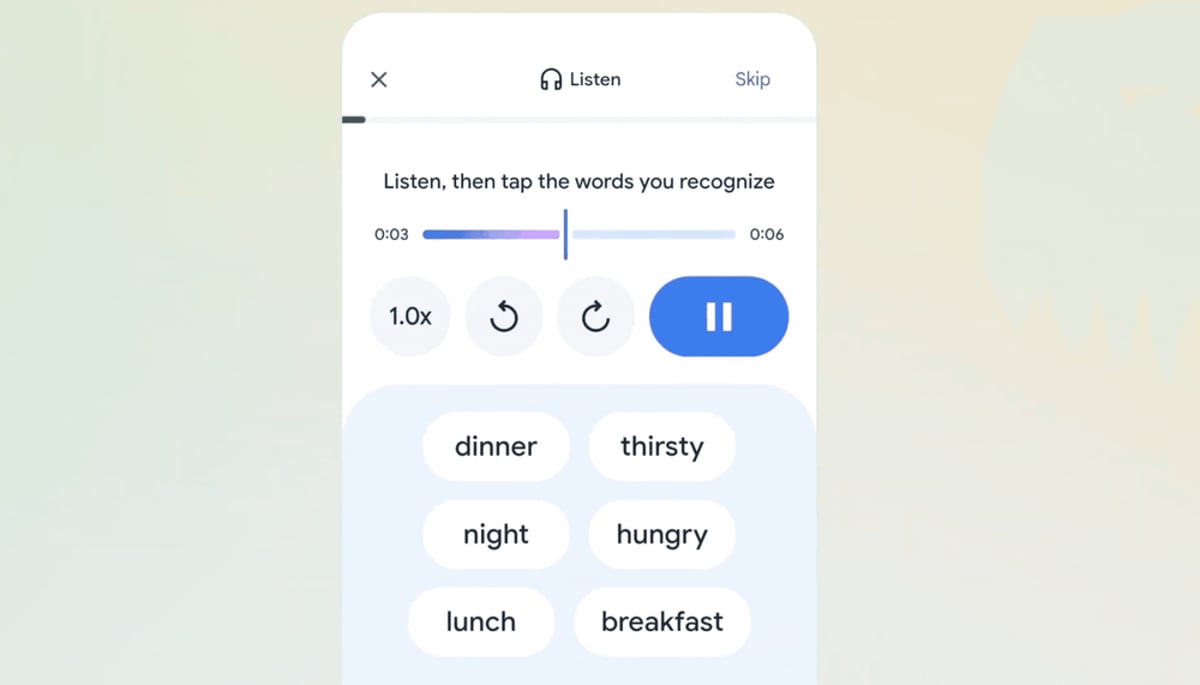
Google is making its boldest move yet into language education, transforming its ubiquitous Translate app into a direct competitor to market leader Duolingo. The tech giant announced today that AI-powered language learning tools are rolling out in beta, leveraging its advanced Gemini AI models to generate personalized lessons that adapt to users' skill levels and learning objectives. The timing couldn't be more strategic. Duolingo has dominated the mobile language learning space with over 500 million registered users and a $7.7 billion market valuation, but Google's integration approach could reshape the competitive landscape entirely. Instead of building a standalone app, Google is embedding these capabilities directly into Translate, which already boasts over 1 billion downloads globally. "These exercises track your daily progress and help you build the skills you need to communicate in another language with confidence," Google product manager Matt Sheets told reporters during a press briefing. The setup mirrors Duolingo's personalization approach but with Google's AI muscle behind it. The initial rollout supports English speakers learning Spanish and French, plus Spanish, French, and Portuguese speakers practicing English. Users tap a new "Practice" button in the Translate app to select their proficiency level and describe their goals—whether for professional conversations, everyday interactions, or communicating with host families while studying abroad. Google's Gemini AI then generates contextual scenarios. Tell it you have intermediate Spanish skills and want to communicate with your host family, and Translate might create a lesson around meal times and household conversations. The AI doesn't just provide static content—it adapts based on your responses and tracks daily progress, creating a gamified learning experience that directly challenges Duolingo's proven engagement model. But Google isn't stopping at lessons. The company simultaneously launched live translation capabilities that enable real-time conversations between speakers of different languages. The feature creates AI-generated transcriptions and audio translations on the fly, supporting over 70 languages including Arabic, Hindi, Korean, and Tamil. Currently available in the US, India, and Mexico, this positions Google's offering as both educational tool and practical communication aid. The move represents a classic Google strategy: leverage existing massive user bases to enter new markets. Rather than competing for downloads against Duolingo's established brand, Google can instantly reach Translate's billion-plus user base with these new capabilities. Industry analysts note this could be particularly disruptive in emerging markets where Google Translate already serves as a primary language bridge. Duolingo hasn't remained idle. The company has been investing heavily in AI features, including conversation practice with chatbots and adaptive learning algorithms. But Google's integration advantage—combining translation, learning, and live conversation tools in a single app—presents a formidable competitive threat. Unlike live translation on the Google Pixel 10, the Translate app doesn't attempt voice cloning, though Sheets indicated Google is "experimenting with different options there," suggesting more advanced features could be coming. The language learning market has exploded during the pandemic, with mobile apps seeing unprecedented growth. Duolingo reported 15.6% revenue growth in its latest quarter, while competitors like Babbel and Rosetta Stone have struggled to maintain momentum. Google's entry with AI-powered personalization and live translation could accelerate consolidation in the space. For users, this development signals a shift toward more integrated language tools that blend learning, translation, and real-world communication. Google's approach suggests the future of language education lies not in isolated learning apps, but in comprehensive platforms that support users from first lesson through fluent conversation.
Google's integration of AI-powered language learning into Translate represents more than a feature update—it's a strategic assault on Duolingo's market dominance. By combining personalized lessons, live translation, and Google's massive user base, this move could fundamentally reshape how people learn languages. The real question isn't whether Google can compete with Duolingo, but whether standalone language learning apps can survive when tech giants embed these capabilities directly into essential tools users already rely on daily.