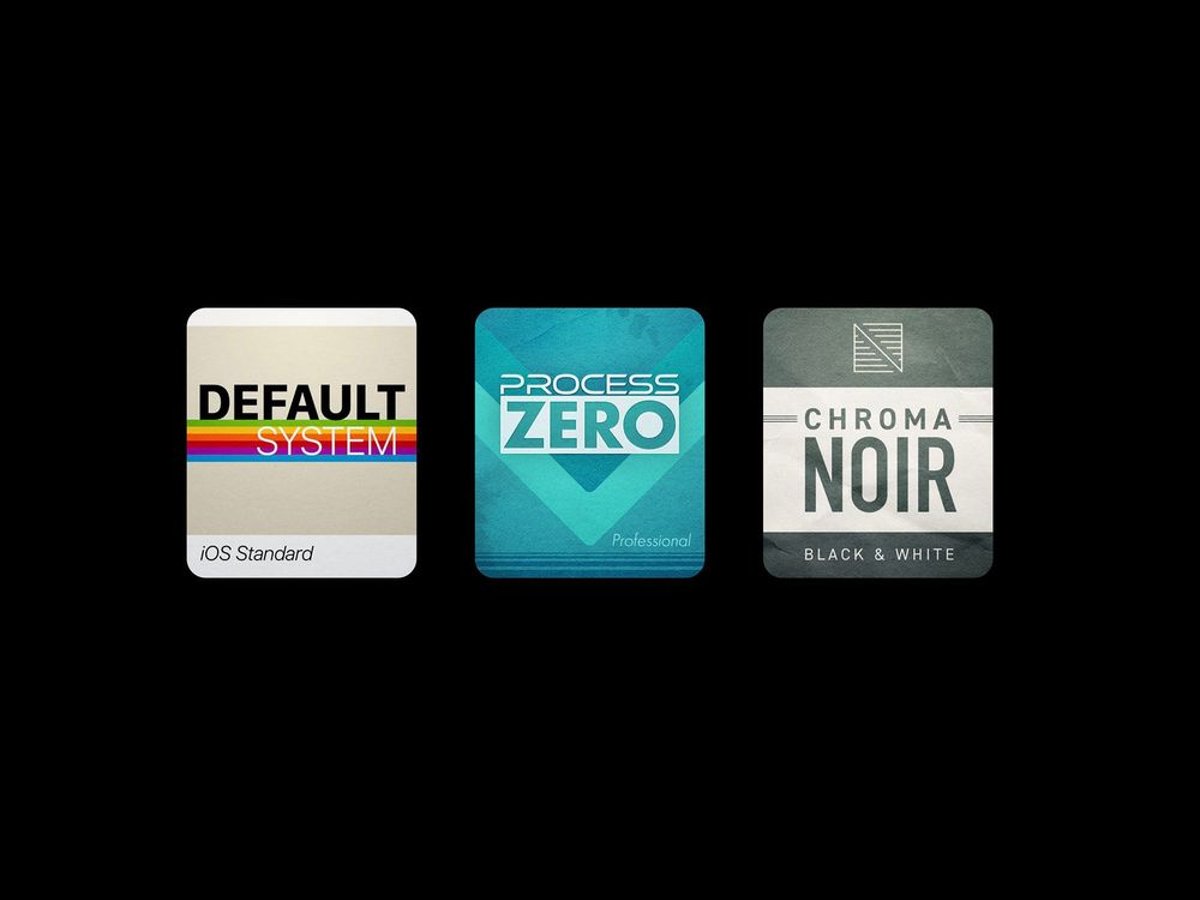
Popular iPhone camera app Halide just launched Mark III, a major update that's been years in the making. The headline feature? Process Zero II now supports HDR and ProRAW - a seemingly contradictory move for a mode designed to strip away computational photography. Available today as a Public Preview, the update also includes a new black-and-white film simulation called Chroma Noir and marks a subtle shift in how we think about "natural" smartphone photography.
Halide, the beloved iPhone camera app for photography enthusiasts, just dropped its most significant update in years. Mark III arrives today as a Public Preview, and it's bringing some unexpected features to the table - starting with HDR support in Process Zero, the app's deliberately minimalist shooting mode.
The move seems counterintuitive at first. Process Zero launched last year as Halide's answer to over-processed smartphone photos, stripping away computational photography's heavy hand. Now it's embracing HDR and ProRAW, two technologies closely tied to Apple's processing pipeline.
But Halide's team is quick to clarify what they mean by HDR. "This is my semi-regular cue to remind you that HDR is not a dirty word," writes The Verge's Allison Johnson in her coverage. The distinction matters - we've come to associate HDR with that over-processed, flattened look where shadows get artificially brightened and highlights lose all punch. That's what happens when high dynamic range scenes get compressed for standard displays.
True HDR displays on modern iPhones tell a different story. They can show a wider range of tones, letting bright highlights actually glow while shadows stay dark. The new Process Zero II taps into this capability, allowing photographers to capture more tonal information without the aggressive processing that typically comes with it.
The ProRAW integration follows similar logic. By shooting ProRAW in Process Zero, users get images that have passed through part of Apple's processing pipeline but retain flexibility for post-capture adjustments. It's a middle ground between completely raw sensor data and Apple's fully processed output.
Process Zero II also introduces Tone Fusion, a new feature for adjusting brightness and shadows. Halide's blog post emphasizes that it doesn't use AI and takes a lighter touch than Apple's default processing - staying true to the mode's anti-computational photography ethos while acknowledging that some adjustment is useful.
The update brings another surprise: Chroma Noir, Halide's own monochrome film simulation. It supports HDR for extra pop in the brightest highlights, drawing on the fact that film itself is a high dynamic range medium. For purists who still reject HDR entirely, there's an off switch.
This represents a subtle but important evolution in how we think about smartphone photography. The backlash against computational photography has been building for years, with photographers complaining that iPhone and Samsung cameras over-process images into an artificial, flat aesthetic. Process Zero emerged from that frustration.
But Halide's team seems to be arguing that the problem isn't the technology itself - it's how aggressively it gets applied. HDR displays are genuinely better at showing images. ProRAW does preserve more editing flexibility. The question is whether you can harness these capabilities without the heavy-handed AI processing that's become the default.
The Mark III update has been in development for years, with the team gathering feedback through Discord and early access programs. The Public Preview label means users can access new features now while design gets finalized.
For existing Halide subscribers, the Mark III update is free. New users can subscribe for $19.99 annually or make a one-time payment of $59.99. The app continues to carve out space in an iPhone photography market dominated by Apple's native camera and a sea of filter apps.
What makes this update noteworthy isn't just the features - it's the philosophy. Halide is threading a needle between computational photography maximalism and analog purism, suggesting there might be a middle path that uses modern display technology without the AI processing that's homogenizing smartphone photos.
Halide Mark III's Process Zero II update challenges the binary thinking that's dominated smartphone photography debates. By adding HDR and ProRAW support to an explicitly anti-computational mode, the team is making a nuanced argument: maybe the problem isn't advanced camera technology, but how aggressively companies apply it. For iPhone photographers tired of over-processed images but unwilling to give up modern display capabilities, this might be the sweet spot they've been looking for. The real test will be whether other camera apps - and eventually Apple itself - follow this more restrained approach.