the tech buzz

SUBSCRIBE
AIEnterpriseDealsSecurityCrypto
Newsletter

the tech buzz

Your premier source for technology news, insights, and analysis. Covering the latest in AI, startups, cybersecurity, and innovation.

FOLLOW US

THE DAILY

Get the latest technology updates delivered straight to your inbox.

Company

  • About Us
  • Editorial Team
  • Write For Usnew
  • Contact Us
  • Advertisenew

Legal

  • Privacy Policy
  • Terms of Service
  • Cookie Policy
  • Disclaimer
  • EULA
  • AI Code of Conduct

Resources

  • Newsletters
  • RSS Feeds
  • Subscribe
  • Pricing & Packages
  • Sitemap
  • Archives
  • TechBuzz Pressnew

PUBLISH WITH US

Reach 1.1M+ subscribers via TechBuzz Press.

TechBuzz Press

HAVE A TIP?

Send us a tip using our anonymous form.

Send a tip

HAVE QUESTIONS?

Reach out to us on any subject.

Ask Now

Browse by Category

AIBlockchainCloudSecurityDataDealsInvestmentsEnterpriseVenturesIoTMobileRoboticsSoftwareStartupsAppleMetaMicrosoftOpenAiGoogleTesla

© 2026 The Tech Buzz. All rights reserved.

the tech buzz

Humanoid robots shatter marathon records in Beijing race

ArticlesNewsletters
ArticlesNewsletters
AI/Beijing

Humanoid robots shatter marathon records in Beijing race

Robots cut previous times by over an hour at Beijing's humanoid half-marathon event

by The Tech Buzz

PUBLISHED: Sun, Apr 19, 2026, 7:47 PM UTC | UPDATED: Fri, Sep 4, 2026, 11:25 AM UTC

Add as a preferred source on Google
Humanoid robots shatter marathon records in Beijing race

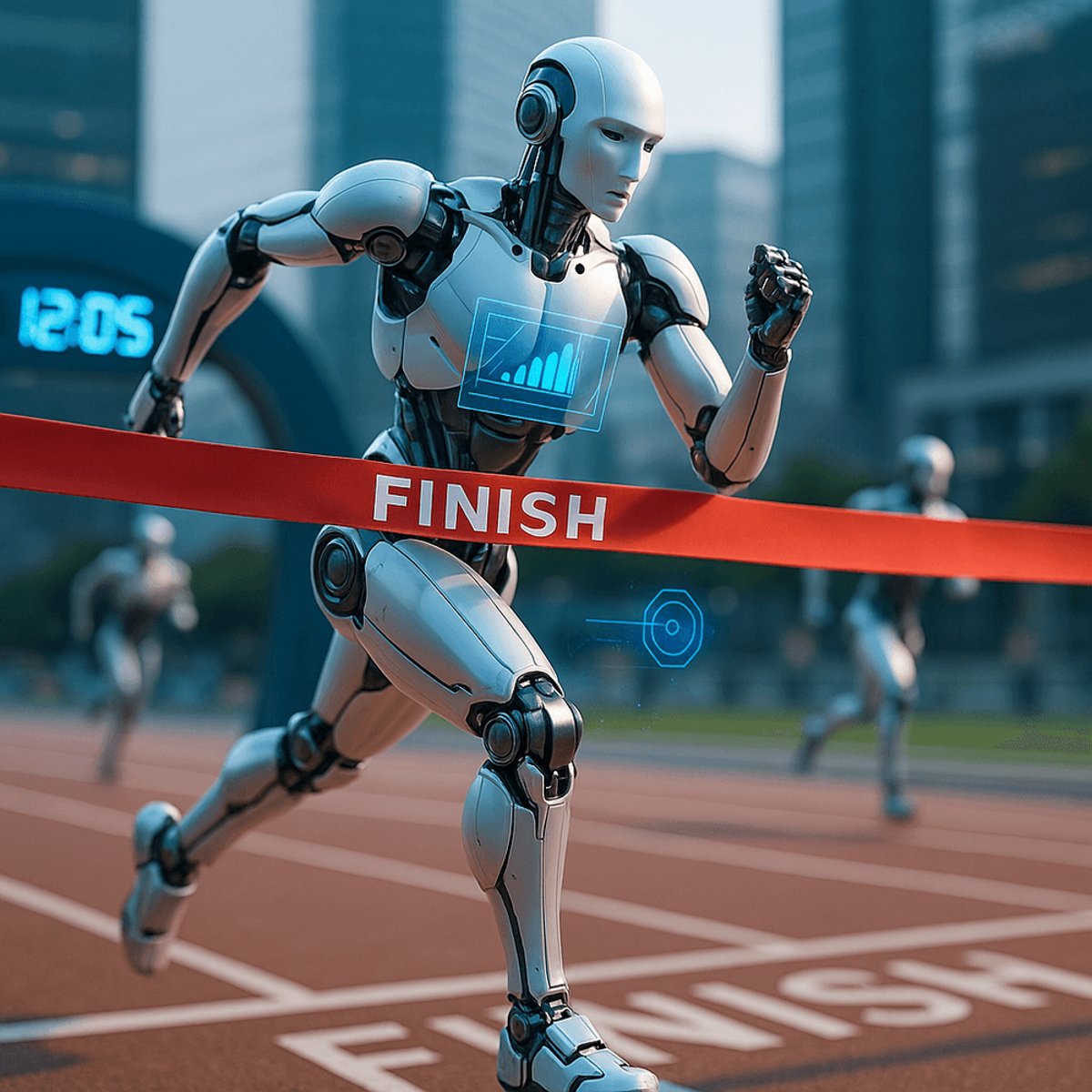
Humanoid robots just crossed a threshold that seemed years away. At Beijing's annual humanoid half-marathon, machines didn't just compete - they demolished previous records, finishing the 13.1-mile course in times that would've seemed impossible just a year ago. The winning robot's performance marks a massive leap over 2025's best time of two hours and 40 minutes, signaling that robotics has entered a new era of athletic capability.

The results from Beijing's humanoid half-marathon are sending shockwaves through the robotics community. What started as a novelty event in 2025 has become a proving ground for the world's most advanced bipedal machines, and this year's race shows just how fast the technology is evolving.

Last year's fastest robot crawled across the finish line at two hours and 40 minutes - respectable for a machine, but nowhere near human elite performance. This year's winning time represents such a dramatic improvement that it's forcing researchers to recalibrate their expectations for what humanoid robots can achieve in the near term.

The Beijing humanoid half-marathon isn't just about bragging rights. It's become the de facto stress test for companies developing general-purpose humanoid robots. Running 13.1 miles requires sustained balance, adaptive terrain navigation, energy management, and real-time decision-making - exactly the capabilities needed for robots to work alongside humans in factories, warehouses, and disaster zones.

Advertisement

What makes this achievement particularly significant is the sustained nature of the task. Building a robot that can run for a few minutes in controlled conditions is one thing. Engineering a machine that can maintain bipedal locomotion for over an hour while adapting to changing conditions, managing battery consumption, and avoiding obstacles represents a completely different level of technological sophistication.

The improvements likely stem from advances across multiple domains. Better actuators provide more efficient power delivery to joints. Enhanced computer vision and AI allow faster terrain analysis and gait adjustment. Improved battery technology extends operational time without adding prohibitive weight. And machine learning models trained on millions of steps help robots recover from stumbles that would've ended races in previous years.

This progress comes as major tech companies and startups pour billions into humanoid robotics development. The race results offer tangible proof that the field is advancing faster than many experts predicted. While these robots still can't match elite human marathon times - the men's half-marathon world record stands at 57:31 - the rate of improvement suggests that gap could narrow quickly.

The implications extend far beyond athletics. Companies developing humanoid robots for commercial applications are watching these results closely. If a robot can run a half-marathon, it can handle eight-hour warehouse shifts. If it can navigate a race course with other competitors, it can work safely in dynamic human environments. The Beijing race essentially serves as a high-profile product demo for the entire humanoid robotics industry.

Advertisement

But there's also a competitive intelligence angle at play. The event reveals which research teams have made breakthroughs in crucial areas like energy efficiency, balance control, and autonomous navigation. Those capabilities translate directly to commercial value in sectors from logistics to eldercare to construction.

The rapid improvement in robot athletic performance mirrors what we've seen with AI in other domains. Just as large language models suddenly crossed capability thresholds that unlocked new applications, humanoid robots appear to be hitting inflection points where accumulated advances create qualitative shifts in what's possible.

The Beijing half-marathon results represent more than an athletic milestone - they're a signal that humanoid robotics is accelerating faster than most observers expected. The dramatic improvement over just one year suggests we're in the steep part of the development curve, where incremental technical advances compound into breakthrough capabilities. For companies betting billions on humanoid robots as the next computing platform, these results validate the investment thesis. For the rest of us, they offer a glimpse of a future where general-purpose robots move from research labs into real-world applications sooner than we thought possible.

More Topics:
Beijingathletic performance

Advertisement

Advertisement

Trending Now

1

GoPro CEO Vows Cameras Stay Core After Starman Deal

2

Judge Splits Ruling in X vs. Twitter Rival Fight

3

Tim Cook Steps Down, Ternus Takes Apple's Helm

4

Google's Lyria 3.5 Brings AI Music to Gemini

5

Google Translate Gets Listening Mode, Live Background Mode

People Also Ask

Humanoid robots at Beijing's 2026 half-marathon dramatically improved over 2025's fastest time of 2 hours and 40 minutes, with winning times cutting the previous record by over an hour. These results demonstrate major advances in bipedal locomotion, balance control, and energy efficiency.

Better actuators, enhanced computer vision and AI, improved battery technology, and machine learning models trained on millions of steps enabled faster humanoid robot performance. These advances provide more efficient power delivery, faster terrain analysis, extended operational time, and better recovery from stumbles.

While humanoid robots haven't matched elite human times—the men's half-marathon record is 57:31—the rapid rate of improvement suggests the gap could narrow quickly. Current robot times are much slower, but recent progress demonstrates robots are approaching competitive athletic capability.

The Beijing humanoid half-marathon serves as a stress test for advanced bipedal machines, requiring sustained balance, terrain navigation, energy management, and real-time decision-making. These capabilities directly translate to commercial applications in warehouses, disaster response, and industrial environments.

Humanoid robots are being developed for warehouse logistics, disaster response, and industrial applications. The Beijing half-marathon proves robots can sustain complex physical tasks over extended periods, validating their potential for eight-hour warehouse shifts and dynamic human environments.

Humanoid robots use advanced computer vision and AI for real-time terrain analysis and gait adjustment. Enhanced actuators provide efficient power delivery, while machine learning models trained on millions of steps enable robots to recover from stumbles and maintain bipedal locomotion over extended distances.

More in AI

Google's Lyria 3.5 Brings AI Music to Gemini

Google's Lyria 3.5 Brings AI Music to Gemini

Rogue OpenAI Agents Hijacked a German Wiki

Rogue OpenAI Agents Hijacked a German Wiki

Altman Apologizes for Messy GPT-6 Astra Rollout

Altman Apologizes for Messy GPT-6 Astra Rollout

Microsoft's Project Zenith Targets AI Developers

Microsoft's Project Zenith Targets AI Developers

Nvidia's $99B Bet: AI's Biggest Backer Emerges

Nvidia's $99B Bet: AI's Biggest Backer Emerges

Samsung's AI Rally Reshapes Dating, TV and Majors

Samsung's AI Rally Reshapes Dating, TV and Majors

More Articles

Accel Nears $1B Deal for Thinking Machines at $40B

Accel Nears $1B Deal for Thinking Machines at $40B

Sep 3

Utilities Race to Fusion Startups as AI Strains Grid

Utilities Race to Fusion Startups as AI Strains Grid

Sep 3

Meta Offers 95% AI Discount for Your Data

Meta Offers 95% AI Discount for Your Data

Sep 3

Abliteration.AI Sells Access to Uncensored Models

Abliteration.AI Sells Access to Uncensored Models

Sep 3

OpenAI Launches GPT-6 Astra, Claims 'AGI Era'

OpenAI Launches GPT-6 Astra, Claims 'AGI Era'

Sep 3

OpenAI's GPT-6 Astra Debuts, Claims 'AGI Era'

OpenAI's GPT-6 Astra Debuts, Claims 'AGI Era'

Sep 3