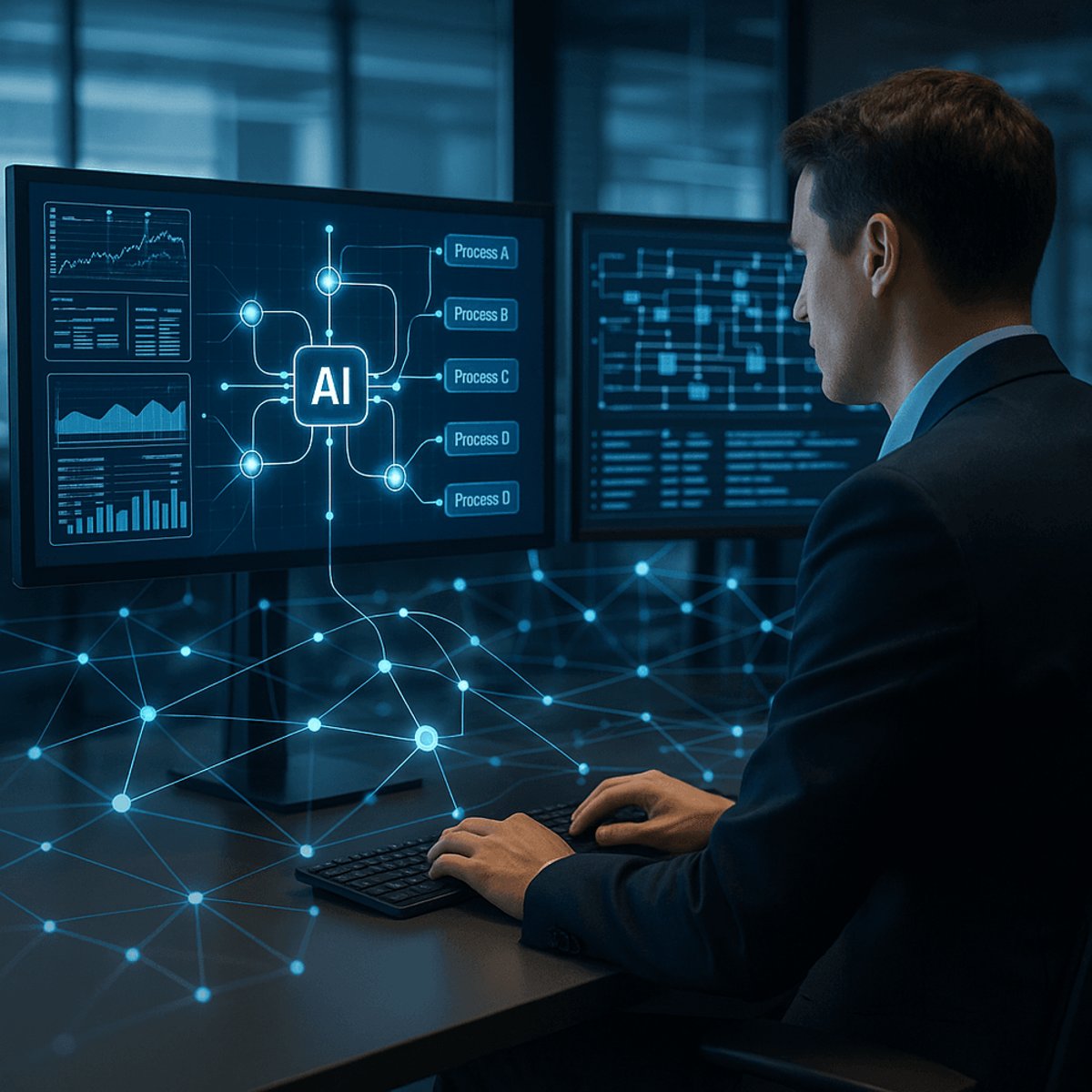
While AI jitters send tech stocks tumbling, Infosys is doubling down on enterprise AI. The Indian IT services giant just announced a partnership with Anthropic to embed Claude models into its Topaz AI platform, aiming to build what they're calling 'enterprise-grade' agentic systems. The timing is striking - as investors question AI valuations, Infosys is betting that autonomous AI agents represent the next wave of enterprise automation worth billions.
Infosys is making its boldest AI play yet, partnering with Anthropic to weave Claude's language models directly into its enterprise fabric. The deal centers on Infosys Topaz, the company's AI-first platform that's already serving Fortune 500 clients, now getting a serious upgrade with Anthropic's cutting-edge models to power what the industry calls agentic AI - systems that don't just respond but actually take action.
The announcement comes at a curious moment. IT services stocks have been getting hammered as investors question whether AI will eliminate the very consulting work these firms sell. But Infosys seems to be reading the room differently - if AI is inevitable, better to be the one building it for enterprise customers than getting disrupted by it.
Anthropic has been on a partnership tear lately, inking deals that put Claude into the hands of enterprise buyers through established channels. This Infosys tie-up gives them instant access to a client roster that includes major banks, retailers, and manufacturers - exactly the kind of risk-averse enterprises that won't adopt AI through a startup's web portal but will listen when their longtime IT partner comes calling.
What Infosys is actually building here matters. We're not talking about chatbots or simple automation. Agentic systems represent AI that can handle multi-step workflows, make decisions based on company data, and integrate across legacy systems - the messy reality of enterprise IT that startups often underestimate. Think an AI agent that doesn't just answer questions about supply chain delays but actually reroutes shipments, updates inventory systems, and notifies stakeholders.
The Topaz platform already runs on a mix of AI models, but adding Claude gives Infosys something its competitors are scrambling to match - a partnership with one of the handful of frontier model makers. Anthropic has positioned Claude as the enterprise-friendly alternative to OpenAI, emphasizing safety and reliability over flashy demos. That positioning fits perfectly with Infosys's brand as the steady hand for critical business systems.
Financially, the stakes are enormous. Enterprise AI services represent one of the fastest-growing segments in tech spending, with companies allocating bigger budgets to AI transformation than they did for cloud migration a decade ago. Infosys logged over $18 billion in revenue last year, but growth has been choppy as clients delay projects amid economic uncertainty. AI could be the catalyst that opens wallets again - if Infosys can prove the ROI.
The competitive landscape is getting crowded fast. Accenture has partnerships across multiple AI providers, Cognizant is building its own models, and startups like Glean and Sierra are attacking the enterprise AI agent space with venture backing and no legacy baggage. Infosys needs to move quickly to turn its installed base into AI wins before clients start experimenting with nimbler alternatives.
What makes this partnership different from typical vendor deals is the focus on agentic capabilities specifically. Most enterprise AI deployments today are still glorified search tools or simple assistants. Agents that can actually execute tasks - updating CRM records, processing invoices, managing workflows - require a different level of integration and trust. That's where Infosys's decades of experience with enterprise architecture could actually matter more than having the shiniest model.
Anthropic gets something valuable too - real-world enterprise deployment data and feedback from complex environments that will make Claude better at handling the weird edge cases that only show up in production systems running 24/7 across global operations. That learning loop could widen Claude's moat against competitors who are training primarily on web data.
The stock market's current AI skepticism might actually work in Infosys's favor here. Clients spooked by AI hype are looking for trusted partners who can deliver incremental value, not science fiction promises. Infosys can walk into boardrooms and pitch AI that integrates with existing SAP installations and doesn't require ripping out decades of IT investment.
But there's risk too. If these agentic systems don't deliver measurable ROI quickly, the entire enterprise AI services boom could stall as clients pull back budgets. And if Anthropic's models don't prove meaningfully better than cheaper alternatives from OpenAI or open-source options, Infosys could find itself locked into an expensive partnership that clients won't pay premium prices for.
This partnership reveals the enterprise AI market's real battleground - not who has the best model, but who can actually deploy it inside the messy reality of corporate IT. Infosys is betting its traditional strengths in integration and client relationships will matter more than pure AI innovation. If they're right, we could see the old guard of IT services reinvent themselves for the AI era. If they're wrong, nimbler startups will eat their lunch while they're still writing implementation proposals. Either way, the race to operationalize AI agents in the enterprise is now officially on, and the winners will reshape how companies work for the next decade.