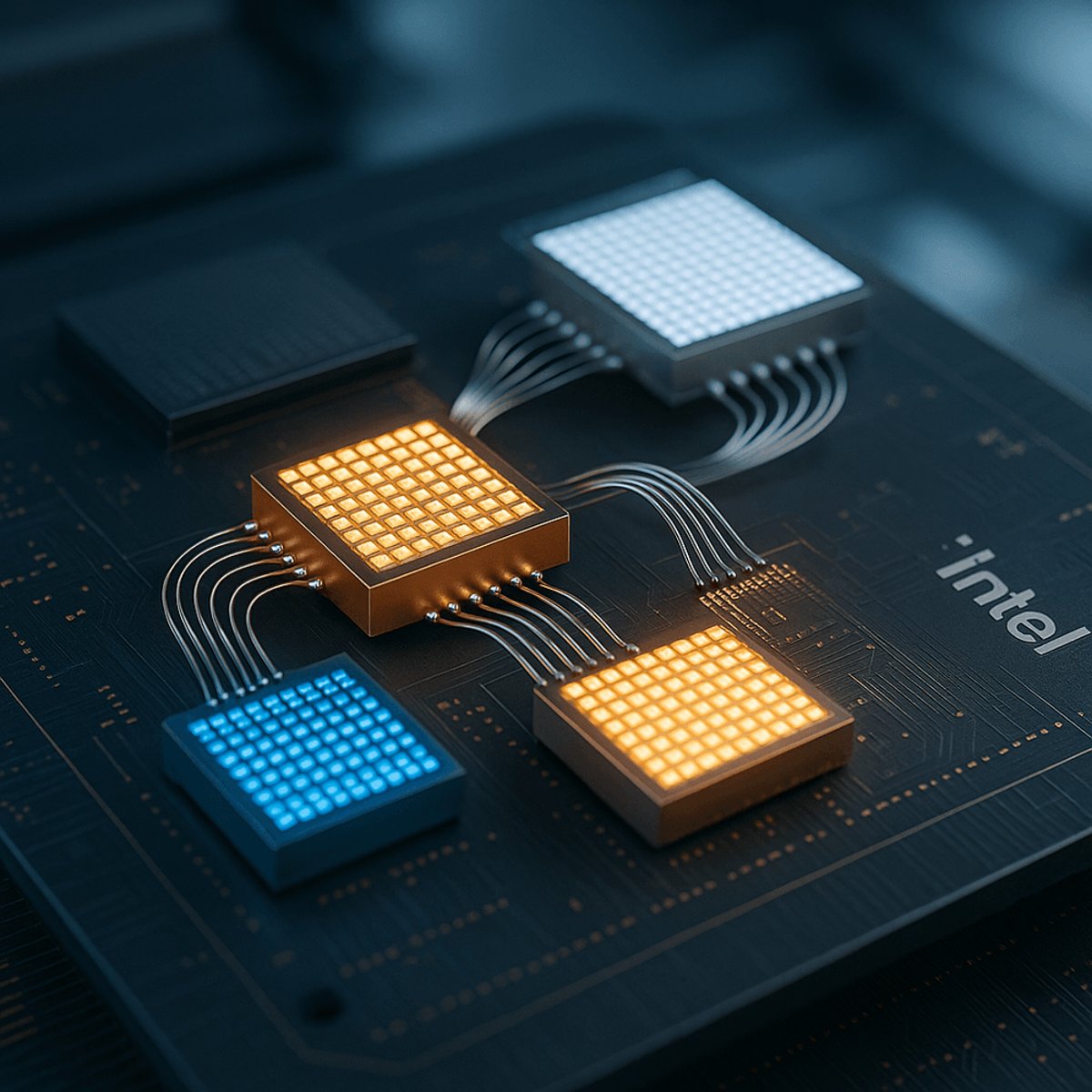
Intel is making a massive bet that the next phase of the AI boom won't be won by the flashiest chips, but by how you put them together. The semiconductor giant is going all-in on advanced chip packaging - the unglamorous but critical process of assembling multiple chiplets into a single powerhouse processor. As AI models balloon in size and demand skyrockets for compute power, Intel sees packaging as the bottleneck that could either strangle or supercharge the industry's growth.
Intel just made chip packaging sexy. Well, as sexy as semiconductor manufacturing gets. The company is pouring billions into what industry insiders call the "forgotten middle" of chipmaking - the intricate art of binding multiple processors, memory chips, and components into a single package that actually works.
It's a nerdy technical pivot, but one with massive implications. As Nvidia and other AI chipmakers race to build ever-more powerful processors for training large language models, they're hitting a wall. Not in chip design, but in how to physically assemble these monsters without them melting down or costing a fortune to manufacture.
That's where Intel comes in. The company has quietly built out some of the most advanced packaging facilities in the world, capable of stacking chiplets with microscopic precision and connecting them with speeds that rival chips etched on a single piece of silicon. According to industry analysts tracking the semiconductor supply chain, Intel's packaging technology is now two to three years ahead of most competitors in certain specialized techniques.
The timing couldn't be better. AI data centers are devouring chips faster than manufacturers can produce them, and the next generation of AI accelerators requires packaging techniques that simply didn't exist at scale three years ago. Companies like OpenAI and Microsoft need processors that can handle trillions of parameters without overheating or breaking the bank on power consumption.
"We're seeing packaging move from a cost center to a strategic differentiator," one semiconductor industry executive told Wired. Intel is betting that even if it can't beat Nvidia in GPU design, it can become the packaging partner that everyone needs.
The technology works by treating chips like Lego blocks. Instead of trying to cram every transistor onto one massive piece of silicon - which gets exponentially harder and more expensive as chips grow - Intel's approach lets designers mix and match specialized chiplets. One handles compute, another memory, a third manages power. Package them right, and you get performance close to a monolithic chip at a fraction of the cost and complexity.
But here's the catch - advanced packaging is brutally difficult to scale. It requires nanometer-level precision across components made by different manufacturers, on different timelines, using different materials. One misalignment and your multi-billion dollar AI chip becomes a very expensive paperweight. Intel has spent years perfecting techniques like EMIB (Embedded Multi-die Interconnect Bridge) and Foveros 3D stacking to solve these problems.
The market Intel is chasing is staggering. Some estimates put the advanced packaging market at over $50 billion by 2028, growing at nearly 25% annually as AI infrastructure buildouts accelerate. Intel isn't just packaging its own chips - it's opening up capacity to rivals, essentially becoming a foundry for the final assembly stage.
This represents a fundamental shift in Intel's identity. The company that once dominated chipmaking through vertical integration is now unbundling its capabilities and selling them piecemeal. It's packaging chips for competitors. It's manufacturing processors designed by others through its foundry services. The old Intel would've never considered it.
But the new reality of semiconductor economics demands it. As Moore's Law slows and the cost of cutting-edge chip fabrication explodes into the hundreds of billions, specialization makes sense. Intel can't outspend Taiwan Semiconductor Manufacturing Company in pure fabrication anymore, but it might be able to own the packaging layer that ties everything together.
The AI connection is what makes this urgent. Training frontier models requires massive parallel processing across thousands of chips working in concert. How those chips communicate - the speed, latency, and power efficiency of their interconnects - increasingly determines model performance. Bad packaging creates bottlenecks that no amount of raw compute can overcome.
Nvidia's latest AI accelerators already use advanced packaging techniques, but they rely on external partners for much of the actual assembly. If Intel can offer better performance, higher yields, or faster turnaround times, it could capture a chunk of that business even while competing against Nvidia in other areas.
There's risk here too. Intel is investing billions in facilities and R&D for a market that's notoriously cyclical. If the AI boom cools or packaging technology hits unexpected roadblocks, those factories could sit idle. The company is also competing against well-established players like TSMC and Samsung, both of which are racing to build out their own advanced packaging capabilities.
What makes Intel's bet particularly interesting is the timing. The company is making this move while simultaneously trying to revive its core chipmaking business, catch up in AI accelerators, and navigate a brutal PC market downturn. It's a lot of balls to juggle, and Wall Street has been skeptical about whether Intel can pull it off.
Intel's chip packaging play is the kind of long-term infrastructure bet that either pays off massively or becomes a cautionary tale about betting on the wrong bottleneck. But as AI models grow and the industry hits the physical limits of what you can etch on a single piece of silicon, packaging stops being a back-office function and becomes the competitive edge. If Intel's right, they won't just survive the AI era - they'll become the invisible glue holding it together. And in semiconductors, sometimes the most boring-sounding technology turns out to be the most valuable.