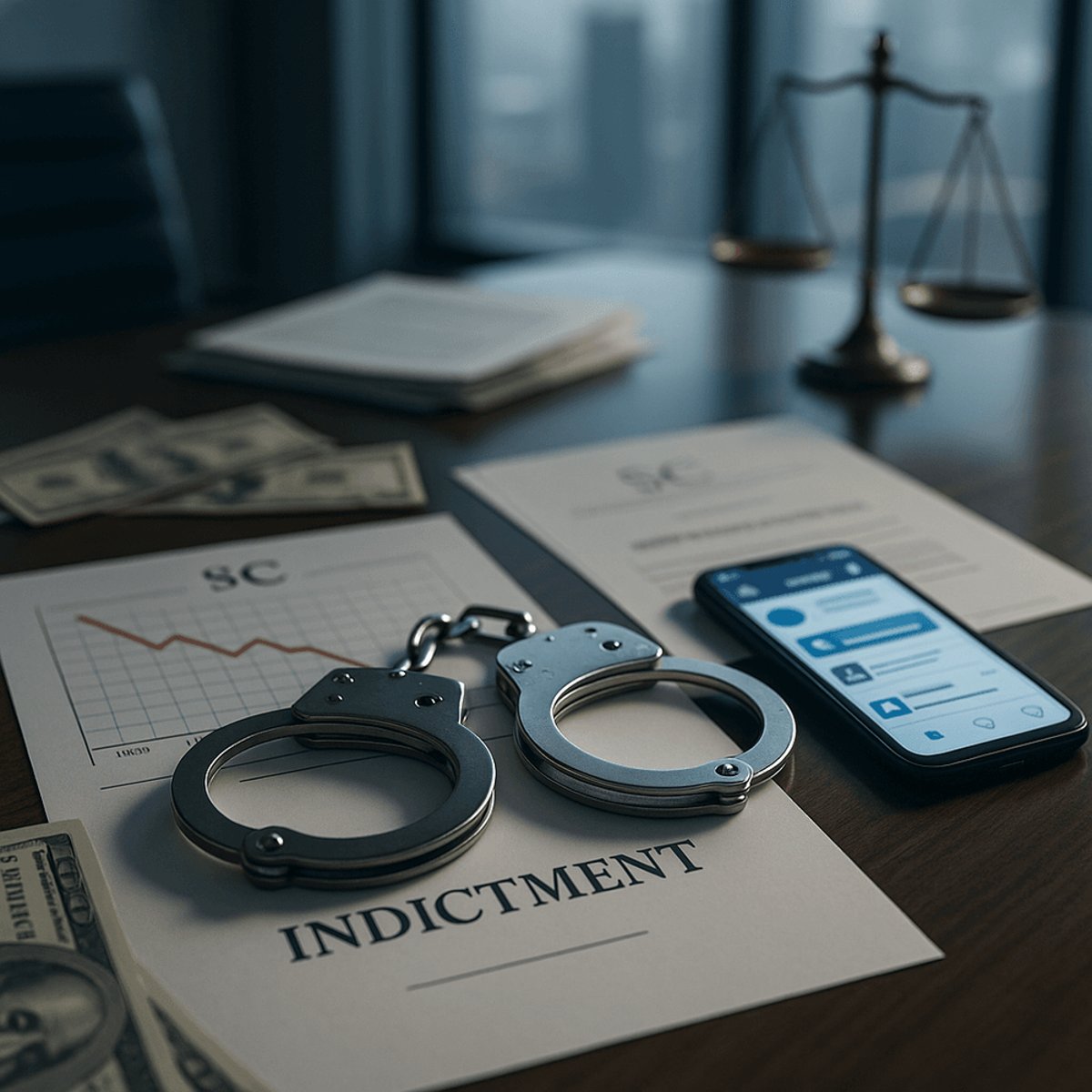
The founder of social media app IRL faces federal charges for allegedly defrauding investors of $170 million during the company's 2021 unicorn funding round. Abraham Shafi, 38, was indicted on wire fraud, securities fraud, and obstruction charges after prosecutors say he concealed millions in user acquisition costs while spending investor funds on personal luxuries including his wedding.
The meteoric rise and spectacular fall of social media startup IRL just took another devastating turn. Abraham Shafi, the 38-year-old founder and CEO of Get Together (IRL's parent company), was indicted Wednesday by a federal grand jury in Oakland on charges of wire fraud, securities fraud, and obstruction of justice for allegedly orchestrating a $170 million investor fraud scheme during the company's 2021 Series C funding round.
The charges stem from what prosecutors describe as a sophisticated deception designed to inflate IRL's user growth metrics while concealing the true cost of customer acquisition. According to the Department of Justice indictment, Shafi allegedly spent millions on incentive advertising to artificially boost app installs leading up to the Series C while simultaneously telling investors that the company spent "very little" on acquiring new users.
The scheme worked – at least temporarily. IRL secured its Series C at a $1 billion valuation, officially joining the unicorn club with backing from heavyweight investors including Peter Thiel's Founders Fund and venture firm Floodgate. The company's pitch was compelling: a platform designed to help users organize real-world events and activities, positioned as an antidote to the digital-only social experiences dominating the market.
But prosecutors allege the financial engineering went far beyond marketing manipulation. The indictment claims Shafi concealed the massive user acquisition expenses by invoicing them to another firm, creating a false picture of the company's unit economics – a critical metric for any social media platform. Even more egregiously, the DOJ alleges that Shafi and his fiancée diverted investor funds for personal use, including "luxury hotel stays, luxury clothing, purchases from home furnishing retailers, thousands of dollars for art classes, and hundreds of thousands of dollars for Shafi's wedding, including payments for wedding guests' airfare and luxury hotels."
The allegations paint a picture of classic Silicon Valley excess funded by investor dollars meant to build a sustainable business. IRL had shown genuine promise in its early days, ranking among Apple's top social apps in 2018. Shafi had positioned the company as a direct competitor to Meta's Facebook and Snap's Snapchat, capitalizing on growing concerns about social media addiction and the need for more meaningful, offline connections.
Shafi's co-founders brought serious Silicon Valley credibility to the venture. Scott Banister, PayPal's first board member and an early Facebook investor, was among the founding team. This pedigree helped attract top-tier investors who were eager to back the next generation of social platforms.
The unraveling began well before Wednesday's criminal charges. IRL shuttered operations in June 2023, less than two years after reaching its billion-dollar valuation. The Securities and Exchange Commission had already filed a civil lawsuit against Shafi last year for the same alleged scheme. "Shafi took advantage of investors' appetite for investments in the pre-IPO technology space and fraudulently raised approximately $170 million by lying about IRL's business practices," Monique Winkler, director of the SEC's San Francisco Regional Office, said at the time.
The criminal charges represent a significant escalation. Shafi now faces up to 20 years in prison on each count if convicted. Notably, only Shafi was named in the DOJ indictment, suggesting prosecutors view him as the primary architect of the alleged fraud scheme.
This case arrives as federal authorities are taking an increasingly aggressive stance toward startup fraud, particularly in the high-stakes pre-IPO market where information asymmetries can enable sophisticated deceptions. The collapse of companies like Theranos and the criminal convictions of founders like Elizabeth Holmes have focused regulatory attention on inflated claims and financial misrepresentations in the startup ecosystem.
The IRL case serves as a stark reminder that the startup world's emphasis on growth-at-all-costs can create perverse incentives for founders under pressure to meet investor expectations. As venture funding becomes more scrutinized and public market conditions remain challenging, expect regulators to continue cracking down on financial misrepresentations that inflate startup valuations. For investors, the case underscores the critical importance of independent due diligence, particularly around unit economics and customer acquisition costs – metrics that proved central to IRL's alleged deception.