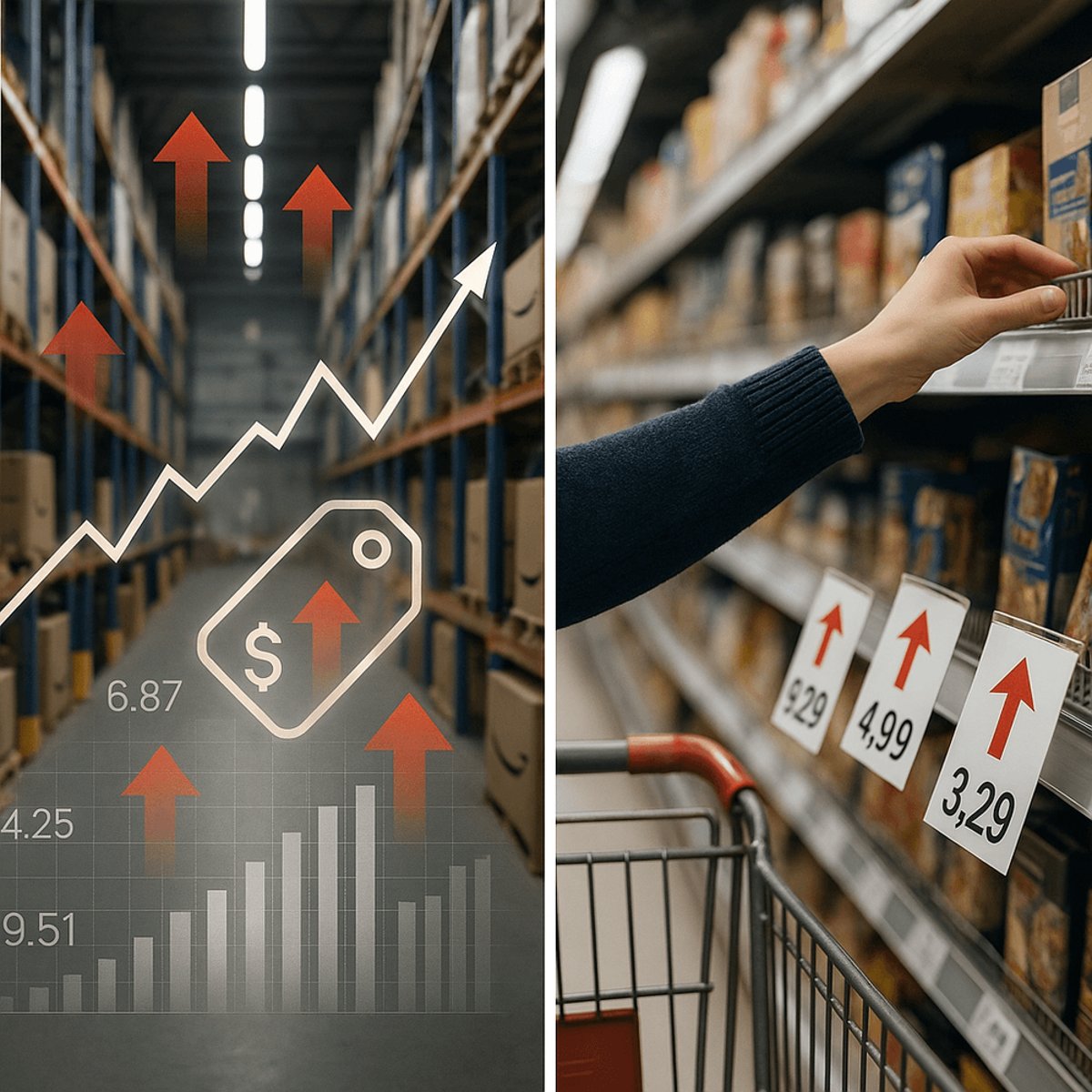
Amazon CEO Andy Jassy just signaled a significant shift in how tariffs are hitting the e-commerce ecosystem. Speaking at the World Economic Forum in Davos on Tuesday, Jassy acknowledged that the pre-purchased inventory Amazon and its third-party sellers stockpiled to absorb tariff shocks has largely dried up, forcing a harder reckoning with pricing. What was once absorbed silently is now creeping visibly into consumer prices.
The tariff reckoning that Amazon has been quietly managing since President Trump's initial tariff wave is now becoming impossible to hide. In a Tuesday interview with CNBC's Becky Quick, CEO Andy Jassy laid out the uncomfortable reality facing e-commerce: the buffer strategy of buying ahead stopped working months ago.
"So you start to see some of the tariffs creep into some of the prices, some of the items, and you see some sellers are deciding that they're passing on those higher costs to consumers in the form of higher prices, some are deciding that they'll absorb it to drive demand and some are doing something in between," Jassy said from Davos. "I think you're starting to see more of that impact."
This is a notably different tune from last summer. Back in June, Jassy had told investors that Amazon hadn't seen "prices appreciably go up" several months after Trump's tariffs were announced. The company and its marketplace sellers had executed a coordinated strategy: front-load inventory purchases before tariffs took full effect, then use that stockpile to keep prices steady while absorbing the margin hit. It was a smart play, and it worked for a while.
But here's where the math breaks down. The inventory cushion that lasted through 2025 is now exhausted. When fresh stock arrives and carries the full tariff cost, sellers face a brutal choice. Jassy explained the constraint with blunt honesty: "At a certain point, because retail is, as you know, a mid-single digit operating margin business, if people's costs go up by 10%, there aren't a lot of places to absorb it. You don't have endless options."
That's the core issue. Retail operates on razor-thin margins, typically 2-4% for many categories. A 10% tariff increase can't be hidden in better logistics or negotiated supplier deals. It has to go somewhere, and increasingly, it's landing on the price tag.
Amazon sellers told CNBC back in April they were already considering or implementing price hikes. A major retail trade association warned last August that the trade war would create a spring inventory crisis, potentially leading to higher prices, thinner shelves, and job losses. These predictions are starting to materialize.
What makes Jassy's comments significant is the admission that Amazon itself is in a bind too. The company tries to position itself as a consumer advocate keeping prices low, but it can't legislate what third-party sellers do. More importantly, even Amazon's own imported goods now carry higher costs. The company is trying to "keep prices as low as possible," Jassy said, but the structural economics are working against that goal.
The consumer behavior shift Jassy described is telling. Amazon is seeing shoppers trade down to lower-priced alternatives and hunt for bargains more aggressively than before. Others are simply delaying purchases of higher-priced discretionary items. Consumers remain "pretty resilient," Jassy noted, but the tariff impact is measurable and changing how people shop.
This creates a particularly awkward moment for e-commerce. The entire value proposition of platforms like Amazon rests partly on low prices and selection. If tariffs force sustained price increases while selection shrinks due to inventory constraints, that core advantage erodes. Third-party sellers face margin compression, Amazon faces pressure to subsidize competitive pricing, and consumers face higher bills. There's no clean exit from this squeeze, only different degrees of pain distribution.
Jassy's Davos admission signals that the tariff absorption game is over for e-commerce. What began as a manageable margin squeeze that savvy players could absorb through inventory timing is morphing into something structural: sustained higher costs that either get passed to consumers or carved from seller margins. For Amazon, this creates a delicate balance between defending its pricing advantage and accepting that some cost increases are simply unavoidable. For consumers, it means the era of tariff-cushioned prices is ending. Watch whether Amazon starts using its own logistics or vendor relationships to offset seller price hikes, or whether the company effectively acknowledges higher prices as the new normal.