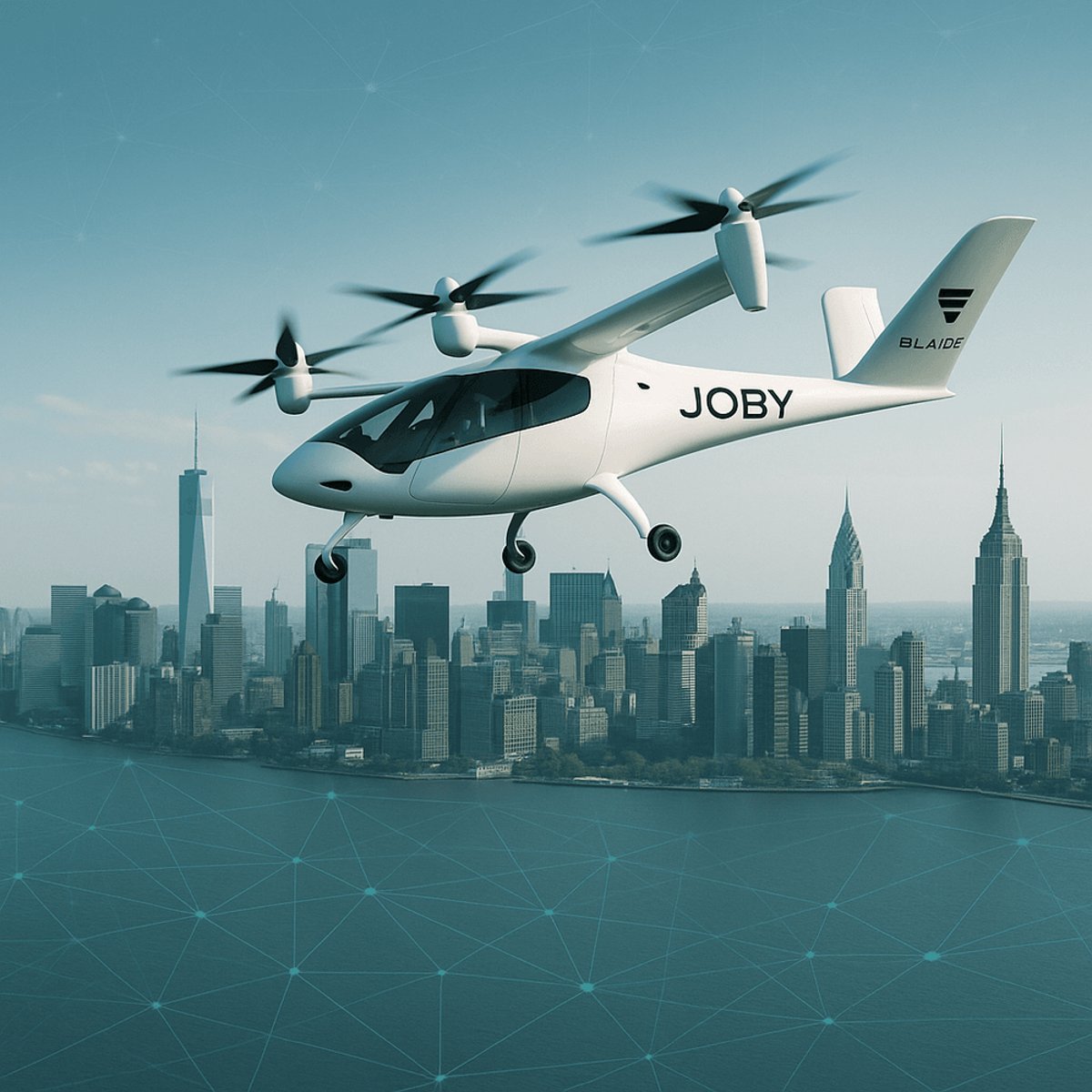
- - Joby Aviation buys Blade's ride-share business for $125 million
- - Blade's existing network provides Joby with strategic infrastructure
- - This sets the stage for Joby's entry into the air mobility market
- - Long-term growth hinges on integration of air taxi technology
In a pivotal move, Joby Aviation is set to acquire Blade Air Mobility’s ride-share operations for up to $125 million. This acquisition aims to propel Joby into the air mobility sector with an established network across key geographic markets. Understanding the implications of this deal is crucial for stakeholders eyeing growth opportunities in urban air transport.
Opening Analysis
Joby Aviation has announced its acquisition of Blade Air Mobility's ride-share operations for as much as $125 million. The purchase includes Blade's established brand, operational foothold in the U.S. and Europe, and an extensive digital network that connects passengers to helicopter rides. Although Blade does not own any helicopters, its asset-light model and terminal access in strategic locations such as New York City offer immediate value to Joby's expansion plans.
Market Dynamics
The acquisition marks a significant shift in the air mobility market, as Joby aims to transition Blade’s existing helicopter services to electric vertical takeoff and landing (eVTOL) operations. Blade's network already flies over 50,000 passengers annually, providing Joby with a substantial customer base and urban transport terminals in high-traffic regions like JFK and Newark airports. By absorbing Blade’s logistics and passenger base, Joby strengthens its competitive posture in the burgeoning urban air transport sector.
Technical Innovation
Exploiting Blade’s software and established user base, Joby intends to replace traditional helicopters with electric air taxis. This transition will reduce operating costs and allow for more sustainable travel options. Joby's eVTOL design, which has been in development for over a decade, positions the company as a frontrunner in the air mobility race. The integration of such technology is vital for Joby to achieve operational efficiency and meet future urban transport demands.
Financial Analysis
This acquisition is pivotal financially as well. Joby's strategy to hold back $35 million of the $125 million purchase price, contingent on performance milestones, highlights a calculated risk approach. This ensures Blade meets certain operational benchmarks, securing returns on Joby's investment. Joby's public listing via a SPAC merger in 2021 has positioned the company well to execute such scale investments, backed by substantial capital inflow and strategic investor confidence.
Strategic Outlook
Within the next 3-6 months, Joby is expected to integrate Blade’s booking systems with its eVTOL operations ahead of scheduled launches in cities like Dubai. Over the next 1-2 years, Joby aims to expand its reach globally, leveraging Blade's terminals to launch its electric air taxis. This acquisition positions Joby to disrupt the conventional commuter travel landscape, offering a viable, eco-friendly alternative to traditional methods.
Key Takeaways
- Joby’s acquisition provides immediate infrastructural benefits and market reach.
- Strategic implications suggest a solid foothold in urban air mobility for Joby.
- Future opportunities lie in scaling eVTOL tech and enhancing consumer accessibility.
Key Takeaways:
- Immediate Infrastructure Gains: Access to a vast network and customer base.
- Strategic Implication: Joby solidifies its position in urban air mobility.
- Future Opportunity: Replace helicopters with eVTOL, enhancing sustainability and efficiency.