Logitech just ended a 13-year drought in solar-powered keyboards with the $99.99 Signature Slim Solar Plus K980, which runs purely on light and introduces the company's first dedicated AI Launch key. The keyboard can operate for months in complete darkness once charged and promises a 10-year battery life, signaling a surprising return to sustainable computing accessories.
Logitech just pulled off something nobody saw coming - bringing solar keyboards back from the dead. The company's new Signature Slim Solar Plus K980 marks the first solar-powered keyboard launch since the K760 disappeared over a decade ago, and it's arriving with some interesting twists.
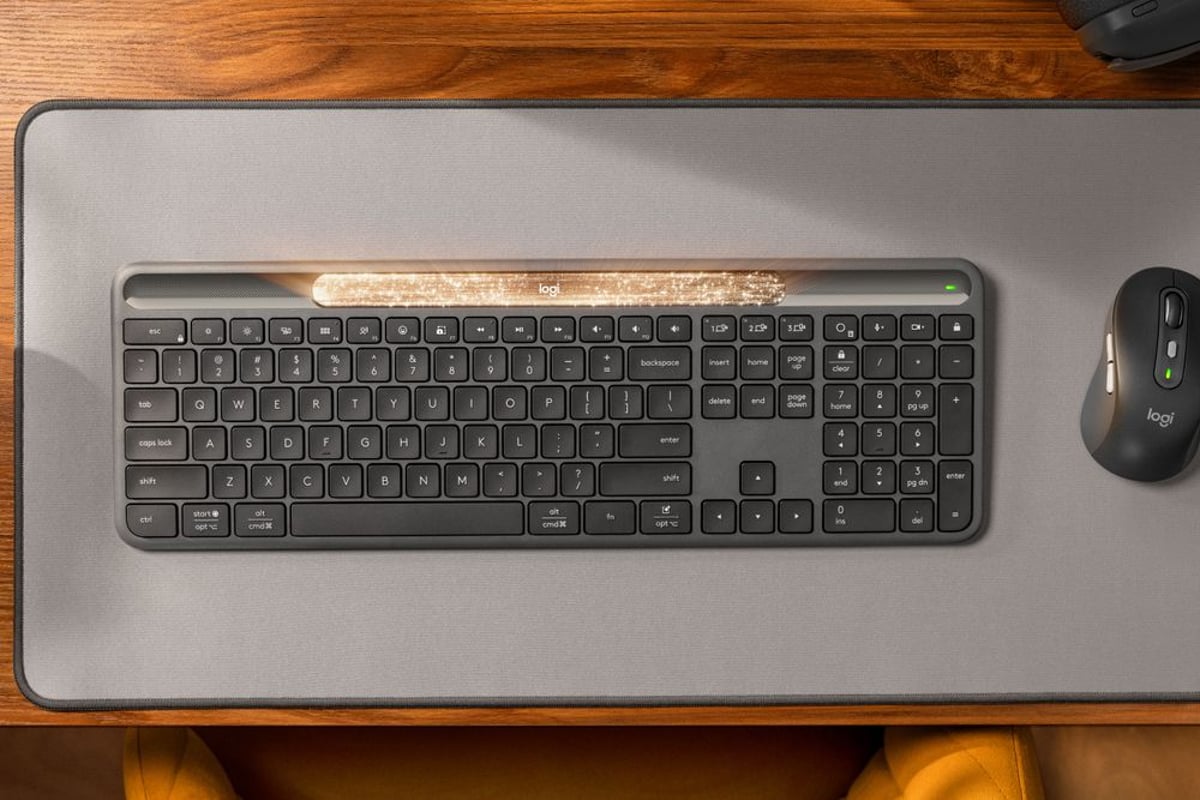
The $99.99 keyboard operates entirely on light power, requiring just 200 lux to keep its battery topped up. There's no USB port, no battery compartment - just a solar cell that converts any light source into power. Logitech claims the internal battery will last 10 years and can keep the keyboard running for four months in complete darkness once fully charged.
"It is safely user-replaceable because it's encased in a plastic casing, with spare parts supplied by iFixIt," spokesperson Melvin Dilanchian told The Verge when asked about battery replacement. That's a refreshing approach to repairability that wasn't common in the original K760 era.
But here's where things get interesting - Logitech didn't just resurrect an old concept. The K980 introduces the company's first dedicated AI Launch key, defaulting to Microsoft Copilot on Windows and Google Gemini on ChromeOS. Users can customize it through the Logi Options Plus app to launch ChatGPT, an AI prompt builder, or even assign it to mundane functions like right CTRL.
The timing isn't coincidental. Solar-powered peripherals are making a comeback as companies scramble to hit sustainability targets. Lenovo beat Logitech to market earlier this year with its own $99.99 self-charging wireless keyboard, shown at CES 2025. Unlike the K980, Lenovo's model includes adjustable legs, spill resistance, and crucially, a USB-C backup charging port.
That backup port matters more than you'd think. The original K750 from 2010 featured LED indicators that warned users when ambient light was insufficient for charging, but the K980 ditches this user-friendly feature. Instead, you'll need to install Logitech's Options Plus app to monitor light levels - a classic example of hardware features moving to software.
The K980 comes in two variants: a universal graphite model with both Windows and macOS key labels, and a Mac-specific off-white version for North American users that drops Windows labeling. Both support pairing with up to three Bluetooth devices and work with Logitech's Bolt USB transmitter, though you'll need to buy that separately.
Beyond the AI key, the keyboard packs standard features like customizable function keys, media controls, mic mute, and camera toggle buttons. The programmable Action key (marked with a large O) can execute Smart Actions macros or trigger custom shortcuts through the companion app. It's a full-size layout with numpad, so nobody's making compromises on functionality.
What's fascinating is how this represents a broader shift in peripheral design. After years of chasing RGB lighting and gaming aesthetics, companies are rediscovering practical sustainability features. The K980's 10-year lifespan projection puts it in stark contrast to devices designed for planned obsolescence.
The competitive landscape is heating up too. While Lenovo's offering seems more practical with its backup charging and adjustable design, Logitech's AI integration suggests different priorities. The K980 isn't just about going green - it's about positioning solar keyboards as productivity tools for the AI era.
For users, the choice comes down to philosophy. The K980 commits fully to light-only operation, betting that modern office lighting is sufficient. Lenovo's approach hedges with that USB-C port, acknowledging that pure solar operation might not work for everyone.
The K980 represents more than just a product refresh - it signals a strategic shift toward sustainable computing that doesn't sacrifice modern features. While questions remain about real-world light dependency versus competitors with backup charging, Logitech's bet on pure solar operation paired with AI integration could define the next generation of eco-friendly peripherals. For users tired of cable clutter and battery anxiety, the K980 offers a compelling glimpse of maintenance-free computing.