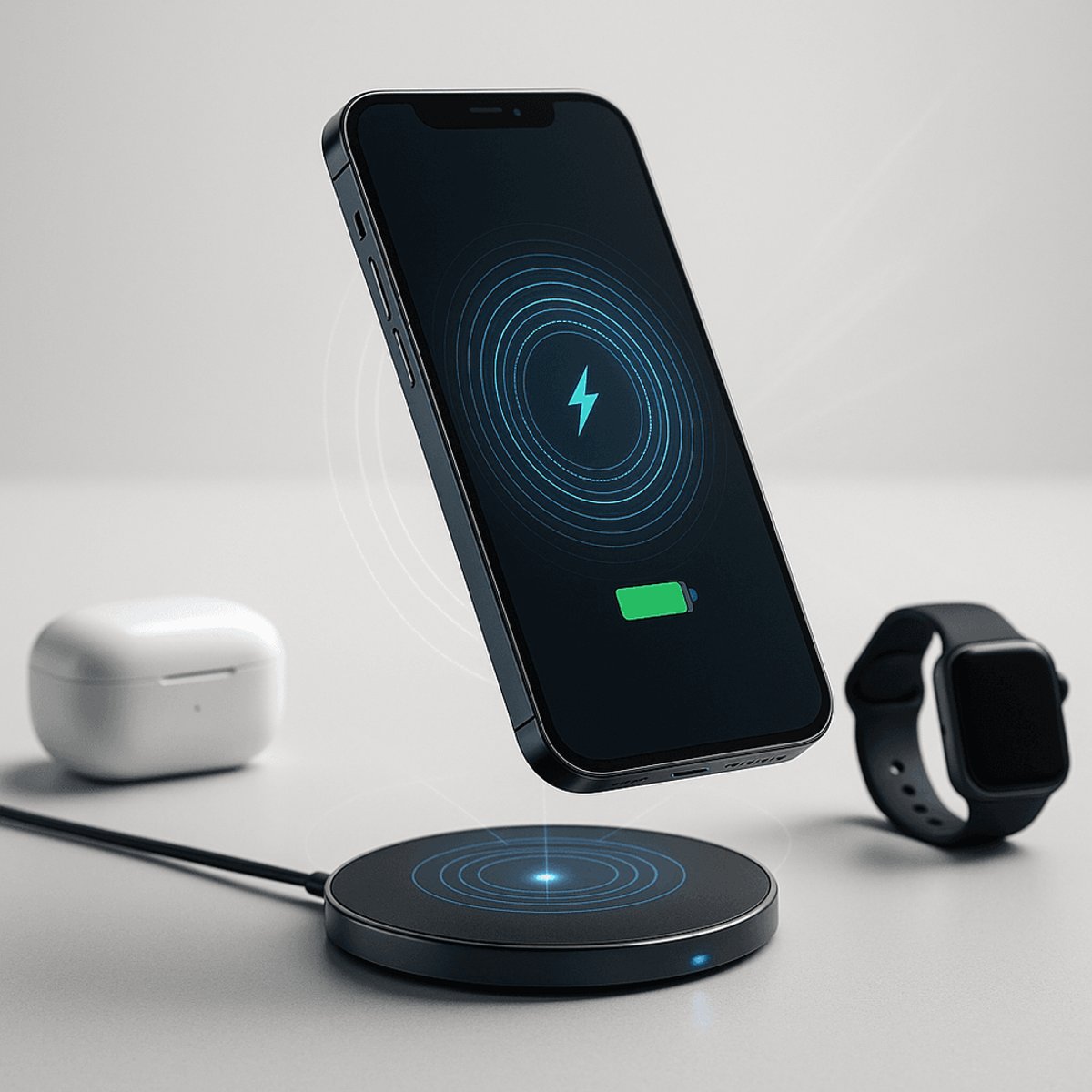
Apple's MagSafe ecosystem just got a major boost from an unexpected ally - Android. WIRED's comprehensive 2025 roundup of 17 wireless chargers reveals how the new Qi2 standard is bringing magnetic alignment to non-iPhone users, creating the first truly cross-platform wireless charging experience since MagSafe debuted in 2020.
Four years after Apple introduced MagSafe, wireless charging is finally breaking free from the iPhone ecosystem. The latest evidence comes from WIRED's exhaustive testing of 17 MagSafe and Qi2 wireless chargers, signaling a market that's matured beyond Apple's walled garden.
The real story isn't the chargers themselves - it's what they represent. The Qi2 wireless charging standard, which launched in 2023, essentially reverse-engineered Apple's magnetic alignment system and made it available to Android manufacturers. Now devices from multiple brands can snap perfectly onto the same charging pads that previously worked only with iPhones.
"Our top pick until Apple's redesign, this Qi2 charger brings MagSafe-style magnetic charging," WIRED's Simon Hill wrote about Anker's $19 MagGo pad, highlighting how the technology has become democratized across price points.
The testing reveals something interesting about market maturation. Despite wireless charging becoming more mainstream, premium pricing persists. Mous charges $100 for its dual charging station, while Urban Armor Gear asks $60 for a single pad that "maxes out at 15 watts" but lacks Qi2 certification. Even Casetify's decorative chargers with "more than 600 designs" command $38-78.
This pricing suggests the market hasn't reached true commodity status yet. Companies are still banking on design differentiation and brand recognition rather than competing purely on specs and cost. The Belkin BoostCharge Pro at $60 and Mophie's travel charger at $75 both target specific use cases - convertible designs and portability respectively.
But the real shift is in charging speeds and compatibility. The 15-watt charging rate that was once exclusive to Apple's ecosystem now appears standard across Qi2 devices. Hill notes that even budget options like the $19 Anker pad deliver the full 15 watts, while some premium models like Casetify's iPhone-specific chargers actually throttle down to 7.5 watts.
The multi-device charging trend also signals market evolution beyond basic phone charging. Nearly every premium option tested includes spots for AirPods or Apple Watch, with some like the Mous station offering dedicated pogo pin connections for watch charging in Nightstand mode.
What's notable is how travel charging has become a specific category. Mophie's foldable 3-in-1 design targets users who want desktop functionality in a portable package, complete with fabric case and charging adapter. This suggests wireless charging has moved beyond the "set it and forget it" nightstand use case.
The testing methodology itself reveals how standardized the category has become. Hill evaluates charging speeds, heat management, cable quality, and power adapter inclusion across dozens of options - the kind of systematic comparison that only happens when a technology reaches maturity.
For manufacturers, the Qi2 standard represents both opportunity and threat. Android makers can finally offer premium wireless charging experiences that match the iPhone, but they're also competing in Apple's established ecosystem. The magnetic alignment that made MagSafe special is now table stakes.
The accessory market tells a similar story. Companies like Casetify are betting that design differentiation - "cat art to sports teams" - can justify premium pricing even as the underlying technology commoditizes. But with basic Qi2 chargers available for under $20, that strategy faces increasing pressure.
The wireless charging market is reaching an inflection point where Apple's MagSafe innovation has become industry standard through Qi2. While premium pricing persists, the technology gap has essentially disappeared - Android users can now access the same magnetic charging experience iPhone users have enjoyed since 2020. The question isn't whether wireless charging will continue growing, but whether accessory makers can maintain differentiation as the underlying technology becomes commoditized. With 15-watt charging now standard and cross-platform compatibility achieved, the next battleground will likely be charging speed, multi-device integration, and design aesthetics rather than basic functionality.