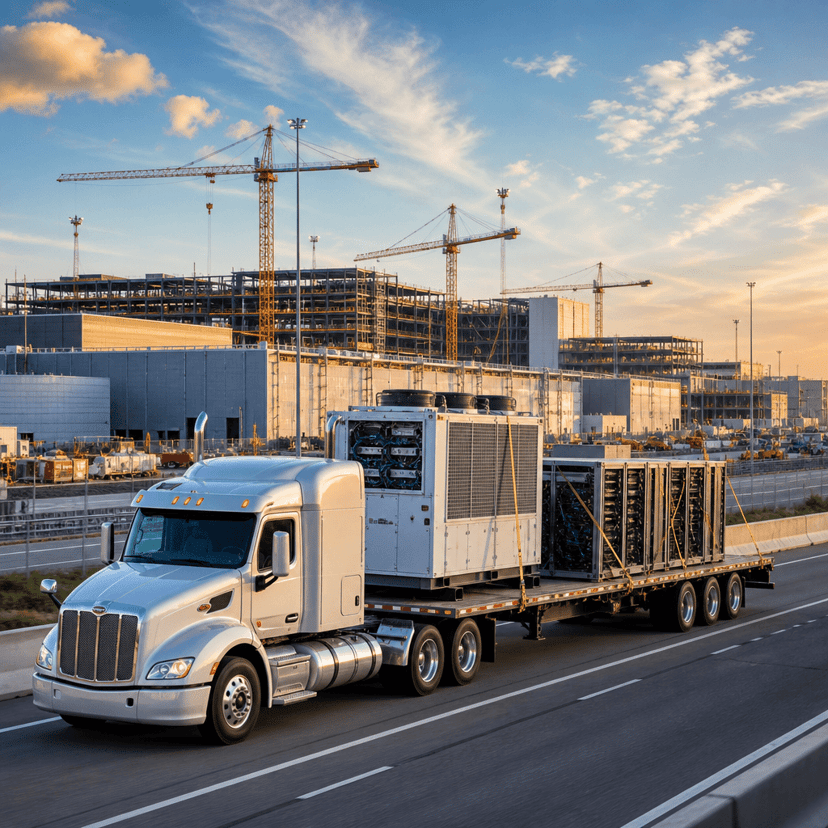
Meta just pulled the trigger on its most aggressive AI infrastructure bet yet. The company broke ground on a $1 billion data center in Tulsa, Oklahoma—its 28th US facility and 32nd globally—designed specifically to power its AI ambitions. The move signals Meta's escalating race to build the compute backbone needed for next-generation AI models, while competitors like Microsoft and Google scramble to secure their own infrastructure.
Meta is planting its flag in America's heartland with a billion-dollar bet on AI infrastructure. The company announced it's breaking ground on an AI-optimized data center in Tulsa, Oklahoma—a strategic expansion that underscores how the AI arms race is reshaping the geography of American tech.
The facility represents Meta's 28th data center in the United States and its 32nd globally, but this one's different. According to the company's announcement, the Tulsa site is being purpose-built to handle AI workloads, designed to power everything from Meta's AI glasses technology to its recently unveiled Muse Spark superintelligence labs. That's a big deal when you consider that training large language models can require thousands of high-performance GPUs running 24/7.
The $1 billion investment isn't just about silicon and servers. Meta's committing $25 million to local infrastructure upgrades—roads, water systems, the works. At peak construction, over 1,000 workers will be onsite, with 100 permanent operational jobs once the facility goes live. For Tulsa, this is economic development on steroids.
But Meta's learned from past data center controversies. The company's going all-in on water stewardship with a closed-loop, liquid-cooled system that recirculates the same water and will operate with zero water consumption for most of the year. That's critical in a region where water rights can spark heated debates. Meta's also partnering with the Tulsa Community Foundation to establish a fund helping residents struggling with water bills—a pre-emptive strike against the "Big Tech drains our resources" narrative.
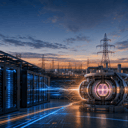
The energy play is equally calculated. Meta's matching the data center's electricity use with 100% clean energy and adding 1,500 megawatts of clean power to Oklahoma's grid. That's enough to power roughly 500,000 homes. The company's paying full freight for grid infrastructure upgrades—substations, transmission lines, the expensive stuff—so local ratepayers don't get stuck with the bill. Meta's also kicking in annual contributions to Public Service Company of Oklahoma's Light a Life Program, which helps customers pay energy bills.
The workforce development angle is where things get interesting. Meta's partnering with Tulsa Tech and Tulsa Community College to create a cross-institutional program focused on digital infrastructure careers. The goal? A pipeline of 200+ graduates annually trained in cooling simulation, fiber optics, structured cabling, AI, and data analytics. That's Meta essentially building its own talent ecosystem from scratch.
Then there's the community investment piece. Meta's providing grants to Eastside Rise to expand neighborhood enhancement programs across East Tulsa—community gardens, public art, home repairs. It's the kind of ground-level engagement that tech companies have historically fumbled.
The water restoration project with Phytech is particularly clever. Meta's deploying plant-sensor technology across 1,500 acres of commodity crops—corn, soybeans, winter wheat—to save over 50 million gallons of water annually. The ten-year commitment helps Meta hit its 2030 goal of being water positive, meaning it'll restore more water to local watersheds than it consumes.
This expansion comes as Meta races against Microsoft, Google, and Amazon to build the infrastructure needed for AI dominance. Microsoft's been cutting nuclear power deals, Google's investing billions in custom AI chips, and Amazon Web Services continues expanding its data center footprint globally. The subtext? Whoever controls the compute infrastructure controls the AI future.
Meta's Tulsa bet also reflects a broader shift in data center geography. Tech giants are increasingly looking beyond traditional hubs like Northern Virginia and Silicon Valley, seeking locations with cheaper land, abundant power, and favorable tax treatment. Oklahoma fits that profile perfectly—plus it offers geographic diversity for disaster recovery and latency optimization.
The timing matters too. Meta CEO Mark Zuckerberg has been vocal about the company's AI ambitions, positioning Meta as a leader in open-source AI models and consumer AI products. But that strategy requires massive computational resources. This isn't just infrastructure—it's the physical manifestation of Meta's AI strategy.
The facility will support Meta's growing portfolio of AI products, from the Ray-Ban Meta smart glasses with AI capabilities to the company's Llama large language models. As AI workloads become more computationally intensive, having dedicated, optimized facilities becomes a competitive advantage.
Meta's Tulsa data center represents more than a billion-dollar infrastructure investment—it's a template for how tech giants are trying to build AI empires while keeping local communities on their side. The playbook combines aggressive compute buildout with water stewardship, clean energy commitments, workforce development, and community grants. Whether this approach actually delivers sustainable benefits to Tulsa remains to be seen, but one thing's clear: the AI infrastructure race is accelerating, and companies willing to write nine-figure checks for purpose-built facilities are positioning themselves to dominate the next decade of computing. For Meta, this is about securing the physical foundation needed to compete with Microsoft, Google, and Amazon in the AI era—and Oklahoma just became a strategic battleground in that war.