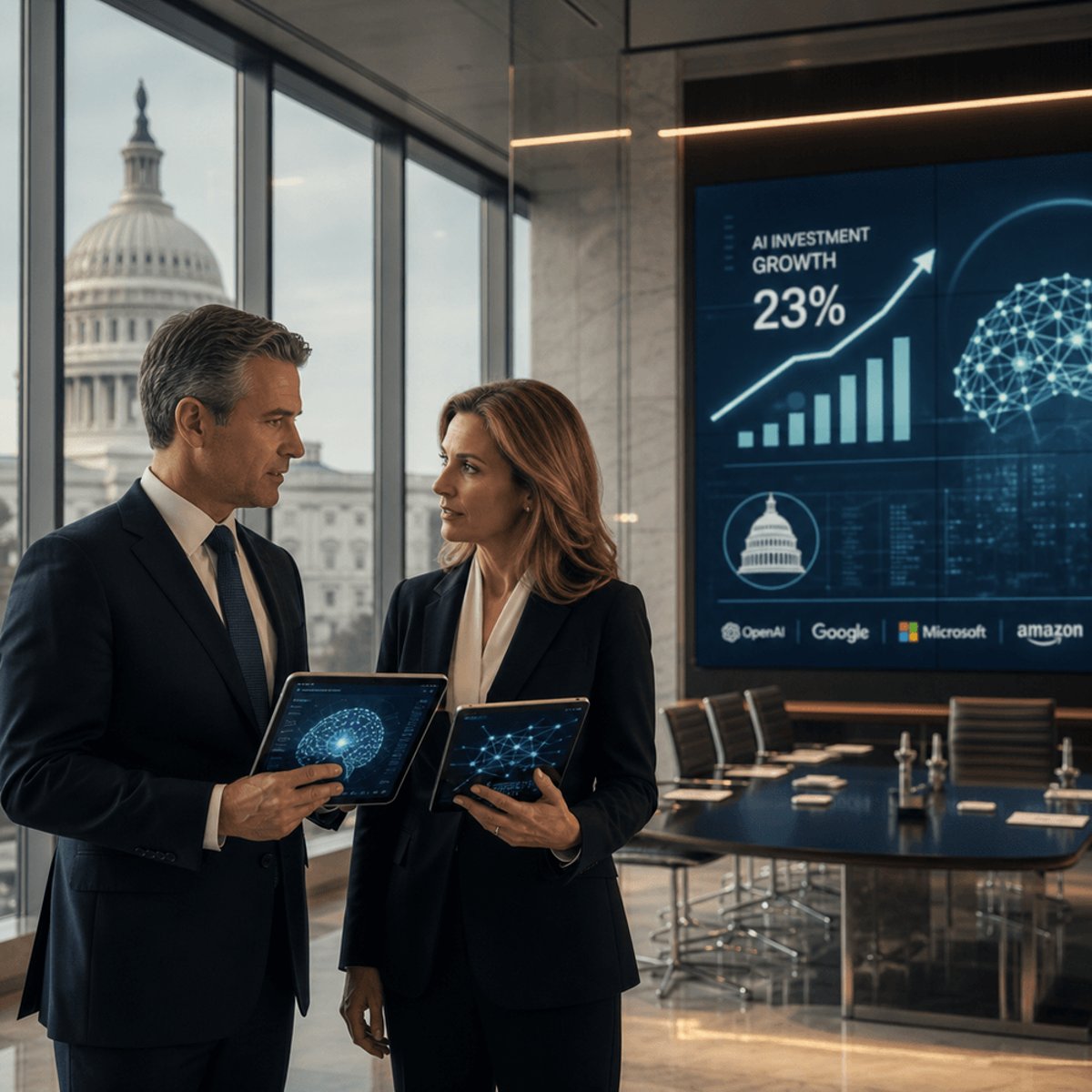
The AI industry's power players are flooding Washington with cash. OpenAI and Anthropic spent a combined $3.17 million on lobbying during Q2 2026, marking a 23% jump from the previous quarter, according to federal disclosure filings. The surge comes as legacy tech giants and defense contractors actually pull back their spending, signaling a major shift in who's shaping AI policy as Congress weighs sweeping regulation.
OpenAI and Anthropic are betting big on Washington influence just as the regulatory hammer threatens to drop. The two AI frontrunners poured $3.17 million into lobbying efforts during Q2 2026, a 23% increase from the first quarter's spending, according to federal lobbying disclosures reported by CNBC.
The acceleration tells a story about where power is shifting in tech. While AI-native companies ramp up their DC presence, traditional tech giants and defense contractors are actually scaling back lobbying expenditures. It's a role reversal that would've seemed unlikely just two years ago, when OpenAI was still primarily known as a research lab and Anthropic was the scrappy newcomer.
The timing isn't coincidental. Congress is actively debating multiple AI-related bills that could fundamentally reshape how these companies operate. Proposed legislation ranges from mandatory safety testing requirements to new copyright frameworks that could upend how AI models are trained on existing content. For OpenAI, which faces ongoing legal challenges over training data, and Anthropic, which has positioned itself as the safety-focused alternative, the stakes couldn't be higher.
What makes this spending particularly notable is the contrast with established players. Legacy tech companies that once dominated K Street spending are pulling back, possibly viewing AI regulation as less existential to their diversified business models. But for pure-play AI companies, every regulatory decision could make or break their competitive position. A single clause about model transparency or data usage could cost billions in compliance or create insurmountable barriers to entry for new competitors.
OpenAI's lobbying push comes as the company navigates multiple fronts. Beyond regulatory concerns, it's locked in an arms race with Google, Microsoft, and Anthropic itself over model capabilities and enterprise partnerships. The company's relationship with Microsoft, which has invested over $13 billion and holds a significant stake, adds another layer of complexity to its policy positions.
Meanwhile, Anthropic has carved out a distinct identity as the AI company that takes safety seriously - a positioning that could pay dividends if Congress mandates stricter oversight. The company's constitutional AI approach and emphasis on interpretability align closely with what many lawmakers say they want to see from the industry. Its lobbying dollars are likely focused on shaping regulations that reward these priorities.
The 23% quarter-over-quarter increase suggests these companies expect the policy environment to heat up further. Federal agencies including the FTC and Department of Justice are already probing AI deals and partnerships. The White House has issued executive orders on AI safety. And international bodies from the EU to the UN are crafting their own frameworks, creating a complex global regulatory landscape these companies must navigate.
For context, $3.17 million split between two companies might sound modest compared to the hundreds of millions Big Tech historically spent on lobbying. But it represents a dramatic escalation for AI startups that barely registered on lobbying disclosure forms three years ago. The money funds armies of former Hill staffers, policy experts, and communications professionals working to ensure AI regulation doesn't strangle innovation - or at least doesn't strangle their particular approach to innovation.
What's emerging is a more sophisticated influence operation than the industry's early "move fast and break things" days. Both OpenAI and Anthropic have hired seasoned policy veterans who understand how to work the levers of power. They're funding think tank research, hosting Congressional briefings, and building coalitions with industry groups. It's lobbying, but with a 2026 polish that emphasizes partnerships and responsibility.
The decline in legacy tech and defense spending adds another dimension. Are established companies confident existing regulations will suffice, or have they simply accepted that AI-specific rules are coming regardless? The answer matters because it could signal whether we're headed for collaborative industry-government standard-setting or contentious battles over mandates and restrictions.
The lobbying surge from OpenAI and Anthropic marks a turning point in AI's political maturation. These aren't scrappy startups asking for permission anymore - they're well-funded powerhouses shaping the rules of the game. As Congress inches toward comprehensive AI legislation, the companies spending the most on influence today will likely live with those consequences for years. The 23% quarterly increase suggests both firms believe the next few months will determine whether AI regulation enables their business models or constrains them. With billions in valuation and the future of computing at stake, $3.17 million might turn out to be the bargain of the decade.