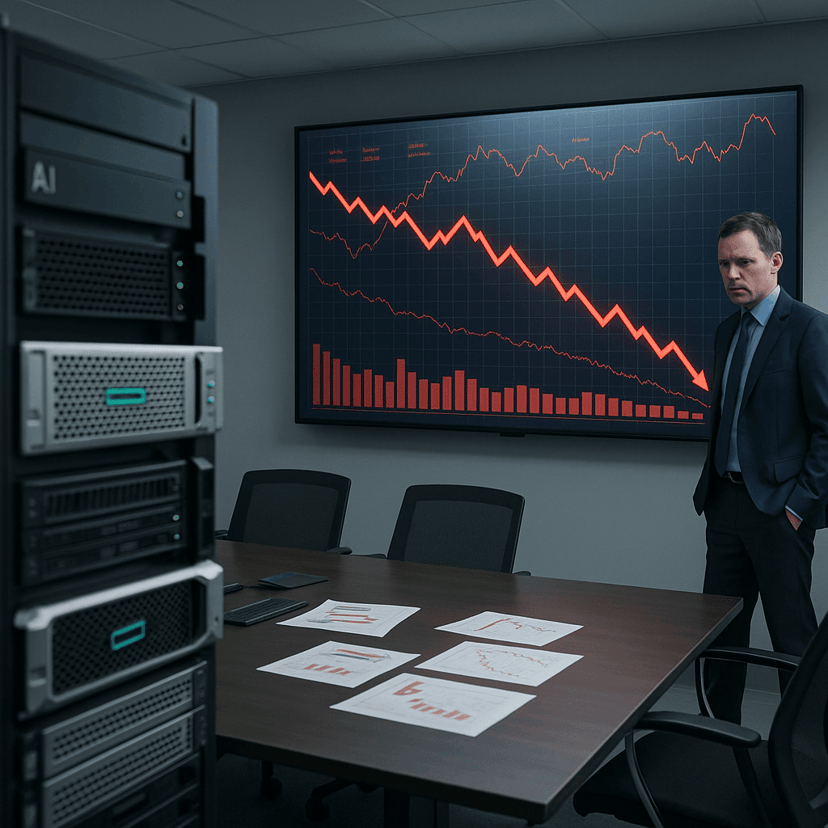
Meta drops its third-quarter earnings tonight, and Wall Street's laser-focused on one question: how much more is Mark Zuckerberg willing to spend on AI? With analysts expecting $49.4 billion in revenue and mounting pressure from OpenAI's Sora rollout, tonight's call could signal whether Meta's doubling down or pulling back on its AI ambitions.
The quarterly earnings ritual takes on fresh urgency tonight as Meta faces its biggest strategic inflection point since the metaverse pivot. Investors aren't just looking at the numbers - they're hunting for clues about whether Zuckerberg's AI spending spree has an end date.
The stakes couldn't be higher. When Meta last reported in July, executives warned that AI investments would push 2026 expense growth above this year's already aggressive pace. The company's 2025 spending forecast sits at $114-118 billion, and tonight's guidance could push that even higher.
But here's the twist: Meta's AI gamble is already showing cracks. The company just axed 600 workers from its Superintelligence Labs unit last week, though it carefully preserved the elite TBD Labs team. It's the kind of surgical cut that suggests pressure - not panic, but definitely pressure.
Meanwhile, the competitive landscape shifted dramatically since July. Meta's Vibes video creation tool launched September 25th to solid traction, driving Meta AI app downloads up 56% month-over-month to 3.9 million. But OpenAI's Sora just crushed those numbers on iOS, racking up 2.6 million downloads compared to Meta AI's 1.1 million during the same period.
"We're seeing a real arms race in AI-generated content tools," according to Appfigures data provided to CNBC. The mobile research firm's numbers show Meta is winning on total downloads but losing the premium iOS market to OpenAI.
The organizational reshuffling tells its own story. Vishal Shah, who led metaverse initiatives, just moved to the AI unit this Monday. It's not quite abandoning the metaverse dream, but it's definitely rebalancing priorities. Reality Labs - the VR/AR division - is expected to report another brutal quarter: $5.1 billion in losses against just $316 million in revenue.
Investors will be parsing every word for hints about the $27 billion data center deal with Blue Owl Capital announced last week. The Louisiana facility represents the kind of massive infrastructure bet that either pays off spectacularly or becomes a very expensive mistake. Meta's timing suggests confidence, but the scale suggests desperation to keep pace with Microsoft and Google's cloud computing advantages.
The advertising business remains Meta's cash cow, with analysts expecting $48.5 billion in ad revenue for Q3. That's the engine funding all these AI experiments, but it's also the business most vulnerable to economic headwinds. User growth projections call for 3.5 billion daily active people, a number that's becoming harder to move as global penetration peaks.
What makes tonight different is the junction Meta finds itself at. The company spent this year rebuilding its AI organization after the lukewarm Llama 4 reception in April. The overhaul worked - technically. But commercially, OpenAI just reminded everyone who's setting the pace in consumer AI applications.
The real question isn't whether Meta will increase AI spending - it's whether investors will keep funding a strategy that's burning cash faster than it's generating returns. Tonight's earnings call could mark the moment Wall Street finally asks Zuckerberg to show his cards.
Tonight's earnings represent more than quarterly results - they're a referendum on Meta's AI strategy at a crucial inflection point. With OpenAI gaining ground in consumer applications and Reality Labs bleeding billions, investors need to see that Meta's massive spending is translating into competitive advantages, not just bigger bills. The market's patience with Zuckerberg's long-term bets isn't infinite, and tonight's guidance could determine whether Wall Street keeps funding the dream or starts demanding returns.