Meta just locked down $27 billion in funding for what could become one of the largest AI data center campuses in the United States. The social media giant's partnership with Blue Owl Capital for the Hyperion facility in Louisiana signals how desperate Big Tech has become to secure the infrastructure needed for their AI ambitions - and how willing they are to give up control to get it.
Meta is betting big on AI infrastructure, and it's willing to give up majority control to make it happen. The company announced a groundbreaking $27 billion joint venture with Blue Owl Capital to develop the massive Hyperion data center campus in Richland Parish, Louisiana - one of the largest AI infrastructure deals in tech history.
The partnership flips the usual playbook. Instead of going it alone, Meta is handing Blue Owl Capital an 80% ownership stake while keeping just 20% for itself. In return, Meta gets something more valuable right now: cold hard cash and built-in financing flexibility. Blue Owl pumped in $7 billion upfront, immediately cutting Meta a $3 billion check that helps fund the company's broader AI expansion.
"Our AI ambitions will be realized through our ability to deliver the infrastructure to support it," Meta CFO Susan Li said in the announcement. "Our partnership with Blue Owl Capital to develop the Hyperion Data Center is a bold step forward."
The deal structure reveals just how capital-intensive the AI race has become. Meta has been burning through billions on data centers, chips, and computing power to compete with OpenAI, Google, and others in the generative AI space. By bringing in Blue Owl - a firm with deep pockets and infrastructure expertise - Meta can accelerate construction without stretching its balance sheet further.
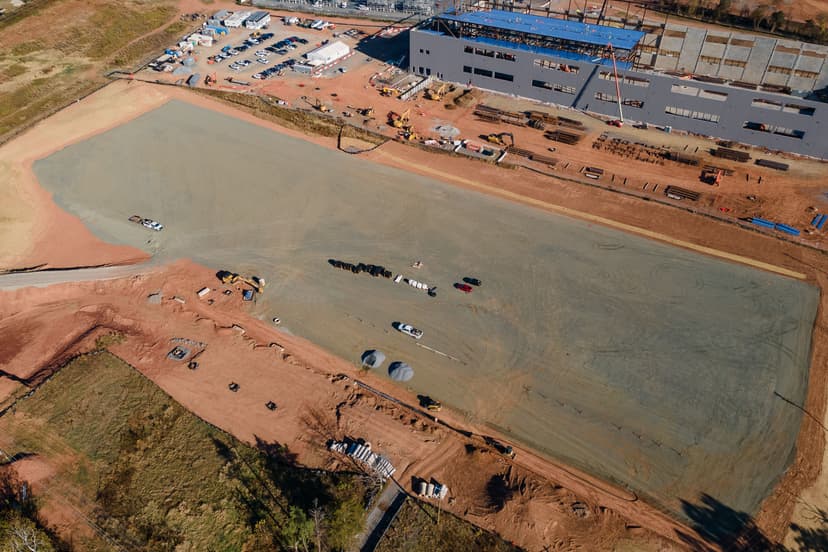
The Hyperion campus represents more than just another data center. With thousands of construction workers already on site according to Meta's Rachel Peterson, VP of Data Centers, this facility is designed specifically for the massive computational demands of AI training and inference. The $27 billion price tag covers not just buildings but the "long-lived power, cooling, and connectivity infrastructure" that modern AI workloads require.
What makes this deal particularly interesting is Meta's lease-back arrangement. The company will rent the facilities from its own joint venture through four-year agreements with extension options. It's a clever financial engineering move that gives Meta operational control while Blue Owl handles the capital risk. Meta even provided a 16-year residual value guarantee, essentially promising to cover potential losses if the partnership goes sideways.
The timing couldn't be more critical. Every major tech company is scrambling to secure data center capacity as AI models grow exponentially larger and more power-hungry. Microsoft is reportedly spending $15 billion on data centers this year alone, while Google and Amazon are racing to build out their own infrastructure networks.
Blue Owl's involvement signals a broader trend: traditional infrastructure investors are pouring money into AI-focused facilities. "We're proud that our funds are partnering with Meta on the development of the Hyperion data center campus - an ambitious project that reflects the scale and speed required to power the next generation of AI infrastructure," Co-CEOs Doug Ostrover and Marc Lipschultz said in the joint statement.
The financial structure is equally revealing about where the money's coming from. Blue Owl is tapping PIMCO and other bond investors through a private securities offering, spreading the risk across institutional investors hungry for infrastructure returns. Morgan Stanley handled the complex deal structuring, bringing together tech ambitions and Wall Street capital in a way that would've been unthinkable just a few years ago.
For Louisiana, this represents a massive economic win. The project promises over 500 permanent operational jobs once complete, plus the thousands of construction positions already in place. It's the kind of high-tech investment that southern states have been fighting to attract as the AI boom reshapes the American economy.
Meta's willingness to cede majority control of a $27 billion data center campus shows just how desperate Big Tech has become for AI infrastructure. This isn't just about building more servers - it's about securing the computational backbone that will determine who wins the AI race. As other tech giants watch this deal unfold, expect more creative partnerships between Silicon Valley ambition and Wall Street capital. The question isn't whether similar mega-deals will follow, but how quickly competitors will need to respond to keep pace.