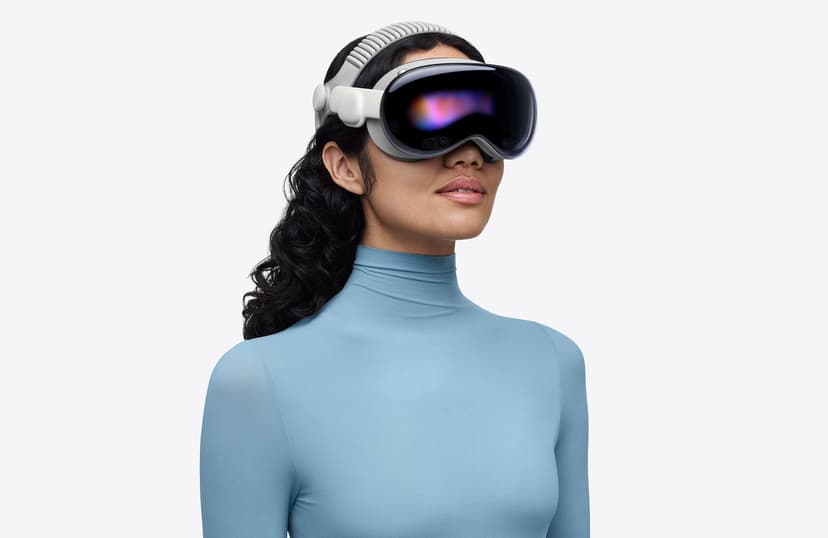
Microsoft just launched Windows 11 remote desktop across Meta's Quest 3 and Quest 3S headsets, bringing Vision Pro-style productivity features to a much broader audience. The wide release signals Microsoft's serious push into mixed reality workspaces, potentially disrupting Apple's early lead in spatial computing for professionals.
Microsoft is making its biggest play yet for mixed reality productivity. The company's Windows 11 remote desktop feature just went live across Meta's Quest 3 and Quest 3S headsets, marking a decisive shift from experimental preview to mainstream availability. The timing couldn't be more strategic - while Apple continues pushing Vision Pro at enterprise customers with a $3,500 price tag, Microsoft's betting on democratizing spatial computing through Meta's $500 headsets.
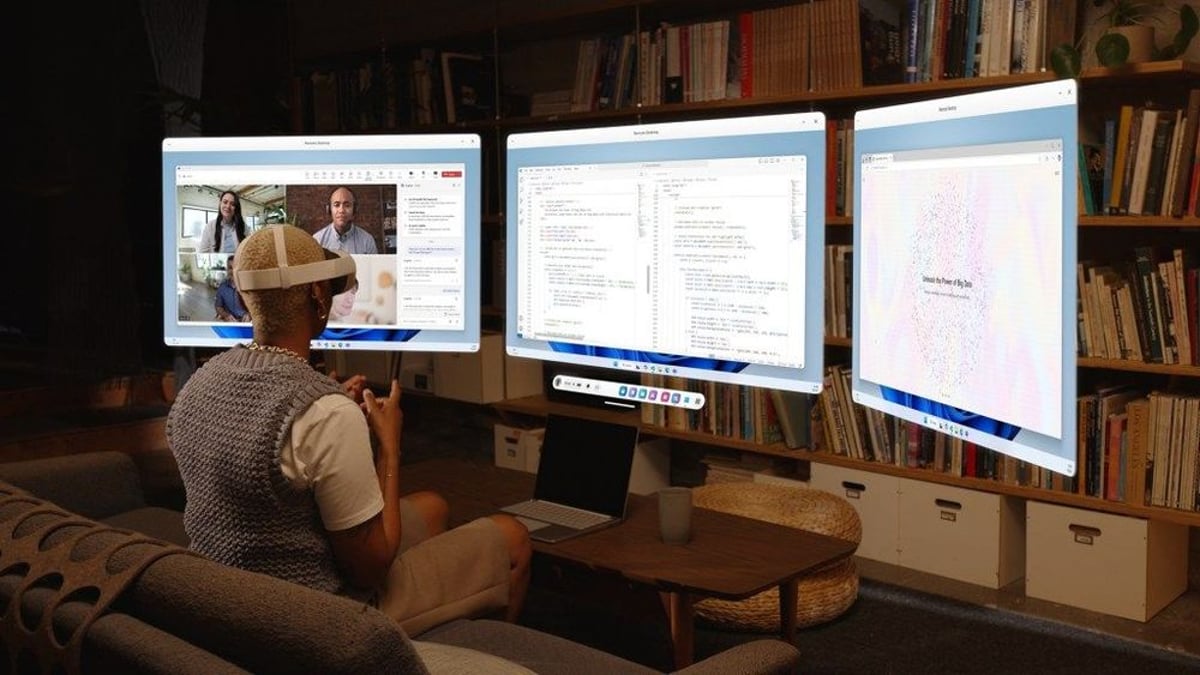
The feature rollout comes through Meta's Horizon OS v81 update, which started hitting devices over the past few weeks. What's particularly interesting is the addition of an ultrawide curved display mode that UploadVR first spotted - a direct shot at Vision Pro's signature spatial desktop experience that Apple's been touting as a killer feature.
Microsoft first teased this integration in December 2024, but the preview felt more like a proof of concept. Now the company's clearly ready to scale. Users simply download Mixed Reality Link on their Windows PC, look at their keyboard through the Quest headset, and select "pair" to instantly beam their desktop into virtual space.
The technical execution is surprisingly polished. You can run multiple high-resolution monitors in VR, switch between full immersion and passthrough mode to see your physical surroundings, and now transform everything into that curved ultrawide display that wraps around your field of view. It's essentially giving Quest users the same spatial productivity experience Apple charges enterprise customers thousands for.
Meta's clearly coordinating this push with Microsoft. Beyond the Windows integration, the Horizon OS v81 update brings serious multitasking improvements - users can now run up to 12 apps simultaneously, resize and rescale displays across all applications, and use a new Full Passthrough mode activated by double-tapping the headset or hitting the Quest 3S action button.
The competitive implications are massive. While Apple's been positioning Vision Pro as the future of professional computing, Microsoft and Meta are essentially saying that future should cost $500, not $3,500. Early enterprise adoption of Vision Pro has been slower than expected, partly due to that price barrier. Microsoft's approach removes that friction entirely.
What makes this particularly smart is Microsoft's existing enterprise relationships. Companies already running Windows 11 across their workforce can now add mixed reality productivity without switching ecosystems or retraining users. That's a much easier sell than asking IT departments to budget for Vision Pro deployments.
The timing also coincides with broader mixed reality momentum. Meta's been pushing Quest for Business harder this year, while Apple's reportedly working on a cheaper Vision headset. Microsoft's essentially claiming the middle ground before that competition fully materializes.
For developers and power users, this represents a significant shift in how we think about desktop computing. The ability to have unlimited virtual monitor real estate, combined with the option to see your physical workspace through passthrough, creates new possibilities for hybrid work environments that weren't practical before.
The real test will be adoption rates among Microsoft's enterprise customers and whether this drives meaningful Quest headset sales. But by making mixed reality productivity accessible at consumer price points, Microsoft's potentially accelerating the entire spatial computing timeline by several years.
Microsoft's wide launch of Windows 11 remote desktop on Quest headsets represents more than just a feature rollout - it's a strategic bet that mixed reality productivity belongs in the mainstream, not just premium markets. By partnering with Meta to deliver Vision Pro-like experiences at consumer prices, Microsoft's potentially reshaping the entire spatial computing landscape. The real question isn't whether this will drive Quest sales, but whether it forces Apple to accelerate its own plans for more affordable mixed reality hardware.