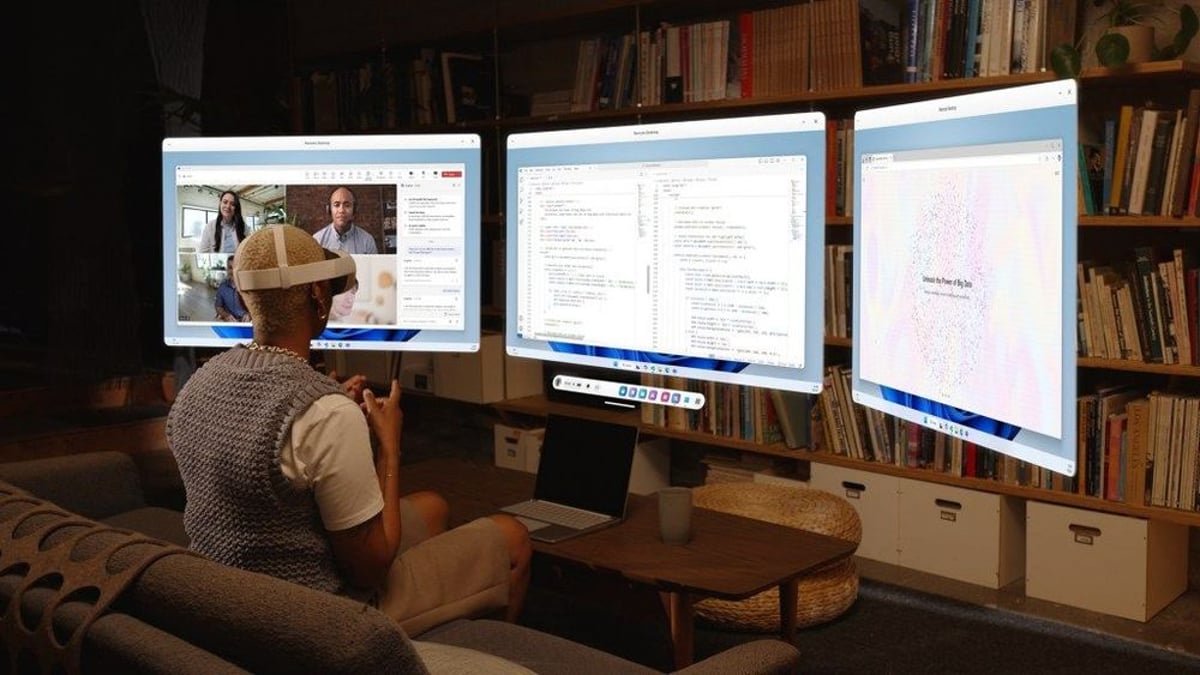
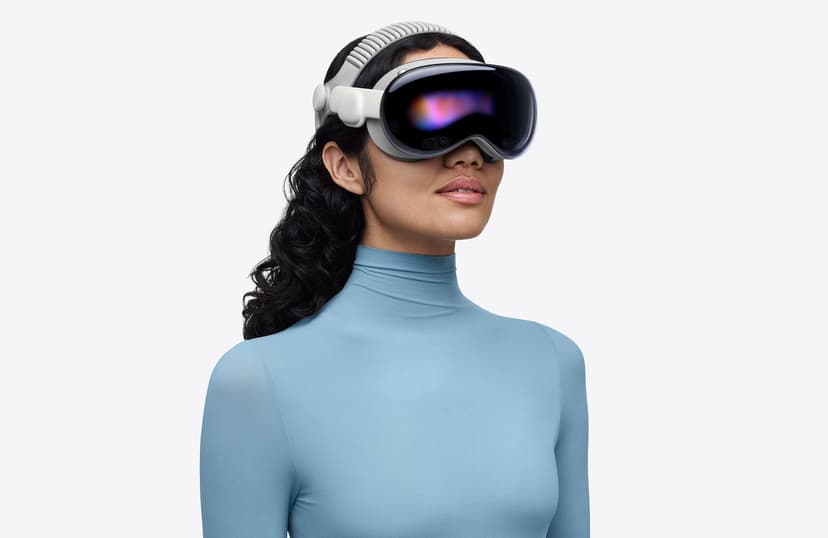
Microsoft just fired the opening shot in the mixed reality productivity wars. The company's Windows 11 remote desktop feature officially launched across Meta's Quest 3 and Quest 3S headsets today, bringing Vision Pro-style virtual monitors to millions more users. The move transforms Quest headsets into serious productivity tools and puts Microsoft squarely in competition with Apple's $3,500 Vision Pro.
Microsoft just turned every Quest 3 into a potential Vision Pro competitor. The company's Windows 11 remote desktop feature officially rolled out today across Meta's Quest 3 and Quest 3S headsets, ending months of limited preview testing and marking Microsoft's most aggressive play yet in mixed reality productivity.
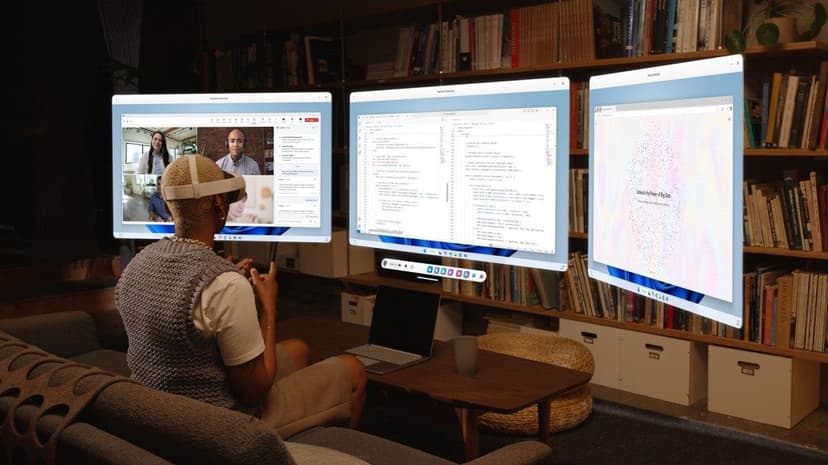
The launch couldn't be better timed. While Apple's Vision Pro continues to struggle with its $3,500 price point, Microsoft is leveraging the much more affordable Quest ecosystem to democratize virtual desktop computing. According to Meta's announcement, the feature can beam multiple high-resolution monitors directly to your headset, effectively turning any space into a multi-monitor workstation.
But it's the new ultrawide mode that really catches attention. UploadVR spotted the curved display option that wraps around your field of view, directly mimicking the Vision Pro's most compelling productivity feature. This isn't coincidence - Microsoft is clearly positioning itself as the more accessible alternative to Apple's premium mixed reality experience.
The technical implementation is surprisingly elegant. Users simply download Mixed Reality Link on their Windows PC, then look at their keyboard through the Quest headset and select "pair." Within seconds, they're interacting with their full desktop environment in virtual space. Meta notes you can either immerse completely in the virtual workspace or use passthrough mode to maintain awareness of your physical surroundings.
What makes this launch particularly significant is the timing. Microsoft first introduced the feature in preview last December, giving the company months to refine the experience based on user feedback. The feature has been rolling out gradually with Meta's Horizon OS v81 update over recent weeks, but today marks full general availability.
The competitive implications are huge. While Apple positioned Vision Pro as a premium spatial computing device, Microsoft is taking the opposite approach - making virtual desktop computing accessible to Quest's much larger user base. Quest 3 starts at $499, making it roughly seven times cheaper than Vision Pro while now offering similar core productivity features.
Meta isn't just along for the ride either. The company heavily invested in making Quest a productivity platform, and today's update includes several related improvements. Users can now rescale and resize displays across all apps, open up to 12 applications simultaneously, and access a new Full Passthrough feature by double-tapping the headset or using the Quest 3S action button.
The productivity angle represents a crucial evolution for both companies. Microsoft gets to extend Windows into mixed reality without building expensive hardware, while Meta transforms Quest from primarily a gaming device into a legitimate work tool. It's a partnership that directly challenges Apple's vision of premium mixed reality computing.
For enterprise customers, this changes the mixed reality calculation entirely. Instead of investing thousands per employee in Vision Pro headsets, companies can now equip teams with Quest 3 devices and get similar virtual desktop functionality at a fraction of the cost. Microsoft's enterprise relationships could prove decisive in driving adoption.
The launch also signals how quickly the mixed reality landscape is shifting. What seemed like Apple's exclusive territory just months ago is now becoming a multi-platform battlefield. Microsoft's approach of leveraging existing hardware partnerships rather than building proprietary devices is starting to look prescient.
Microsoft's Windows 11 VR desktop launch represents more than just another software update - it's a strategic strike at Apple's mixed reality ambitions. By making Vision Pro-style productivity features available on affordable Quest headsets, Microsoft is democratizing virtual desktop computing and forcing a fundamental rethink of mixed reality pricing. As more companies evaluate mixed reality for remote work and collaboration, Microsoft's partnership with Meta suddenly looks like the winning bet. The question isn't whether mixed reality will transform productivity - it's whether Apple can compete when Microsoft offers similar features at a seventh of the price.