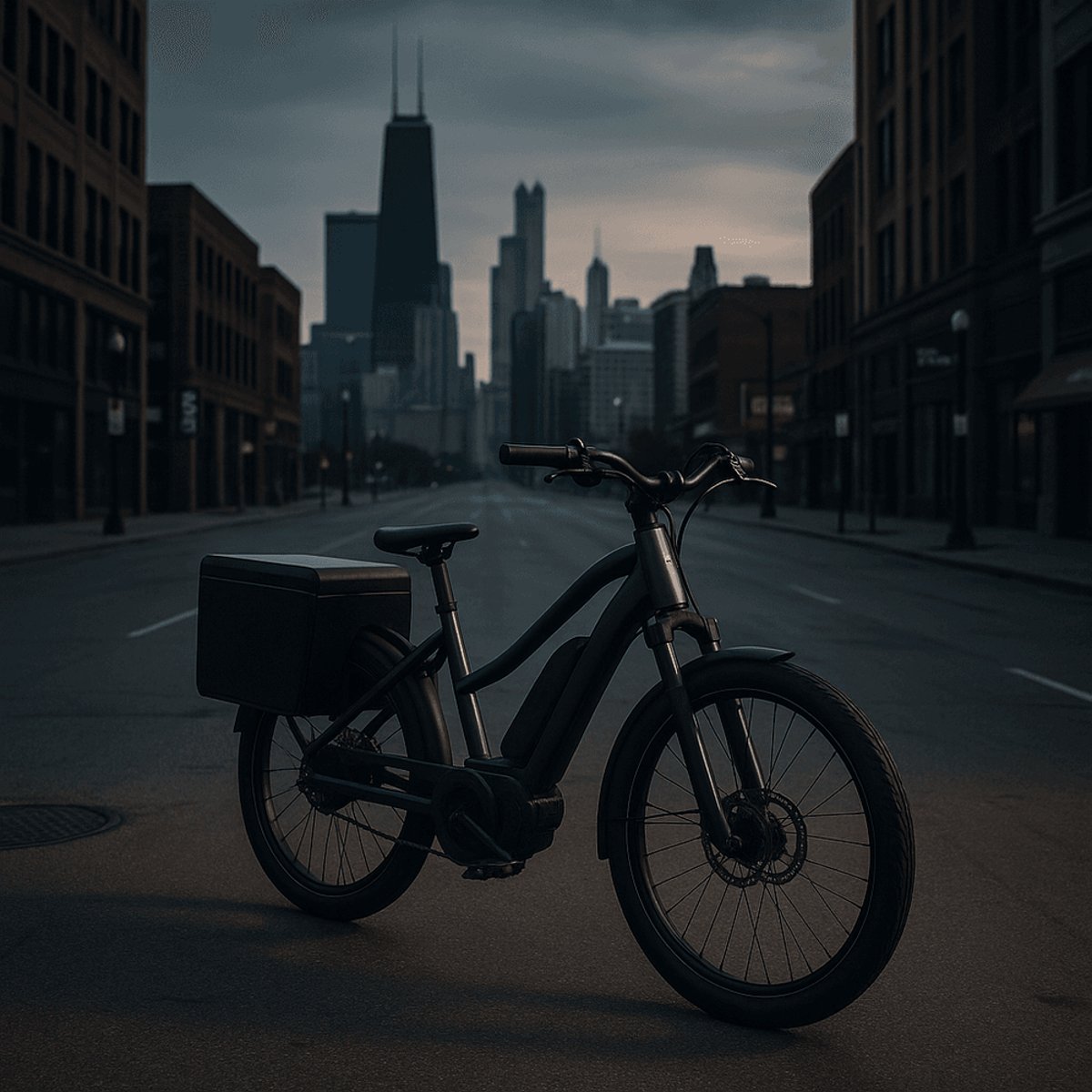
Chicago's immigration crackdown is hitting the gig economy hard. E-bike rental startup Whizz has lost 8% of its Chicago business since National Guard troops arrived, as delivery workers abandon the streets out of fear. Co-founder Mike Peregudov says the viral footage of federal agents chasing a delivery worker across a bridge captures what his company's been seeing in its metrics for weeks.
The viral footage stopped people in their tracks: a food delivery worker scrambling across a Chicago bridge with his e-bike, pursued by armed federal agents shouting "Get him!" For Whizz co-founder Mike Peregudov, that clip wasn't just social media drama - it was his business reality playing out in real time.
The e-bike subscription startup has watched Chicago demand crater by 8% since National Guard troops arrived in the city as part of President Trump's expanded immigration enforcement. What started as Whizz's fastest-growing market has become a cautionary tale about how policy decisions ripple through the gig economy.
"They're afraid," Peregudov told TechCrunch of workers returning bikes to the company's Chicago office. The fear isn't limited to undocumented workers either - legal immigrants and even citizens worry about getting swept up in raids that can mean weeks of detention while paperwork gets sorted.
The numbers tell a stark story of how quickly street-level enforcement can reshape urban economics. Whizz had exploded from zero bikes in Chicago in March to around 300 by July's end, riding the wave of demand from delivery workers seeking reliable alternatives to the sketchy e-bikes that have gotten banned in multiple cities. That growth trajectory flatlined in August when federal troops deployed.
"When a raid happens, these people can detain the guy for, whatever, two weeks," Peregudov explained in a LinkedIn post sharing the viral chase footage. "When they understand he is legally here, they will let him go away, but he will lose those two weeks." For gig workers living paycheck to paycheck, that's devastating.
The immigrant entrepreneur, who came to the U.S. on a talent visa, has watched his business become an unexpected barometer of immigration policy. While raids are happening across Whizz's other markets - New York, San Francisco, and Philadelphia - those cities haven't seen the militaristic deployments that amp up tension in Chicago.
Interestingly, Washington D.C. presents the opposite dynamic despite also having National Guard presence. Business is actually up in the capital because federal agents appear to be targeting unlicensed gas moped riders, pushing delivery workers toward Whizz's legal e-bikes.
The contrast highlights how enforcement tactics create different market pressures. In Chicago, the broad-based fear keeps workers off the streets entirely. In D.C., targeted enforcement of traffic violations drives them toward compliant alternatives.
For Whizz, which raised funding to solve the delivery industry's vehicle reliability problem, the Chicago situation represents an unplanned stress test. The company built its model around providing safe, affordable bikes for workers who previously relied on a "mish-mash of products with questionable reliability," as the TechCrunch report noted.
But reliability means nothing when your customer base is too scared to work. Peregudov's LinkedIn post - where he wrote that "it has become way harder to deliver a food order in the city" - captured how quickly political decisions translate into economic reality.
The broader implications extend beyond one startup's Chicago troubles. If delivery workers abandon major markets due to enforcement fears, it could reshape urban food delivery entirely. Restaurants, customers, and the platforms connecting them all depend on that last-mile infrastructure.
Whizz's current predicament also raises questions about the gig economy's vulnerability to policy shifts. These workers exist in a legal gray area - not employees but dependent on consistent work. When enforcement actions disrupt that consistency, the effects cascade through multiple business models.
Whizz's Chicago struggles reveal how immigration enforcement creates unexpected business casualties. As policy shapes street-level behavior, companies serving gig workers must navigate forces far beyond traditional market dynamics. The startup's contrasting experiences in Chicago versus D.C. suggest that enforcement tactics matter as much as enforcement itself - broad fear keeps workers home, while targeted regulations might just shift demand. For the broader delivery ecosystem, Whizz's 8% drop serves as an early indicator of how political decisions ripple through the digital economy's physical infrastructure.