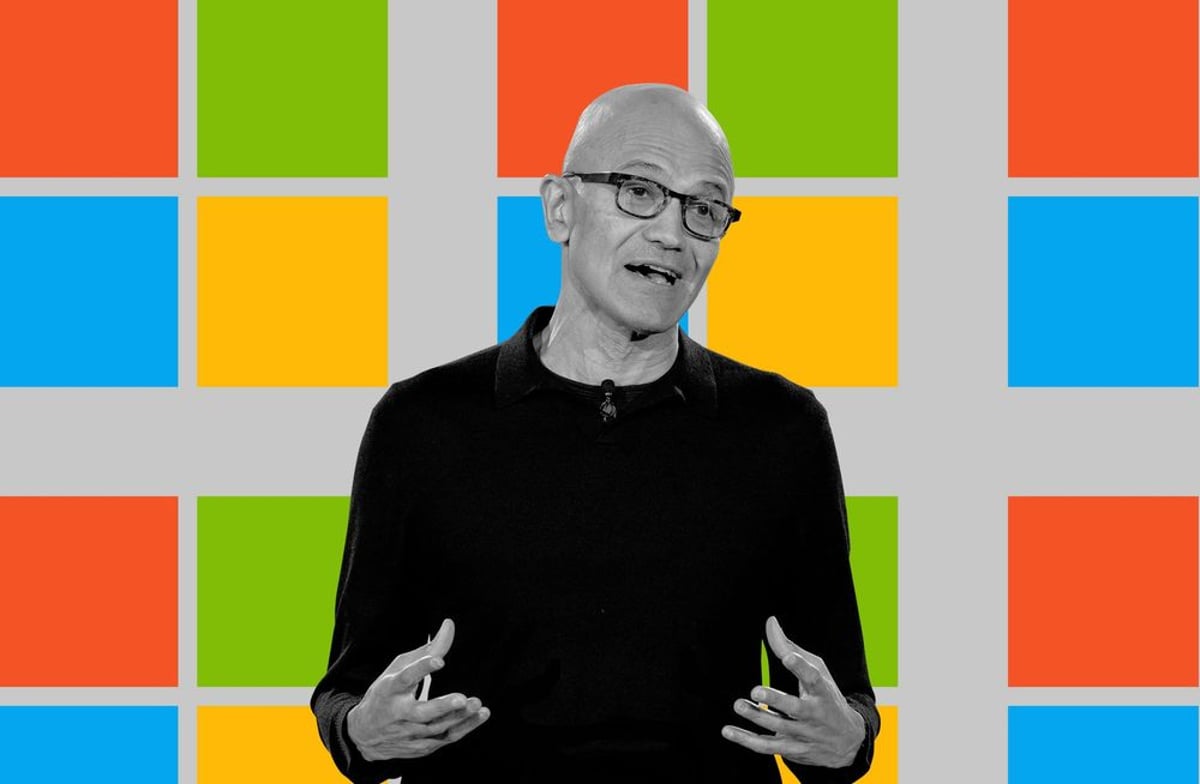
Microsoft CEO Satya Nadella is moving beyond the hype. With his newly appointed commercial chief handling the day-to-day, Nadella has launched a personal blog this week with a blunt message for the entire AI industry: stop obsessing over model quality and start thinking about systems. His first post signals a major strategic shift - Microsoft isn't betting on better models, it's betting on AI agents as replacement tools for the Windows and Office software that built the company.
Microsoft CEO Satya Nadella just changed his job description. With new commercial leadership now handling the company's biggest revenue-generating business units, Nadella is channeling his energy into something unexpected for a Fortune 500 executive in 2026 - a personal blog about AI philosophy.
His first post on the freshly launched "sn scratchpad" cuts through months of hype around large language models with a challenge to the entire industry: everyone's arguing about AI slop versus sophistication, but they're missing the point entirely. "We need to get beyond the arguments of slop vs sophistication and develop a new equilibrium in terms of our 'theory of the mind' that accounts for humans being equipped with these new cognitive amplifier tools as we relate to each other," Nadella wrote in the post.
It's a loaded statement that reveals where Microsoft is heading. The company isn't interested in winning the model wars. It's betting that the future belongs to whoever can integrate AI agents into workflows so seamlessly that users don't think about the underlying technology. That's a huge shift for a company built on selling software licenses to enterprises worldwide.
Underlying this pivot is real tension in how the industry approaches AI right now. Creative professionals - artists, designers, filmmakers - are watching AI models get better at copying their work. Meanwhile, Microsoft is pushing Copilot, its voice-driven AI assistant, as the new creative tool of choice. The problem? Barely any of what Copilot promises actually works in real life, and much of what does come out looks unmistakably like AI-generated content - the very thing critics call "slop."
Nadella's blog post suggests he knows this gap exists. But instead of fixating on model quality, his argument is that the industry should focus on how these systems get deployed and what societal impact they create. "We will evolve from models to systems when it comes to deploying AI for real world impact," Nadella wrote. "The choices we make about where we apply our scarce energy, compute, and talent resources will matter. This is the socio-technical issue we need to build consensus around."
The timing is significant. Throughout 2025, Nadella positioned Microsoft at the center of a model competition, backing OpenAI, competing with Google, and navigating Anthropic. But his new blog entry suggests a strategic reorientation: model one-upmanship is a distraction. What matters is building systems that people actually want to use.
This philosophy also conveniently sidesteps the toughest question Microsoft faces with Copilot - why should anyone trust or use an AI system that generates content so unreliable it's become synonymous with "slop"? By reframing the conversation around systems integration and responsible deployment rather than output quality, Nadella is essentially arguing the industry should accept AI slop as a given and move on to bigger questions about implementation.
The blog launch itself is worth noting. Nadella isn't publishing essays in Harvard Business Review. He's running a personal blog - a format that feels almost vintage in 2026. It signals he wants to speak directly to technologists and thinkers rather than investors or the press. The informality of the medium also gives him cover to explore ideas without the polish required for official corporate messaging.
Nadella promised this won't be a one-off. He'll be publishing regular "notes on advances in technology and real-world impact" throughout 2026, positioning himself as a thought leader rather than just an operator. It's a calculated move. By the end of the year, Microsoft's AI agents either deliver the kind of experiences that justify all the hype, or they don't. Either way, Nadella will have built a narrative around why the industry should judge AI on system-level impact rather than model performance.
Nadella's pivot to personal blogging signals a maturation in how Microsoft thinks about AI strategy. Rather than chasing model benchmarks or getting caught in the hype cycle, the company is staking its reputation on building systems that integrate AI agents into daily workflows - even if the underlying technology isn't perfect. It's a pragmatic bet that execution and implementation matter more than raw model power. Whether 2026 proves him right depends entirely on whether Copilot and other AI systems finally deliver on their promises, or whether Nadella's "systems over models" philosophy becomes a convenient excuse for AI output that still looks like slop to everyone else.