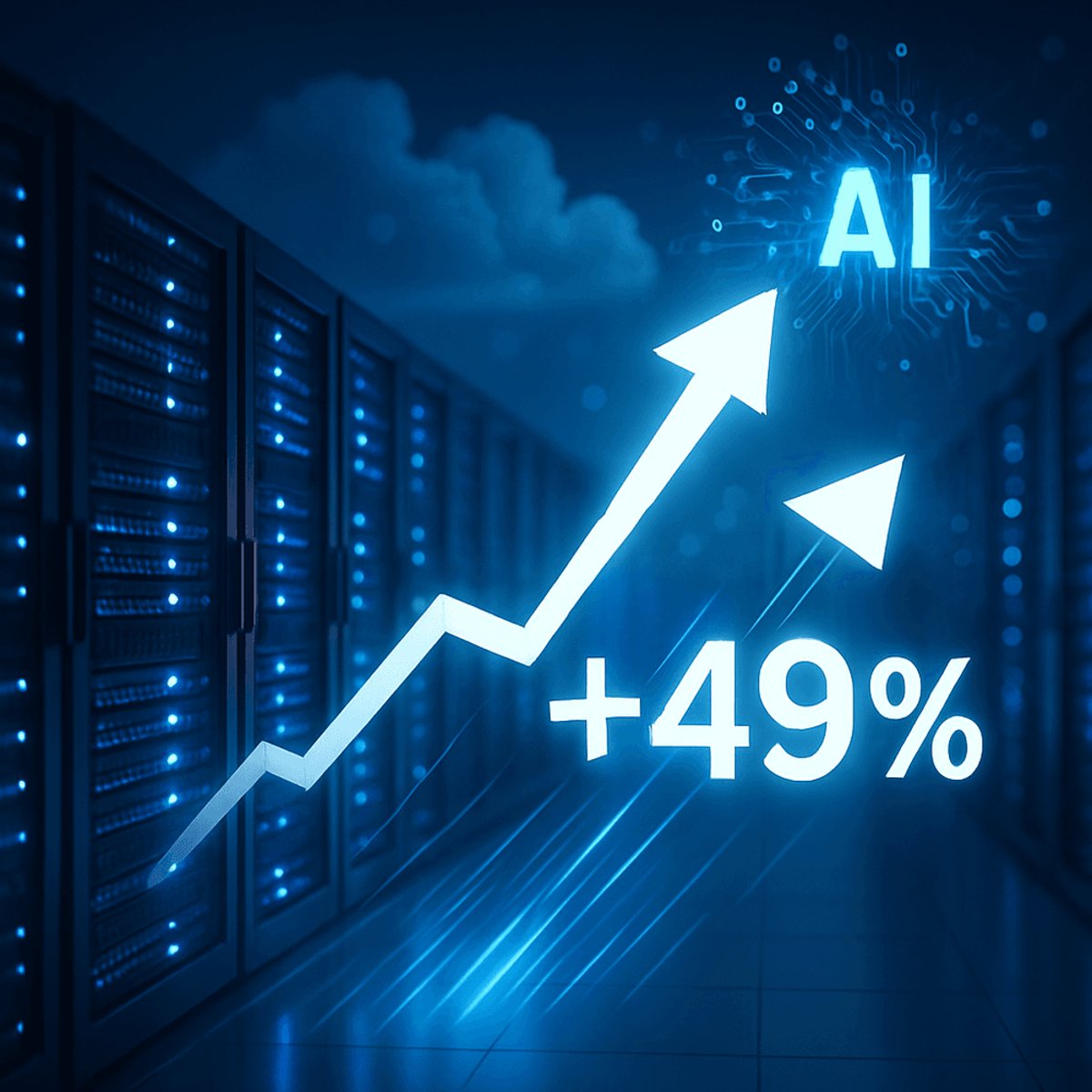
Nebius shares exploded 49% in premarket trading after the AI infrastructure firm announced a blockbuster $19.4 billion multi-year deal with Microsoft. The Amsterdam-based company, spun out from Russian internet giant Yandex in 2023, will provide cloud computing power and GPU resources for Microsoft's AI workloads through 2031. The massive contract underscores the fierce competition for AI compute capacity as tech giants race to scale their artificial intelligence operations.
The AI infrastructure gold rush just claimed its biggest prize yet. Nebius Group, the Amsterdam-based GPU provider spun out from Russian internet giant Yandex, sent shockwaves through Wall Street Tuesday morning as shares rocketed 49% higher on news of a massive $19.4 billion deal with Microsoft.
The multi-year agreement, worth $17.4 billion to Nebius through 2031, highlights the desperate scramble for AI computing power as tech giants pour billions into artificial intelligence infrastructure. Microsoft gains access to Nebius's graphics processing units and cloud computing capacity to power its expanding AI workloads, while potentially securing additional capacity under the arrangement.
"This is exactly the type of deal that validates the entire AI infrastructure thesis," said one Wall Street analyst who requested anonymity. The partnership comes as Microsoft faces intense pressure to scale its AI capabilities following its massive investment in OpenAI and the competitive threat from rivals like Google and Amazon.
Nebius's meteoric rise reflects the premium investors are placing on AI infrastructure plays. The company's stock had already climbed 60% in Monday's extended trading before Tuesday's premarket surge, creating a two-day gain that has essentially doubled the stock price. The frenzy spread to competitors, with CoreWeave shares jumping 6.6% in sympathy.
The deal's structure reveals Microsoft's strategic thinking around AI compute. Rather than building massive data centers from scratch, the tech giant is partnering with specialized providers like Nebius to quickly scale capacity. This approach mirrors Amazon's recent partnerships and Google's cloud infrastructure investments, suggesting the entire industry is racing to lock up GPU resources.
Nebius brings unique advantages to the partnership. Spun out from Yandex in 2023, the company inherited sophisticated AI infrastructure capabilities and counts Nvidia and venture firm Accel among its investors. The Yandex connection, while potentially controversial given Russian ties, has provided Nebius with battle-tested technology for handling massive AI workloads.
The timing couldn't be better for Nebius. As enterprise demand for AI services explodes, companies are struggling to secure reliable GPU access. OpenAI's recent struggles with compute capacity and Google's own infrastructure investments have created a seller's market for AI infrastructure providers.
Investors are betting this deal represents just the beginning. Microsoft's provision for additional capacity purchases suggests the partnership could expand well beyond the initial $19.4 billion commitment. With AI workloads growing exponentially, the compute requirements for training and running large language models continue to outpace supply.
The market reaction extends beyond just Nebius and CoreWeave. Infrastructure stocks across the board are catching a bid as investors recalibrate the value of AI compute providers. The sector's sudden prominence has created a new category of high-growth stocks positioned at the intersection of cloud computing and artificial intelligence.
The Nebius-Microsoft deal signals a fundamental shift in how tech giants are approaching AI infrastructure. Rather than going it alone, companies are increasingly willing to pay premium prices for proven AI compute capacity. For investors, this creates a new class of picks-and-shovels plays in the AI gold rush. The question now is whether other infrastructure providers can secure similar mega-deals, or if Nebius has cornered a uniquely valuable market position. With AI demand showing no signs of slowing, the infrastructure arms race is just getting started.