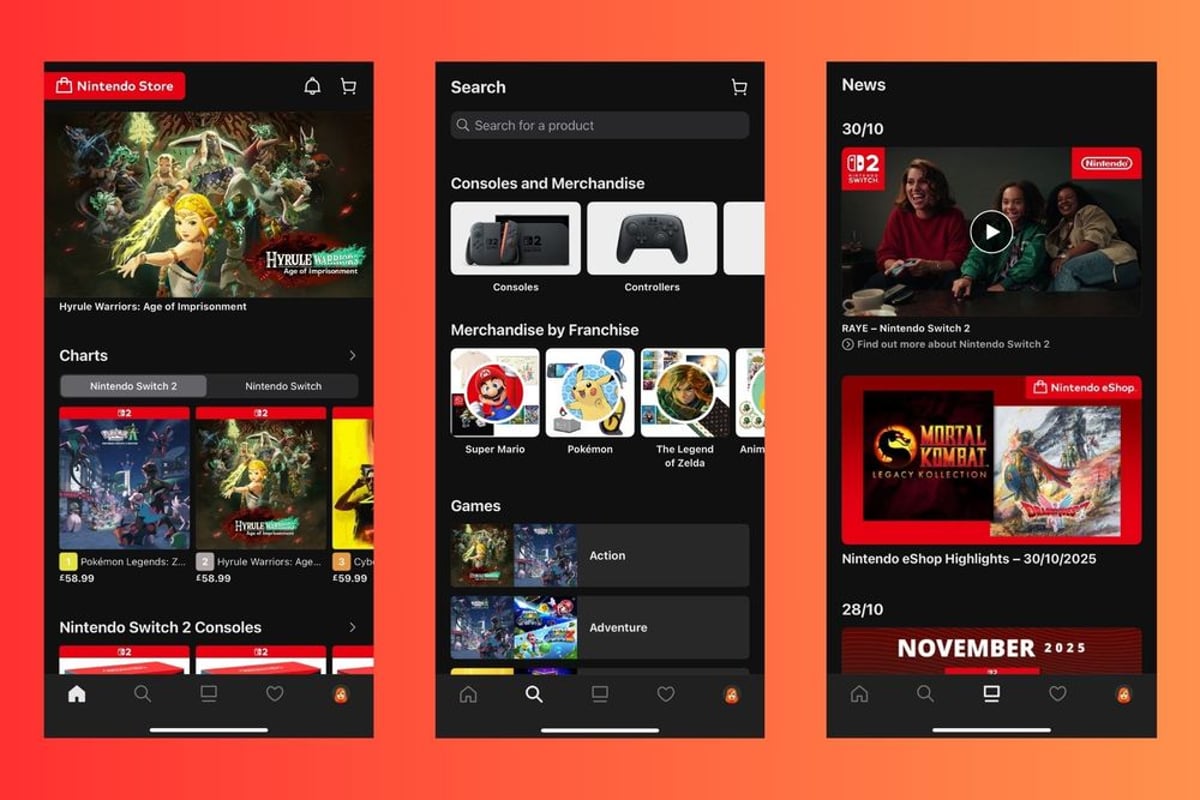
Nintendo just dropped its long-awaited official store app for iOS and Android, bringing the eShop experience to mobile devices worldwide. After five years of Japan-exclusive access, the gaming giant is finally letting global fans browse and buy Switch games, consoles, and merchandise from their phones. It's a surprisingly late entry into mobile retail for a company that's been pushing digital sales harder than ever.
Nintendo just made shopping for games and gear a lot easier. The company's new Nintendo Store app is now live on iOS and Android, bringing the full retail experience to smartphones and tablets across the US, UK, Canada, and most of Europe.
This isn't exactly breaking new ground - the app has existed in Japan since 2020 under the "My Nintendo" branding. But Nintendo's decision to expand globally signals the company's growing focus on direct-to-consumer sales as physical retail continues its decline. The timing couldn't be better, with holiday shopping season approaching and rumors of a Switch 2 announcement heating up.
The app lets users browse the complete Nintendo catalog, from the latest Switch titles to hardware accessories and branded merchandise. But here's the catch - you can't actually complete purchases within the app. Instead, tapping "buy" opens your device's web browser to finish the transaction through Nintendo's mobile website. It's an extra step that feels clunky in 2025, though it likely helps Nintendo sidestep Apple and Google's 30% app store fees.
What makes this more than just a mobile web wrapper is the gaming activity tracking. Nintendo account holders can now see their complete play history across Switch, Switch 2, and even legacy 3DS and Wii U systems (though data for older consoles only goes back to February 2020). This kind of detailed analytics was previously buried in parental control settings, making it nearly impossible for regular users to access.
The social features hint at Nintendo's broader strategy beyond just selling games. Users can earn rewards by checking in at official Nintendo stores and events, turning the app into a loyalty program that bridges digital and physical experiences. Push notifications alert you when wishlist items go on sale - a smart move that could drive impulse purchases during Nintendo's frequent eShop sales.
This fits Nintendo's recent pattern of launching dedicated apps for different services rather than cramming everything into one platform. The company already has separate apps for Nintendo Music streaming and Nintendo Today news. It's the opposite approach from competitors like Sony, which bundles everything into the PlayStation app.
The global rollout comes as Nintendo faces increasing competition in mobile gaming from both traditional rivals and new players. While the Switch continues dominating handheld gaming, mobile has become the fastest-growing segment of the industry. This app won't directly compete with mobile games, but it strengthens Nintendo's relationship with customers who increasingly expect seamless mobile experiences.
For Nintendo investors, this represents another step toward higher-margin digital sales. Physical game sales still generate significant revenue, but digital downloads offer better profit margins and eliminate manufacturing and distribution costs. Making it easier to buy games digitally - even with the browser redirect - should gradually shift more sales online.
Nintendo's global store app launch might seem like table stakes in 2025, but it represents the company's methodical approach to digital transformation. By gradually expanding mobile touchpoints while maintaining tight control over the user experience, Nintendo is building a direct relationship with customers that bypasses traditional retail entirely. The real test will be whether the app drives meaningful sales growth or just shifts existing purchases to a new platform.