NVIDIA just dropped a major collaboration that could reshape how brands create content at scale. The chip giant's expanded partnerships with Adobe and marketing behemoth WPP are bringing agentic AI - autonomous systems that make decisions and take action - directly into enterprise marketing workflows. The move signals a massive bet that AI agents, not just chatbots, will become the backbone of creative production and customer experience within the next 12 months.
NVIDIA is making its most aggressive push yet into the marketing technology stack. The company revealed Monday that its strategic collaborations with Adobe and WPP are expanding to bring what they're calling "agentic AI" - autonomous intelligent systems - to the center of enterprise marketing operations.
The timing isn't accidental. As brands face mounting pressure to deliver personalized customer experiences across dozens of channels simultaneously, traditional creative workflows have hit a breaking point. Content teams can't scale fast enough to meet demand, and that's where autonomous AI agents come in.
"AI agents are transforming how work gets done across all industries, accelerating everything from content creation to decision-making," according to NVIDIA's official announcement. The company is positioning this not as a tool upgrade but as a fundamental reimagining of creative production itself.
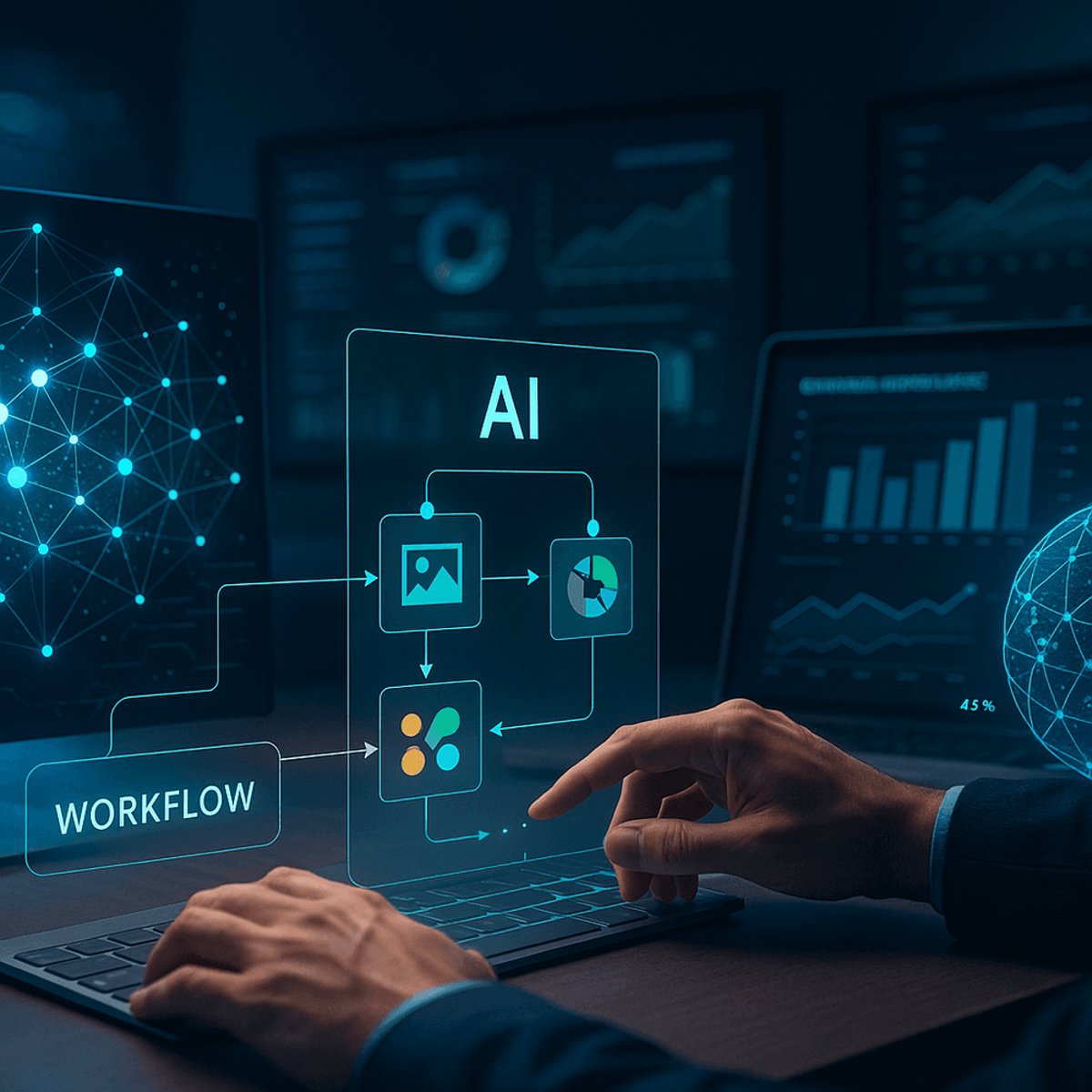
Here's what makes this different from previous AI integrations: these aren't assistants waiting for human prompts. Agentic AI systems can analyze campaign performance, identify content gaps, generate creative variations, and deploy them across channels with minimal human oversight. Think of it as an autonomous creative department that never sleeps.
The collaboration leverages NVIDIA's AI computing infrastructure alongside Adobe's creative tools and WPP's massive client roster. WPP, the world's largest advertising company serving clients like Coca-Cola, Ford, and Unilever, gives the partnership immediate scale across Fortune 500 brands.
What they're building targets two critical pain points: creative production bottlenecks and customer experience orchestration. On the production side, AI agents can spin up localized campaign variations for different markets, test creative concepts in real-time, and optimize assets based on performance data. For customer experience, they're orchestrating personalized journeys across email, social, web, and mobile without human teams manually coordinating every touchpoint.
The enterprise AI market has been waiting for this. While generative AI grabbed headlines with tools like ChatGPT and Midjourney, the real enterprise value comes from autonomous systems that integrate into existing workflows. Adobe has been quietly building toward this with its Sensei AI platform, but NVIDIA's compute power and WPP's distribution network accelerate deployment timelines dramatically.
Industry observers see this as a direct response to mounting pressure on marketing ROI. CMOs are demanding proof that AI investments translate to measurable business outcomes, not just faster image generation. Autonomous agents that can manage entire campaign lifecycles represent a clearer value proposition than standalone creative tools.
The collaboration also highlights NVIDIA's broader strategy beyond chips. The company has been aggressively building partnerships across enterprise software, from healthcare to finance, positioning its AI infrastructure as the foundation layer for autonomous systems. This marketing push follows similar moves in NVIDIA's collaboration with enterprise platforms like ServiceNow and Salesforce.
For Adobe, this addresses a critical vulnerability. As competitors from Canva to startup AI tools chip away at creative software market share, Adobe needs to prove its enterprise value extends beyond individual applications to orchestrated workflows. AI agents that span the entire Creative Cloud and Experience Cloud represent that next evolution.
The technical architecture remains under wraps, but the partnership likely combines NVIDIA's NIM microservices for deploying AI models with Adobe's Firefly generative AI and Experience Platform data layer. WPP's role appears focused on real-world deployment across client campaigns and feeding performance data back into the system.
What's unclear is how much autonomy these agents actually have. The marketing industry has burned itself before with automation that went off the rails - remember when programmatic ad buying led to brand safety disasters? Enterprise clients will want guardrails, human approval workflows, and kill switches. The balance between autonomy and control will determine adoption speed.
Competitors aren't sitting still. Google has been integrating AI agents into its Marketing Platform, while Microsoft is pushing Copilot across its advertising tools. The race is on to own the autonomous marketing stack, and this three-way partnership represents a formidable alliance.
The announcement comes as enterprise AI spending continues its explosive growth trajectory. Brands are allocating bigger budgets to AI infrastructure, betting that autonomous systems will deliver the personalization scale that human teams can't match. NVIDIA's positioning at the center of this shift keeps reinforcing its status as the essential AI infrastructure provider.
This partnership marks a turning point for enterprise marketing technology. We're moving from AI as a creative assistant to AI as an autonomous operator managing entire workflows. The combination of NVIDIA's infrastructure muscle, Adobe's creative platform dominance, and WPP's Fortune 500 client relationships creates a powerful forcing function for agentic AI adoption. The question isn't whether autonomous marketing systems become standard - it's how fast human creative teams adapt to working alongside them. Brands that figure out the human-AI collaboration model first will have a significant competitive advantage in personalization at scale.