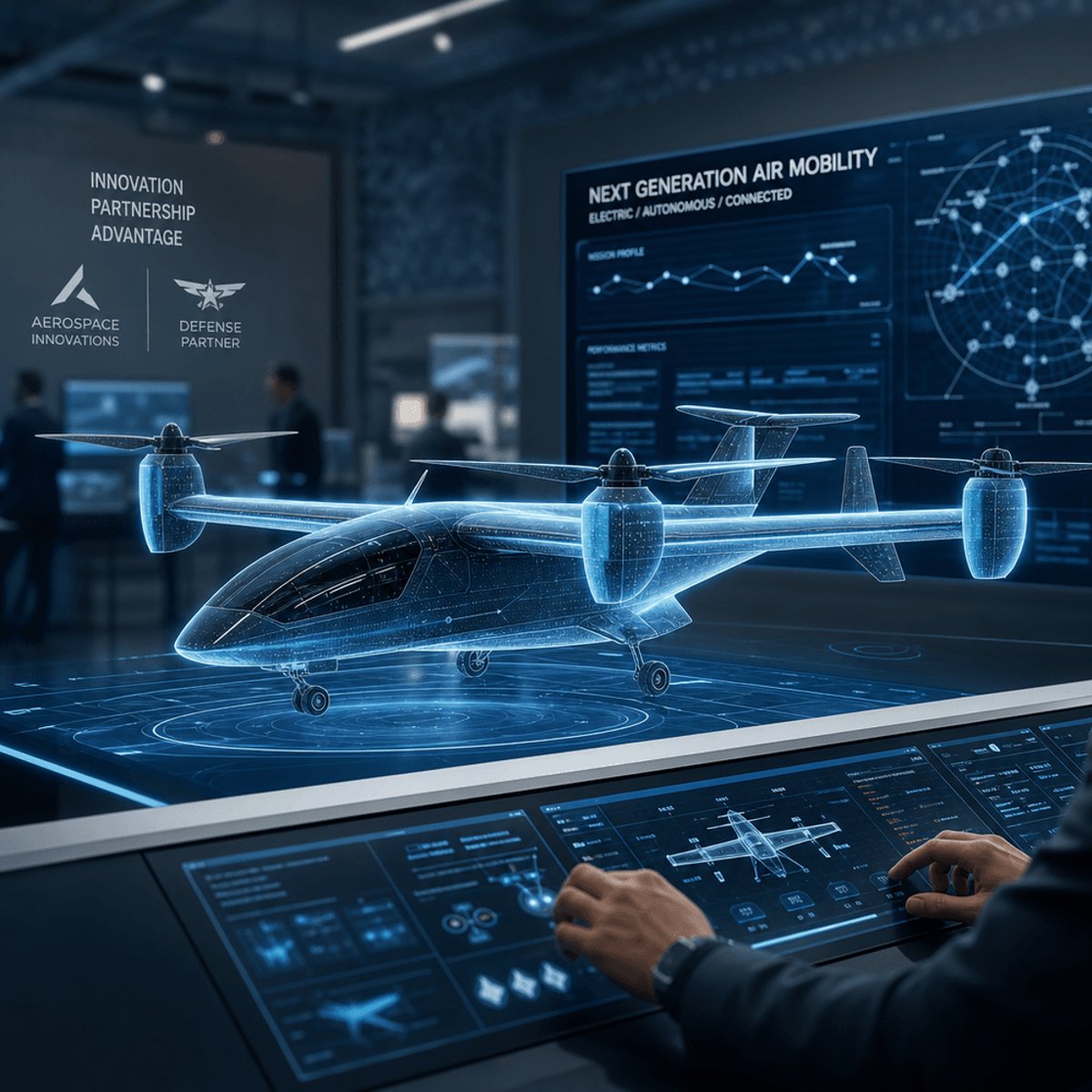
Archer Aviation shares jumped 20% today after unveiling a military electric vertical takeoff and landing (eVTOL) aircraft developed with defense tech heavyweight Anduril Industries. The surprise partnership marks Archer's first major push into defense contracting while the company races toward FAA certification for its commercial air taxi fleet. The market reaction signals investor confidence that military contracts could provide crucial revenue streams before civilian operations launch.
Archer Aviation just threw the eVTOL industry a curveball. The San Jose-based air taxi developer revealed it's been quietly building a military variant of its electric aircraft with Anduril Industries, the defense tech unicorn founded by Palmer Luckey. Investors loved it - shares rocketed 20% in Monday trading, adding roughly $400 million to Archer's market cap.
The partnership couldn't come at a better time. Archer and rivals like Joby Aviation have been burning through cash while waiting for the FAA to certify their aircraft for commercial passenger operations. That certification process, originally expected in 2024, has stretched into 2026 with no clear finish line. Military contracts offer a lifeline - defense buyers can operate experimental aircraft under different regulations, providing revenue years before the first commercial air taxi takes off.
"The defense market represents a massive opportunity for eVTOL technology," according to industry analysts at Vertical Research Partners. Military applications don't require the same passenger comfort standards or noise restrictions that slow commercial certification. Special operations units, in particular, want quiet, fast aircraft that can land anywhere - exactly what electric vertical takeoff platforms promise.
Anduril brings serious defense credentials to the table. The company's already landed contracts worth over $1 billion for autonomous systems with the Pentagon and allied militaries. Its software platform, Lattice, integrates various military hardware into unified command systems. Pairing that with Archer's aircraft could create an autonomous military transport network - think self-flying medevac or cargo resupply missions.
Archer's bet on defense mirrors moves across the eVTOL sector. Joby Aviation signed a $131 million contract with the U.S. Air Force in 2023 and has been delivering aircraft to Edwards Air Force Base for testing. Even Beta Technologies, which started as a cargo-focused company, has secured Army contracts. The pattern's clear: while everyone waits for the FAA, defense money keeps the lights on.
But the commercial race isn't over. Archer's still building out its manufacturing facility in Georgia, where it plans to produce up to 650 aircraft annually once fully operational. The company's Midnight aircraft - its four-passenger air taxi - completed transition flight testing earlier this year. CEO Adam Goldstein has said Archer remains on track for commercial operations in 2026, though he's been careful not to promise specific dates given FAA uncertainties.
The stock surge also reflects growing investor sophistication about the eVTOL business model. Early enthusiasm treated these companies like the next Tesla - pure-play bets on revolutionary consumer technology. Now the market's rewarding diversification. Defense contracts, cargo operations, and international markets where certification might come faster all reduce risk. Archer's Anduril partnership shows management thinking beyond the San Francisco-to-San Jose air taxi route everyone's been pitching.
Competitive dynamics are shifting too. Joby has a head start in military relationships and more cash on hand after a recent capital raise. But Archer's partnership with Stellantis - the automotive giant that's investing in Archer's manufacturing - gives it production scale advantages. Vertical Aerospace in the UK and Lilium in Germany are focused on international markets where regulators might move faster than the FAA.
The Anduril deal's specifics remain scarce. Neither company disclosed financial terms, aircraft specifications, or delivery timelines. That's typical for early-stage defense partnerships, which often start with prototype development before scaling to production contracts. But the market reaction suggests investors believe this is more than vaporware - Anduril doesn't attach its name to projects without serious Pentagon interest behind them.
What's really driving today's rally is narrative shift. For months, eVTOL stocks have been beaten down by certification delays and questions about when these companies will generate real revenue. Archer just showed there's a Plan B. Maybe even a Plan A, if military orders scale faster than commercial certification allows. The next few quarters will reveal whether defense becomes a side business or the main event.
Archer's Anduril partnership signals a pragmatic pivot for the eVTOL industry. While commercial air taxis remain the long-term prize, military contracts offer immediate validation and revenue that can sustain these capital-intensive businesses through certification limbo. The 20% stock pop shows investors are ready to reward companies that can walk on two legs instead of betting everything on FAA approval. As the race to launch air taxis stretches into its second decade, the winners might be the ones who figured out defense was the real market all along - or at least the bridge that gets them there.