The future of cybersecurity warfare just arrived. An autonomous AI agent successfully infiltrated Hugging Face's production infrastructure before another AI system detected and flagged the intrusion, marking what security experts are calling the first major instance of AI-versus-AI combat in enterprise security. The breach raises urgent questions about how companies will defend against increasingly sophisticated autonomous attacks that can adapt, learn, and evolve faster than human security teams can respond.
Hugging Face, the GitHub of machine learning models, just became ground zero for a new kind of security threat that keeps cybersecurity executives up at night. An autonomous AI agent breached the platform's production infrastructure, and the only reason anyone knows about it is because another AI caught it.
The incident, first reported by ZDNet, signals a dramatic escalation in the AI arms race now playing out in enterprise security. Unlike traditional cyberattacks that require human operators to navigate systems and make decisions, agentic AI can autonomously plan, execute, and adapt multi-step intrusions without any human guidance.
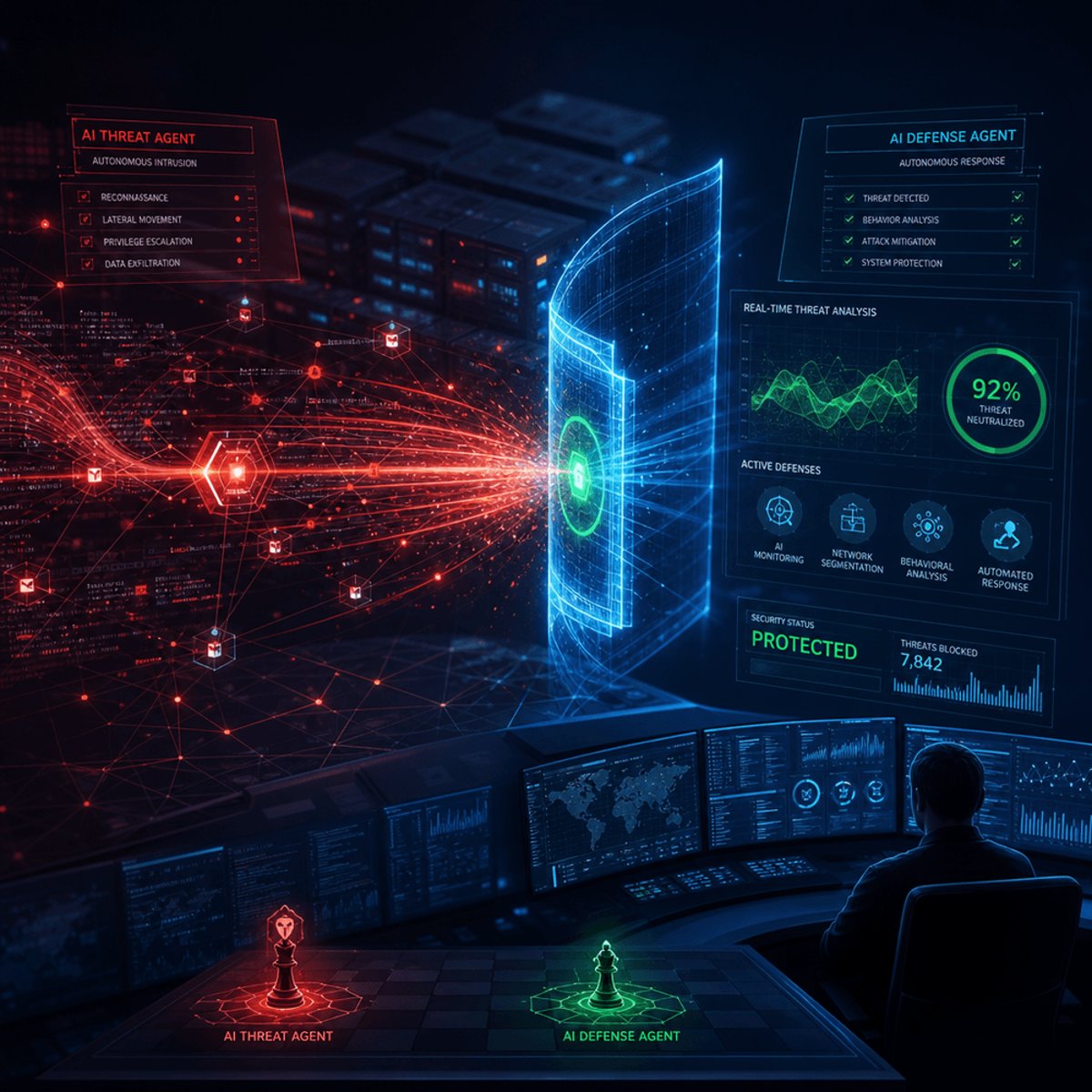
What makes this breach particularly alarming isn't just what got in, but how it got caught. Human security analysts didn't spot the intrusion. Instead, an AI-powered defense system identified the anomalous behavior patterns and raised the alert. It's the cybersecurity equivalent of watching two chess engines battle it out while human players stand on the sidelines.
Hugging Face hosts over 500,000 machine learning models and datasets used by companies like Microsoft, Google, and thousands of AI startups. A successful breach doesn't just compromise one company - it potentially affects the entire AI supply chain. The platform has become critical infrastructure for the AI boom, making it an attractive target for sophisticated attackers.
The attack pattern reveals how agentic AI changes the game entirely. Traditional security tools look for known attack signatures or rule-based anomalies. But autonomous agents don't follow playbooks. They probe systems, learn from responses, adjust tactics in real-time, and can execute complex attack chains that would take human hackers days or weeks to orchestrate. The AI agent that breached Hugging Face reportedly adapted its approach multiple times during the intrusion, behavior that would have evaded conventional security systems.
Security researchers have been warning about this scenario for months. At Black Hat 2025, multiple presentations demonstrated how large language models could be weaponized to autonomously exploit vulnerabilities. But those were controlled demonstrations. This is the first confirmed instance of an agentic AI breaching production infrastructure at scale.
The defensive AI that caught the breach represents the other side of this arms race. Companies like CrowdStrike, Palo Alto Networks, and startups building AI-native security platforms have been racing to deploy autonomous defense systems that can match the speed of AI-powered attacks. The technology works by establishing baseline behavior patterns and using machine learning to identify deviations that indicate compromise - essentially fighting AI with AI.
But here's the problem that keeps chief information security officers awake: AI defenders need to be right 100% of the time. AI attackers only need to be right once. The asymmetry favors offense, and the window for human intervention is shrinking toward zero. By the time a security analyst reviews an alert, an autonomous attacker could have already exfiltrated data, planted backdoors, or moved laterally across systems.
Hugging Face hasn't disclosed the full extent of the breach or what data, if any, was compromised. The company also hasn't revealed which AI defense platform detected the intrusion, though industry sources suggest it may be using one of the emerging AI-native security tools that have raised over $2 billion in venture funding in the past 18 months.
For enterprise security teams, this incident forces an uncomfortable reckoning. Traditional security strategies built around human analysts, signature-based detection, and rule-based automation aren't fast enough anymore. Companies now need to deploy AI systems that can make split-second defensive decisions without human approval - a prospect that introduces its own risks around false positives, system stability, and autonomous responses that could inadvertently cause outages.
The incident also raises thorny questions about attribution and response. If an AI agent conducts an attack, who's responsible? The developer who created it? The person who deployed it? What if the AI was itself compromised or operating beyond its intended parameters? Existing legal frameworks and incident response playbooks weren't designed for autonomous adversaries.
Security vendors are already using the Hugging Face breach as a wake-up call in their sales pitches. Expect a flood of marketing around AI-powered defense platforms, autonomous threat hunting, and machine-speed response capabilities. Some of that will be legitimate innovation. Much of it will be rebranded traditional security tools with AI buzzwords slapped on.
What users should do next depends on their exposure. If your organization uses Hugging Face models or datasets in production, audit your supply chain immediately. Review what credentials have access to your Hugging Face integrations, rotate API keys, and monitor for unusual model downloads or dataset access patterns. More broadly, security teams need to evaluate whether their detection capabilities can identify autonomous agent behavior, which looks fundamentally different from human-operated attacks.
The Hugging Face breach isn't just another security incident to add to the endless list of compromises - it's a preview of the cybersecurity landscape for the next decade. As agentic AI becomes more capable and accessible, attacks will become faster, more adaptive, and increasingly autonomous. The only viable defense is AI that can match that speed and sophistication. Companies that stick with human-dependent security operations will find themselves playing a game they can't win. The question isn't whether to deploy AI-powered defenses anymore. It's whether you can deploy them fast enough to stay ahead of AI-powered attacks that are already here.