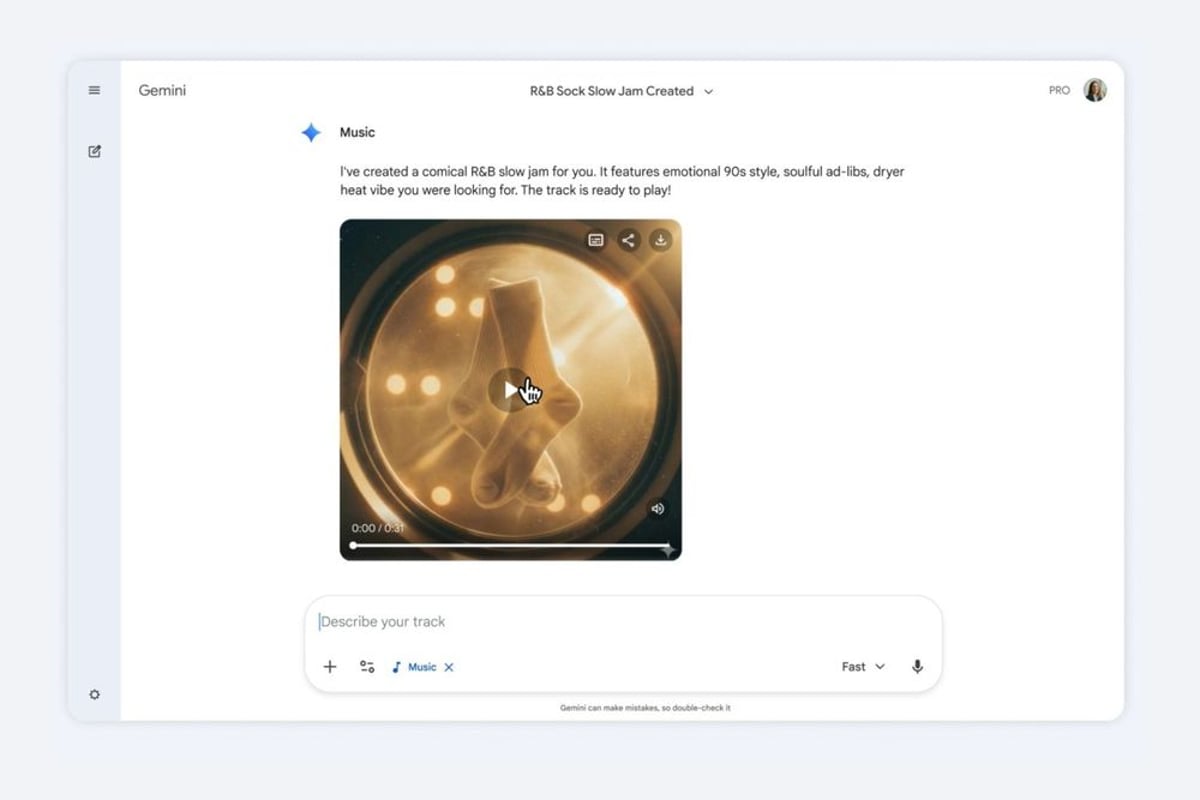
Google just turned its Gemini chatbot into a music studio. The company's rolling out beta access to Lyria 3, DeepMind's latest audio model, letting users generate 30-second tracks from text, images, or videos without ever leaving the chat window. It's a bold move that puts AI-generated music creation directly into the hands of millions of Gemini users globally, and it signals Google's intent to dominate the emerging generative audio space where startups like Suno and Udio have been making noise.
Google just handed its Gemini chatbot a new superpower - the ability to compose music on demand. Starting today, users can access Lyria 3, DeepMind's latest audio generation model, directly within the Gemini app to create 30-second tracks based on text descriptions, uploaded images, or even video clips.
The integration marks a significant expansion of Gemini's capabilities and represents Google's most aggressive push yet into the rapidly evolving generative audio market. Unlike standalone music generation tools that require users to jump between platforms, Lyria 3 lives natively inside the Gemini interface - you describe what you want, and the AI composes it right there in the chat thread.
According to The Verge's report, the feature launches globally today with support for eight languages: English, German, Spanish, French, Hindi, Japanese, Korean, and Portuguese. Google's limiting access to users 18 and older, likely due to copyright and content moderation concerns that have plagued the AI music generation space.
The timing couldn't be more strategic. Generative audio has exploded in the past year, with startups like Suno and Udio attracting millions of users and raising significant venture capital. Both companies let users create full-length songs from simple text prompts, and they've demonstrated how hungry consumers are for accessible music creation tools. By embedding Lyria 3 directly into Gemini, Google's betting it can capture that demand while leveraging its massive existing user base.
Lyria 3's multimodal approach sets it apart from text-only competitors. Users can feed the model images - say, a sunset over the ocean - and generate ambient tracks that match the mood. Upload a video of a birthday party, and Lyria 3 can compose a celebratory tune. This kind of context-aware generation hints at where Google thinks the technology is headed: less about replacing musicians, more about giving everyday users tools to soundtrack their digital lives.
But the launch raises thorny questions about copyright and artist compensation that the industry hasn't resolved. AI music models train on vast datasets of existing recordings, and rights holders from the Recording Industry Association of America to individual artists have filed lawsuits against similar platforms. Google hasn't detailed what safeguards Lyria 3 includes to prevent it from generating music that sounds too similar to copyrighted works, though the 30-second limit suggests the company's being cautious about potential infringement claims.
The integration also intensifies pressure on OpenAI and Meta to expand their own AI assistants' creative capabilities. OpenAI's ChatGPT can analyze music and discuss composition, but it can't generate audio. Meta's been investing heavily in AI audio research but hasn't rolled out consumer-facing music tools at scale. Google's move forces both competitors to either match the functionality or risk looking behind the curve.
For Google, Lyria 3 represents more than just a cool feature - it's part of a broader strategy to make Gemini the go-to AI assistant for creative work. The company's already integrated image generation through Imagen, and adding music creation fills another gap. If users can generate text, images, and now audio all within a single interface, the friction of switching between specialized tools disappears.
The beta rollout suggests Google's still refining the technology. Audio generation is computationally expensive and prone to artifacts that image models have largely solved. Thirty-second clips are short enough to generate quickly but long enough to be useful for social media posts, video intros, or presentation backgrounds - the kind of casual creative needs that drive consumer adoption.
Industry watchers will be monitoring whether Google imposes usage limits or charges for Lyria 3 access. Suno and Udio both use freemium models with paid tiers for commercial use and higher-quality exports. Google could follow suit or bundle music generation into its Gemini Advanced subscription, which already includes access to more powerful language models and expanded context windows.
Google's integration of Lyria 3 into Gemini isn't just about adding another feature - it's about redefining what users expect from AI assistants. By making music generation as simple as typing a prompt, Google's lowering the barrier to creative expression while simultaneously raising the stakes for competitors. The real test will be whether 30-second clips are enough to satisfy users who've seen what's possible with full-length AI compositions, and whether Google can navigate the legal and ethical minefields that have tripped up others in this space. For now, millions of Gemini users are about to discover they've got a music producer in their pocket.