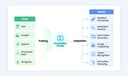
Nvidia is making its biggest play yet in telecom infrastructure. Just ahead of Mobile World Congress in Barcelona, the chipmaker and Nokia unveiled a wave of AI-RAN collaborations with major telecom operators across Europe, Asia, and North America. The move signals that software-defined, AI-native wireless networks are transitioning from experimental trials to commercial deployment, potentially reshaping how 5G and future 6G networks operate.
Nvidia just made telecom operators an offer they can't refuse - AI-powered wireless networks that promise to transform how carriers manage everything from network traffic to energy consumption. The timing isn't accidental. With Mobile World Congress kicking off March 2 in Barcelona, Nvidia and Nokia are positioning AI-RAN as the inevitable evolution of wireless infrastructure, not just another vendor pitch.
AI-RAN, or artificial intelligence radio access network technology, represents a fundamental shift in how wireless networks operate. Instead of fixed, hardware-dependent systems, these networks use AI to dynamically optimize signal processing, traffic routing, and resource allocation in real-time. Think of it as the difference between a static traffic light system and one that adapts instantly to actual traffic patterns.
The announcement reveals partnerships spanning three continents, though Nvidia and Nokia haven't named specific operators yet. That's standard practice for pre-MWC reveals - expect the actual carrier names to drop during keynotes and demo sessions at the Barcelona event. But the geographic spread signals this isn't a regional experiment. Major operators in North America, Europe, and Asia are betting real infrastructure budgets on the technology.
What makes this different from previous telecom AI initiatives is the "software-defined" approach. Traditional RAN equipment locks carriers into specific hardware configurations that take years to upgrade. Nvidia's platform runs on GPU-accelerated servers that can be updated through software, similar to how cloud providers continuously enhance their services. For operators drowning in capital expenditure cycles, that flexibility matters.
The technology also arrives as carriers face mounting pressure to improve network efficiency while handling exponential data growth. 5G deployments haven't delivered the cost savings operators hoped for, and 6G planning is already underway. AI-RAN promises to optimize existing infrastructure before requiring massive new buildouts - a compelling pitch when telecom executives are scrutinizing every infrastructure investment.
Nokia's involvement adds credibility beyond Nvidia's AI expertise. As one of the big three telecom equipment vendors alongside Ericsson and Huawei, Nokia brings established relationships with operators worldwide and deep knowledge of network requirements that can't be learned from datasheets. The partnership suggests Nvidia is serious about telecom as a long-term vertical, not just selling GPUs to another industry.
But there's competitive context here too. Nvidia's AI dominance in data centers doesn't automatically translate to telecom infrastructure, where reliability and latency requirements differ dramatically from cloud workloads. Rival chipmakers and telecom equipment vendors are developing their own AI-RAN solutions. Intel, Qualcomm, and even Amazon Web Services have telecom AI initiatives in various stages. Nvidia needs operator commitments now to establish its platform as the de facto standard.
The "lab to field" language in the announcement is telling. It acknowledges that AI-RAN has been stuck in proof-of-concept mode for years while vendors worked through thorny problems like latency, power consumption, and integration with legacy systems. Moving to field deployment means these partnerships involve actual commercial networks serving real subscribers, not just controlled test environments. That's the validation investors and competitors will be watching.
What's less clear is the financial model. Telecom operators traditionally buy equipment outright or through financing arrangements. Nvidia's AI business increasingly runs on software licensing and cloud services. How these partnerships structure costs - upfront hardware purchases versus ongoing software subscriptions - will determine whether smaller regional carriers can adopt AI-RAN or if it remains a tool for only the largest operators.
The MWC timing also positions Nvidia against the geopolitical backdrop of telecom infrastructure. With Western operators still unwinding Huawei equipment and governments scrutinizing network security, AI-RAN platforms from US-based Nvidia offer a politically safer path for carriers in allied countries. That's not explicit in the announcement, but it's subtext every telecom executive understands.
The shift from lab experiments to commercial deployments marks a genuine inflection point for AI in telecom infrastructure. Whether Nvidia can translate its data center dominance into long-term telecom market share depends on the performance data that emerges from these operator partnerships over the next 12-18 months. For now, the company has positioned itself at the center of an industry transformation just as carriers make critical decisions about next-generation network architecture. The real test comes when these AI-RAN systems face peak traffic, network failures, and the other messy realities that separate vendor promises from operational reality.