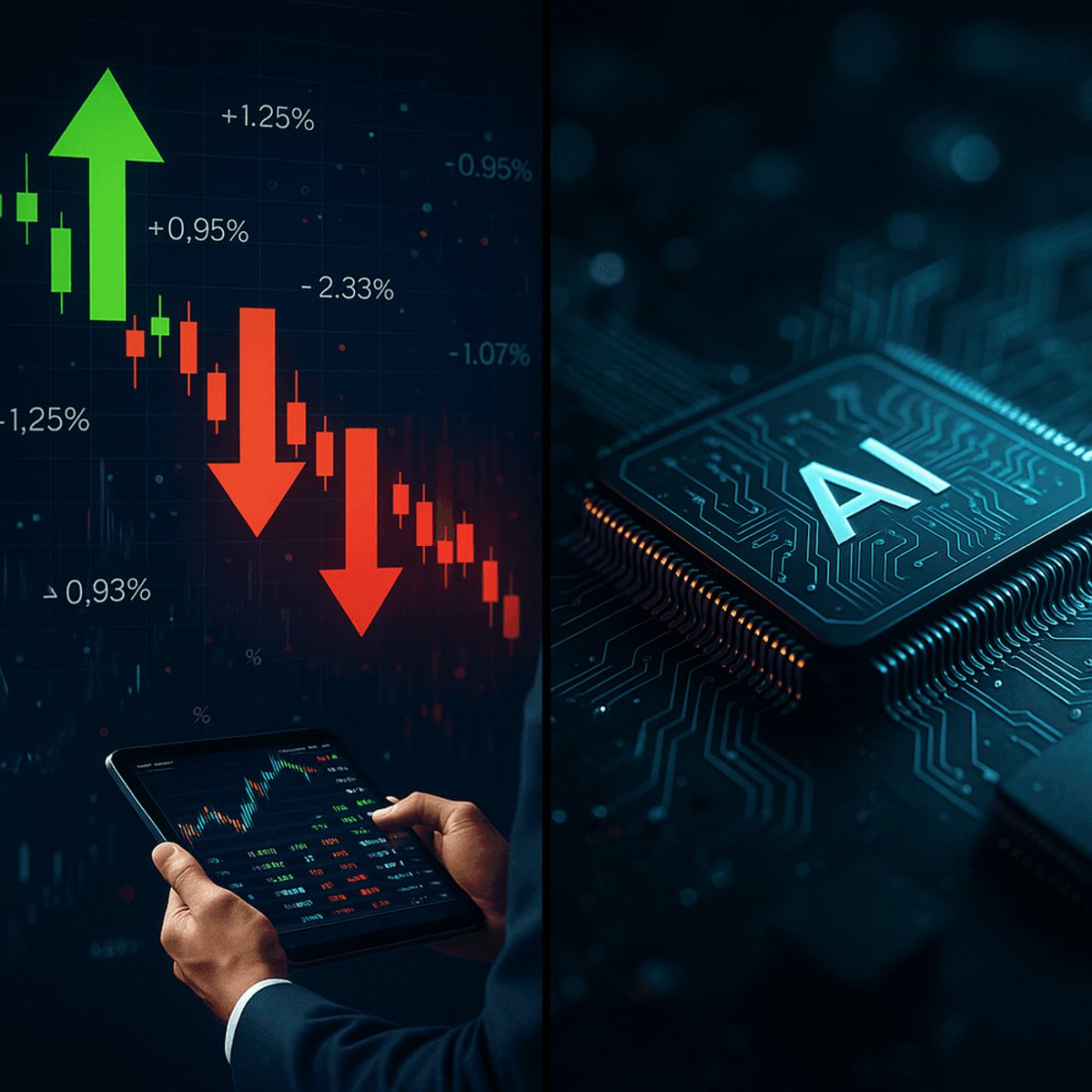
Nvidia delivered another blowout quarter that had Wall Street buzzing - until it didn't. The AI chipmaker's shares initially surged 5% Thursday after crushing Q3 expectations with $57.01 billion in revenue, but quickly reversed course and turned negative as investors digested the results. Despite CEO Jensen Huang directly addressing "AI bubble" concerns, the market's schizophrenic reaction highlights just how jittery investors have become about AI valuations.
Nvidia just proved that even crushing earnings can't shield you from market volatility in today's AI-obsessed trading environment. The chipmaker's Wednesday after-hours bombshell - $57.01 billion in Q3 revenue, up 62% year-over-year - sent shares rocketing 5% in pre-market trading Thursday. But by the closing bell, those gains had evaporated completely, with the stock finishing in negative territory.
The earnings themselves were undeniably stellar. Nvidia didn't just beat Wall Street's already lofty expectations; it sailed past even the whisper numbers that typically circulate among the most bullish analysts. The company also issued stronger-than-expected Q4 guidance, signaling the AI boom isn't slowing down anytime soon.
But here's where things get interesting. CEO Jensen Huang used the earnings call to directly confront the elephant in the room - mounting concerns about an AI bubble. "There's been a lot of talk about an AI bubble," Huang told investors, according to CNBC. "From our vantage point, we see something very different."
That pushback wasn't just casual commentary. Huang and his team systematically addressed what Ben Barringer, global head of technology research at Quilter Cheviot, called "pretty much all of the bear cases out there." They tackled scaling laws, hyperscaler capex concerns, demand from companies like OpenAI and Anthropic, supply constraints, vendor financing, partnerships, and even China trade issues.
"They really did a stand up job of calling out every elephant in the room," Barringer told CNBC's Europe Early Edition. But apparently, that wasn't enough to keep investors from taking profits.
The reversal wasn't just about Nvidia - it dragged the entire AI ecosystem down with it. Chipmakers AMD and Broadcom sank alongside power infrastructure companies like Eaton, which had all initially rallied on Nvidia's strong results. It's a perfect example of how interconnected these AI plays have become.
Ross Seymore at Deutsche Bank might have summed up the market's hesitation best. Despite touting the positives in Nvidia's quarter, he noted that shares are "fairly valued" and maintained his neutral rating. In other words, even a perfect quarter doesn't automatically justify higher prices when you're already trading at premium valuations.
The timing of this reversal is particularly telling. Investor sentiment around AI has been weakening in recent sessions amid fears about elevated valuations, debt financing challenges, and potential chip depreciation. Nvidia's earnings were supposed to be the catalyst that reignited the AI rally - instead, they became another reminder of how quickly momentum can shift.
Interestingly, the earnings still managed to boost Asian chip stocks. Samsung Electronics and Taiwan's Hon Hai Precision Industry (better known as Foxconn) led gains across the region, suggesting international investors are taking a different view of Nvidia's results than their U.S. counterparts.
This isn't just about one company's stock performance. Nvidia has become the de facto barometer for AI investment sentiment, and when its shares can't hold gains after a knockout quarter, it raises questions about the entire sector's trajectory. The fact that Huang felt compelled to directly address bubble concerns shows how seriously the company is taking these valuation worries.
Nvidia's post-earnings reversal perfectly captures the current AI investment climate - even flawless execution can't overcome valuation anxiety. While the company systematically addressed every bear case and delivered another record quarter, investors are clearly nervous about paying premium prices in an uncertain market. The fact that Asian markets embraced the results while U.S. traders took profits suggests this is more about domestic sentiment than fundamental concerns. For now, Nvidia remains the AI sector's bellwether, and its inability to hold gains after stellar results should worry anyone betting on continued AI euphoria.