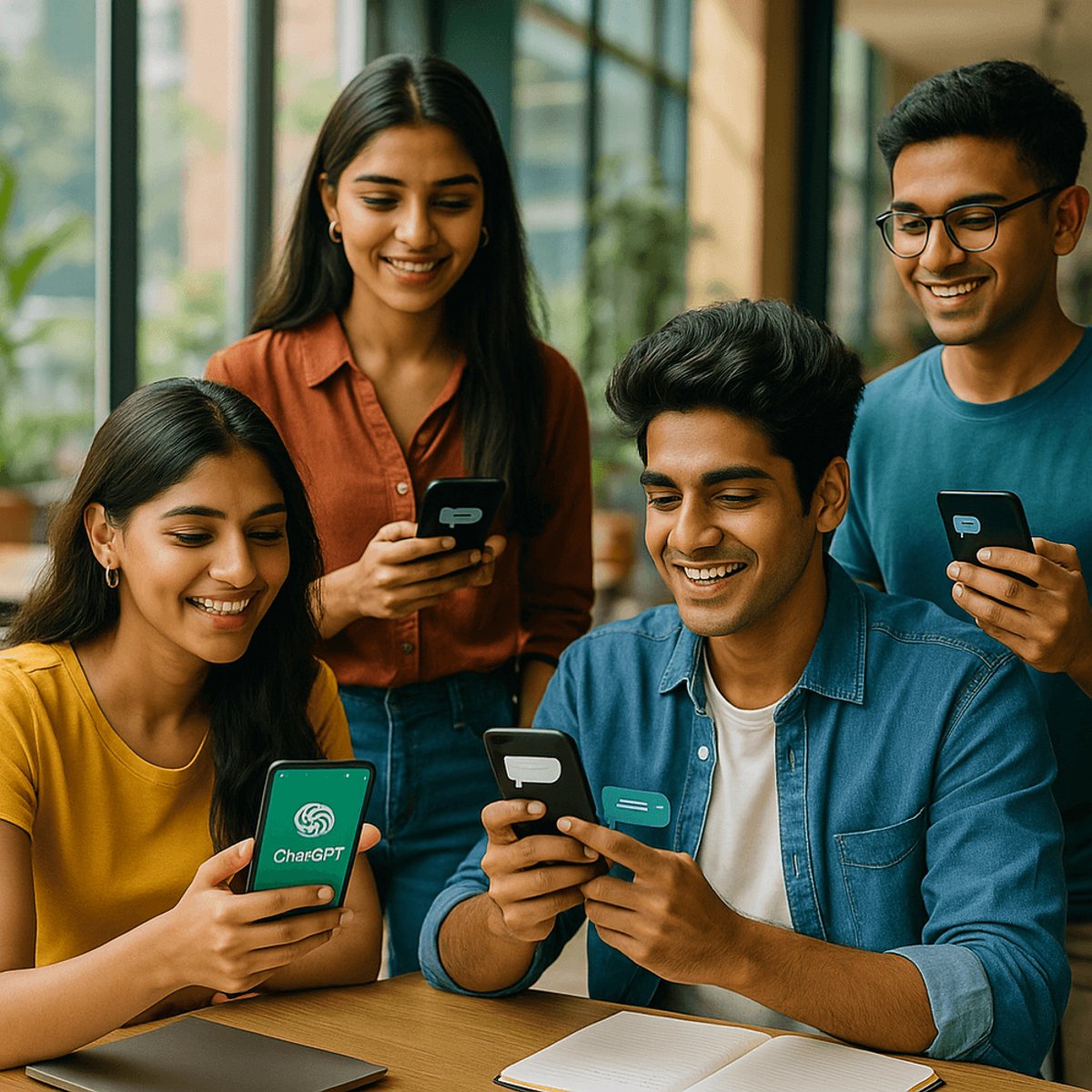
OpenAI just pulled back the curtain on who's actually using ChatGPT in India, and the numbers reveal a striking generational divide. The company disclosed Friday that users between 18 and 24 years old account for nearly half of all messages sent to ChatGPT from India, while those under 30 represent a staggering 80% of total usage. The rare demographic snapshot, shared at the India AI Impact Summit 2026, offers the first concrete look at how AI adoption is playing out in one of the world's fastest-growing tech markets.
OpenAI rarely shares granular user data, which makes Friday's disclosure about India all the more significant. Speaking at the India AI Impact Summit 2026, the company revealed that users between 18 and 24 years old are responsible for nearly 50% of all messages sent to ChatGPT from India. When you expand the age bracket to include everyone under 30, that figure jumps to 80% of total usage.
The numbers paint a vivid picture of how AI adoption is unfolding differently across global markets. While Western tech hubs debate AI ethics and regulation, India's youth population is simply using the technology - for everything from homework help to job applications to learning new skills. The demographic skew is far more pronounced than what OpenAI has seen in mature markets like the United States or Europe.
India represents a critical battleground for AI companies. With over 1.4 billion people and a median age of just 28, the country offers exactly what every tech platform craves: massive scale and young, digitally-native users. Google has long dominated search and mobile in India, but OpenAI's ChatGPT appears to be carving out its own territory among younger demographics who prefer conversational interfaces over traditional search boxes.
The timing of this disclosure isn't accidental. OpenAI has been quietly ramping up its focus on international markets as competition intensifies at home. Google's Gemini, Microsoft's Copilot integration, and Meta's Llama models are all fighting for the same users. But India offers something different - a largely untapped market where user habits aren't yet locked in.
What's particularly striking is what the data reveals about use patterns. The 18-24 age bracket in India is using ChatGPT for distinctly practical purposes. Students are leveraging it for exam preparation and assignment help. Young professionals are using it to draft emails, prepare for interviews, and learn technical skills. The conversational format resonates in a country where English proficiency varies widely and traditional interfaces can feel intimidating.
The under-30 dominance also reflects India's unique demographic reality. Unlike aging populations in developed markets, India has a youth bulge that's only now coming online in massive numbers. Cheap smartphones and aggressive data pricing from carriers like Jio have created the infrastructure. OpenAI's free tier provides the access. The result is a perfect storm of adoption.
But there's competition brewing. Google recently expanded Gemini's language support to include Hindi, Tamil, and other Indian languages. Microsoft has been pushing Copilot integration across its Office suite, which has strong penetration in Indian enterprises. Local startups are building India-specific AI models trained on regional languages and cultural contexts. OpenAI's current lead among young users isn't guaranteed to last.
The company hasn't disclosed whether these Indian users are predominantly on the free tier or paying for ChatGPT Plus subscriptions. That distinction matters enormously for OpenAI's economics. Running ChatGPT is expensive - each query costs the company money in compute resources. If India's massive usage is mostly free-tier traffic, it represents both an opportunity and a challenge.
What we're watching unfold is a generational shift in how people interact with information. India's youth aren't just early adopters of AI - they're the first truly AI-native cohort at scale. They didn't grow up with Google Search as the default answer to every question. For them, having a conversation with ChatGPT feels as natural as scrolling through Instagram or watching YouTube.
The demographic data also has implications for how OpenAI develops its product roadmap. If half your Indian traffic comes from 18-24 year-olds, you optimize for their use cases: education, career development, language learning, and skill building. That's different from optimizing for enterprise knowledge workers in San Francisco or London.
Industry observers are already speculating about what comes next. Will OpenAI launch India-specific features or pricing? Could we see partnerships with Indian educational institutions or government initiatives? The company's decision to share this data publicly suggests India has moved from experimental market to strategic priority.
OpenAI's India numbers reveal something bigger than just user demographics - they show us what AI adoption looks like when it hits a young, hungry, digitally-native population at scale. The 18-24 age bracket driving half of all ChatGPT messages from India isn't just a data point; it's a preview of how the next billion AI users will engage with this technology. For OpenAI, the challenge now is converting that massive youth engagement into sustainable business while fending off Google, Microsoft, and local competitors who are watching these same numbers. India has officially moved from emerging market to must-win territory in the global AI race.