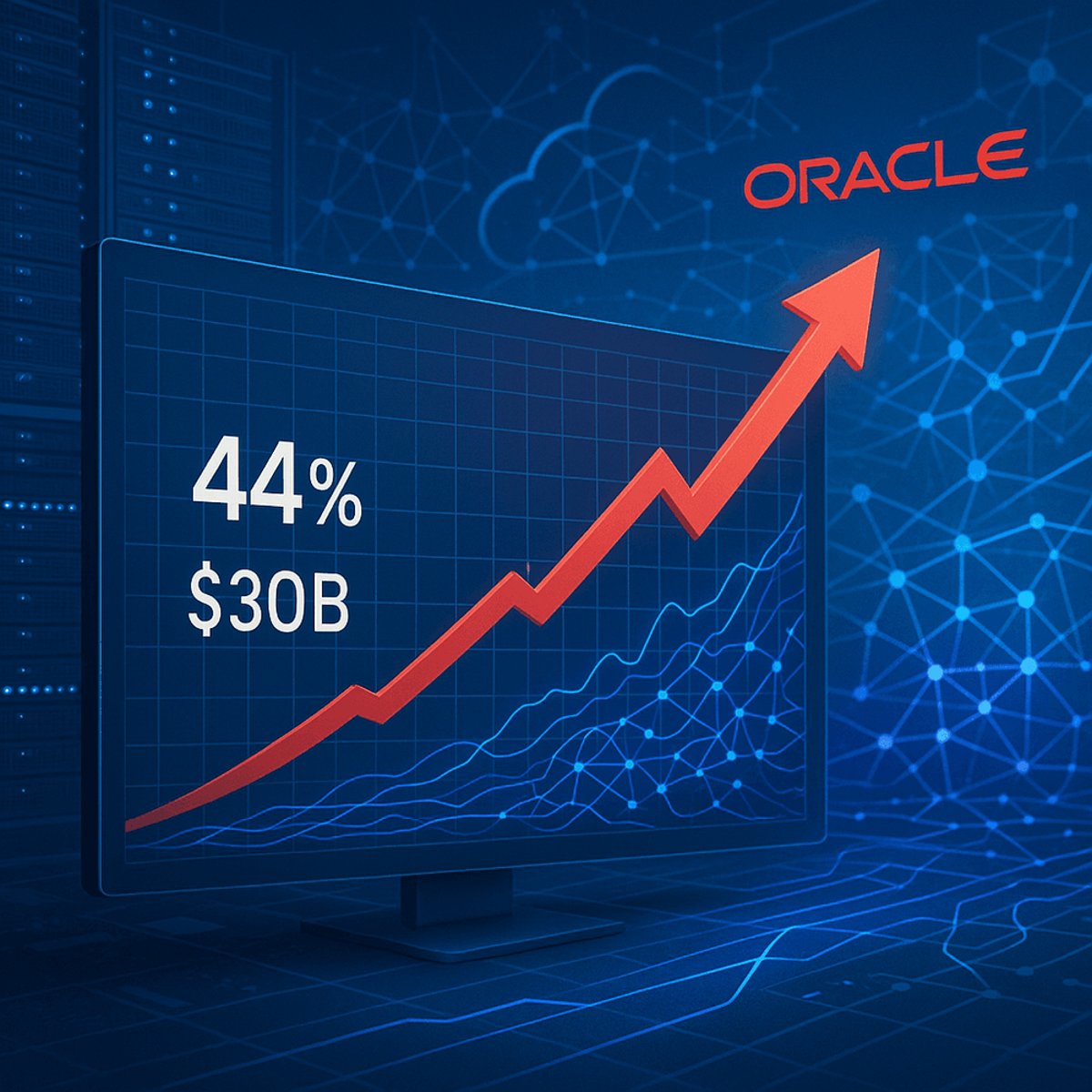
Oracle just delivered the earnings vindication Wall Street was waiting for. The database giant's stock jumped 7% in after-hours trading Tuesday as it posted a decisive Q3 beat, driven by cloud infrastructure revenue that climbed 44% year-over-year. The company added a staggering $30 billion to its revenue backlog during the February quarter alone - concrete evidence that its massive bet on AI infrastructure, including that eye-popping OpenAI partnership, is translating into real money.
Oracle is finally seeing its AI infrastructure gamble pay off in hard numbers. The company's Q3 earnings, released Tuesday evening, sent shares climbing 7% as cloud revenue growth hit 44% - a pace that rivals are struggling to match in today's AI-frenzied market.
The standout metric? Oracle boosted its revenue backlog by $30 billion during the three months ending in February, according to CNBC's reporting. That's not just growth - it's validation of a strategy that seemed risky when Oracle first went all-in on AI cloud infrastructure.
The timing couldn't be better. Just weeks ago, Oracle announced it would provide over $300 billion in AI infrastructure to support OpenAI's computing needs, a deal that raised eyebrows across the industry. Now we're seeing why CEO Larry Ellison was so confident making that commitment. The backlog surge suggests Oracle's pipeline is stuffed with similar mega-deals from companies desperate for AI computing power.
Cloud infrastructure revenue climbing 44% year-over-year puts Oracle in rare company. While Amazon Web Services and Microsoft Azure still dominate overall cloud market share, Oracle's growth rate is outpacing both tech giants in percentage terms. The difference? Oracle has positioned itself as the go-to provider for companies that need massive GPU clusters and specialized AI workloads, rather than competing head-to-head in general-purpose cloud services.
The $30 billion backlog increase is particularly telling. In enterprise software, backlog represents contracted revenue that hasn't been recognized yet - essentially a preview of future earnings. For context, Oracle's total revenue last quarter was around $14 billion, meaning this single quarter's backlog additions represent more than two full quarters of current revenue. That's the kind of number that makes CFOs and investors sit up straight.
What's driving this surge? The AI infrastructure land grab that's been reshaping enterprise tech over the past year. Companies building large language models need somewhere to train them, and Oracle has been aggressively building out datacenters packed with Nvidia H100 and newer GPUs. The OpenAI deal showcased Oracle's capacity to handle hyperscale AI workloads, and competitors took notice.
But Oracle isn't just riding the AI wave - it's also benefiting from its traditional database business getting a second wind. Organizations migrating legacy Oracle databases to Oracle Cloud Infrastructure are discovering they can consolidate AI workloads on the same platform, creating a flywheel effect that competitors like AWS can't easily replicate.
The 7% after-hours stock jump erases some of the skepticism that's dogged Oracle for years. For a company often dismissed as a legacy database vendor, posting 44% growth in any category - let alone the hottest segment of enterprise tech - forces a narrative reset. Investors who've been waiting for proof that Oracle can compete in the cloud era just got it.
The earnings beat also puts pressure on Oracle's competitors to show similar AI-driven results. Google Cloud and Microsoft have been touting their AI capabilities for months, but Oracle is now demonstrating that specialized AI infrastructure can be a differentiated business, not just a feature of general cloud platforms.
Looking ahead, the real question is whether Oracle can sustain this momentum. A $30 billion backlog boost is impressive, but converting that backlog into recognized revenue while maintaining margins will be the next test. Oracle also needs to prove it can keep signing mega-deals beyond OpenAI - one whale doesn't make a sustainable business model.
The broader market implications are significant too. Oracle's success validates the thesis that AI infrastructure is a massive, standalone opportunity. That could accelerate investment in specialized AI cloud providers and put pressure on traditional cloud providers to unbundle their AI offerings.
For now, though, Oracle is having its moment. In a market that's been brutal to tech stocks that can't demonstrate AI revenue traction, Oracle just showed up with receipts. The 44% cloud growth rate and $30 billion backlog increase aren't projections or promises - they're money in the bank, or at least money under contract. And in today's show-me market, that's exactly what investors wanted to see.
Oracle's Q3 blowout marks a turning point for a company that's spent years trying to prove it belongs in the cloud era. The 44% cloud revenue growth and $30 billion backlog surge aren't just good numbers - they're evidence that Oracle's AI infrastructure strategy is working at scale. As AI workloads continue exploding across enterprise tech, Oracle has positioned itself as the specialized infrastructure provider that can handle the biggest, most demanding deployments. The real test now is execution: converting that massive backlog into revenue, maintaining growth rates as comparisons get tougher, and proving the OpenAI deal was the first of many rather than a one-off win. For investors who've been waiting for Oracle to demonstrate cloud credibility, Tuesday's earnings just delivered the proof.