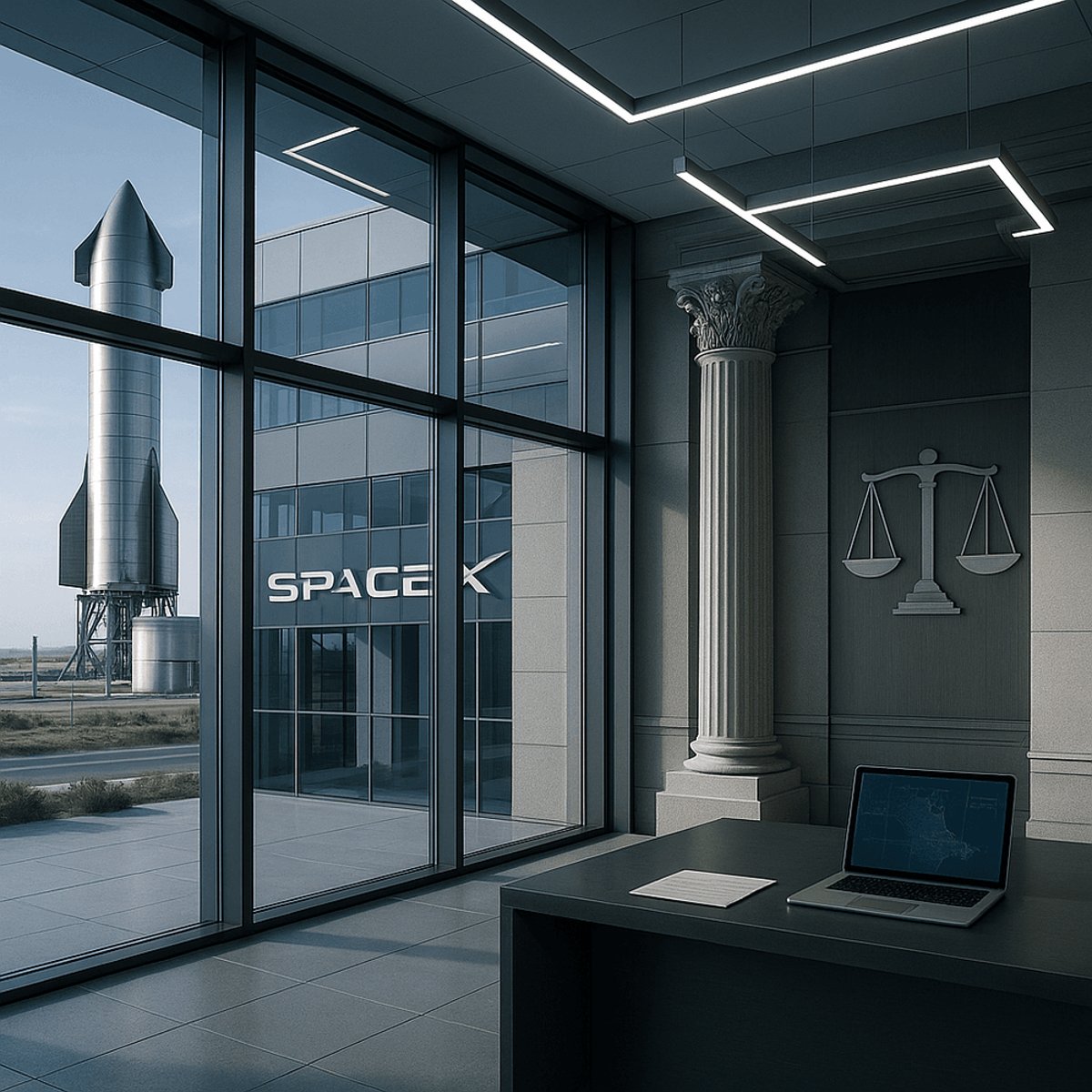
SpaceX is taking another step toward building a fully autonomous company town in South Texas. The aerospace manufacturer is establishing a municipal court for Starbase, the incorporated city surrounding its massive rocket facility near Brownsville. The move comes after Starbase already launched a volunteer fire department and announced plans for its own police force, raising questions about corporate governance and the boundaries between private enterprise and public administration.
SpaceX is building more than rockets in South Texas. The company's push to establish a municipal court for Starbase marks the latest chapter in what's becoming one of the most unusual experiments in corporate governance in modern American history.
The aerospace giant's company town, which officially incorporated as a city, is now moving to create its own judicial system. It's a development that puts SpaceX in rarefied territory, controlling not just the economic engine of an entire municipality but potentially its law enforcement and legal proceedings as well.
Starbase already operates a volunteer fire department staffed largely by SpaceX employees and contractors. The company has also announced plans to form the Starbase Police Department, though details about staffing, oversight, and accountability remain scarce. Now, with a municipal court in the works, the infrastructure of a fully functioning city is taking shape around SpaceX's Starship development and launch facility.
The model echoes company towns from America's industrial past, when coal mining operations and steel manufacturers built entire communities around their facilities. But those arrangements largely disappeared by the mid-20th century amid concerns about corporate overreach and worker exploitation. SpaceX's revival of the concept comes with a 21st-century twist: it's happening in one of the most advanced technology sectors on the planet.
Legal experts have raised eyebrows at the arrangement. Municipal courts typically handle minor offenses, traffic violations, and local ordinance disputes. But questions linger about judicial independence when the primary employer, largest landowner, and economic force in a city also controls its legal system. Traditional checks and balances between government branches become complicated when one corporation effectively serves as all three.
The Starbase development sits in Cameron County, one of the poorest regions in Texas, where SpaceX has rapidly transformed a sleepy beach community into a hub of aerospace activity. The company's Starship program, designed to eventually carry humans to Mars, conducts regular test flights from the facility. The operations have brought jobs and economic activity, but also noise complaints, road closures, and environmental concerns from longtime residents.
Incorporating as a city gave SpaceX greater control over local zoning, utilities, and infrastructure decisions. Establishing a police force and court system extends that control into areas traditionally reserved for elected officials accountable to voters, not shareholders. It's unclear how many permanent residents actually live in Starbase beyond SpaceX employees, or what the electoral structure looks like for city governance.
The development comes as Elon Musk, SpaceX's founder and CEO, has increasingly positioned himself as a political figure as well as a business leader. His companies have repeatedly clashed with regulatory agencies over environmental reviews, labor practices, and safety protocols. Creating a municipality where SpaceX holds significant sway over local law enforcement and judicial proceedings could complicate those dynamics further.
Other tech companies have flirted with similar concepts. Google and its parent company Alphabet explored developing an entire neighborhood in Toronto before public backlash scuttled the project. Tesla has discussed building a company town near its Gigafactory in Texas. But SpaceX appears furthest along in actually implementing the model.
The legal framework for Starbase's court system will likely face scrutiny from civil liberties organizations and constitutional scholars. Texas law allows municipalities to establish courts of record for misdemeanors and civil cases, but the appointments of judges and their independence from the dominant local employer could become flashpoints. Whether residents and workers in Starbase will have meaningful input into who sits on the bench, and whether those judges can rule impartially against SpaceX interests, remains to be seen.
SpaceX's expansion into municipal governance with a court system represents uncharted territory for modern tech companies. While company towns once dominated American industrial landscapes, their revival in the space age raises fundamental questions about corporate power, judicial independence, and democratic accountability. As Starbase builds out the infrastructure of a complete city under corporate control, it may become a test case for whether private enterprise and public governance can coexist, or whether the old concerns that killed company towns a century ago will resurface in South Texas.