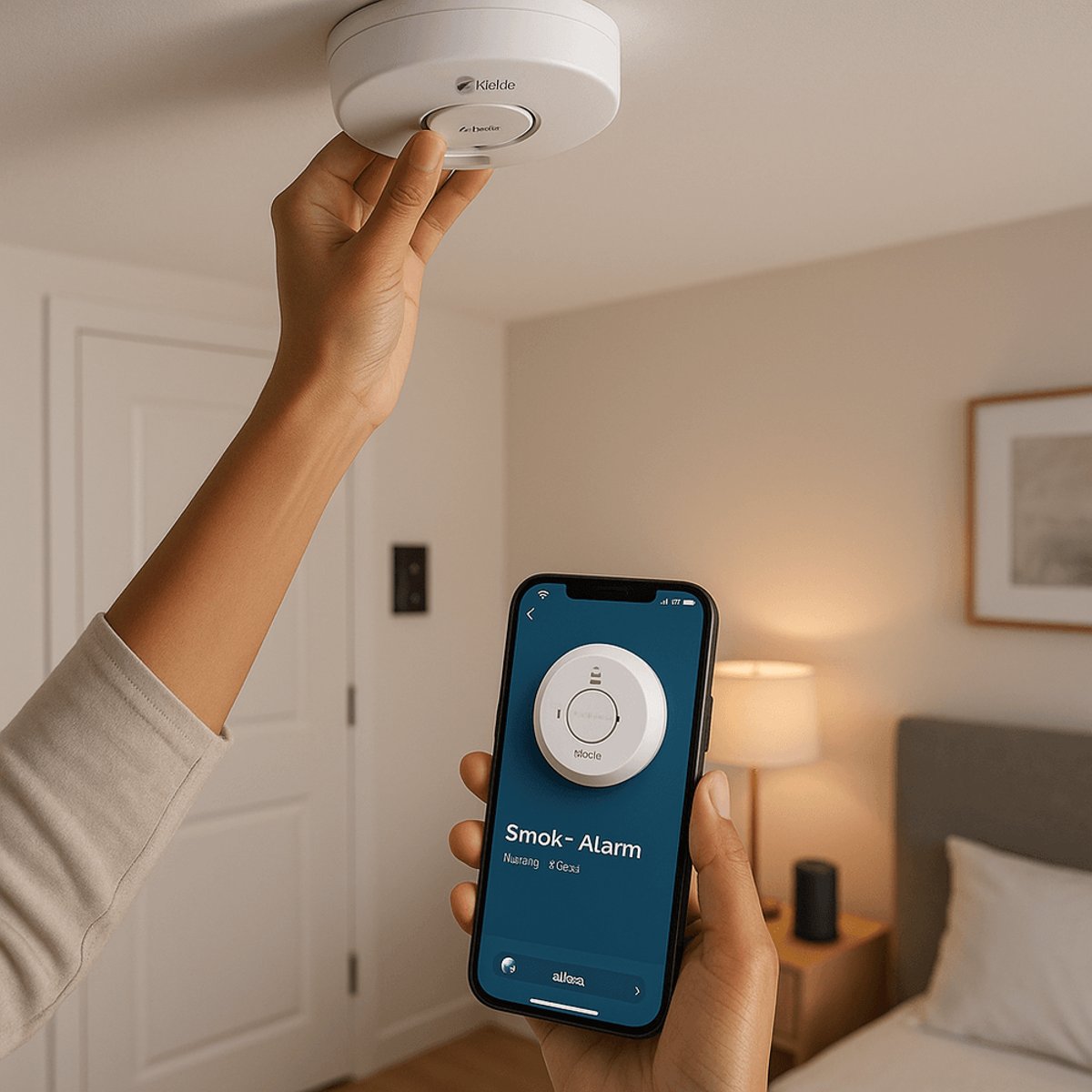
Ring and Kidde are doubling down on their smart home safety partnership with a new battery-powered smoke detector that brings Alexa integration without the hassle of hardwiring. The launch marks the second collaboration between Amazon's Ring division and the century-old fire safety brand, signaling a broader push to make connected home safety devices more accessible to renters and DIY installers who've been locked out of the hardwired smart home market.
Ring just made smart home safety a lot more accessible. The Amazon-owned doorbell company teamed up with fire safety veteran Kidde to launch a battery-powered smoke detector with Alexa integration, eliminating the biggest barrier to entry for millions of renters and DIY enthusiasts, according to Wired.
The device represents the second collaboration between the two companies, but this time there's no electrician required. That's a significant shift in a market where hardwired installation has kept smart smoke detectors out of reach for roughly 44 million U.S. rental households, based on Census data. The battery-powered approach lets users mount the detector in minutes rather than calling in professionals or violating lease agreements.
Amazon has been quietly building out its connected home safety portfolio since acquiring Ring for $1 billion back in 2018. The company's strategy revolves around creating an integrated ecosystem where devices talk to each other seamlessly. A smoke alarm that triggers your Ring cameras to start recording and alerts your phone through Alexa fits perfectly into that vision.
The timing isn't accidental. The global smart smoke detector market is projected to hit $2.1 billion by 2028, growing at nearly 9% annually, according to industry analysts. But adoption has been hampered by installation complexity and the reality that most people rent rather than own their homes. Ring and Kidde are betting that removing the hardwiring requirement unlocks a massive untapped market.
Kidde, which has been manufacturing fire safety equipment since 1917, brings credibility that pure-play tech companies lack. Homeowners and renters trust the brand's 100-plus years of experience in a category where reliability literally means life or death. For Ring, the partnership offers instant legitimacy in safety hardware beyond video doorbells and security cameras.
The Alexa integration is where things get interesting from a platform perspective. Users can receive voice alerts through Echo devices, check detector status through the Alexa app, and potentially integrate the alarm into broader home automation routines. It's another data point feeding into Amazon's growing map of connected home behavior and user patterns.
But the battery-powered approach introduces questions about maintenance and reliability. Traditional hardwired smoke detectors draw power from home electrical systems with battery backup, while fully battery-dependent models require vigilant replacement schedules. The industry has struggled with this issue for years, with studies showing that roughly 25% of smoke alarm failures stem from dead or missing batteries.
The competitive landscape is heating up. Google's Nest Protect has dominated the premium smart smoke detector market since 2013, while startups like First Alert and established players like Honeywell have pushed their own connected options. Ring's advantage lies in its massive installed base of doorbell and camera users who already live within the Amazon ecosystem and use the Ring app daily.
From a business model perspective, the device likely serves as another entry point into Ring's subscription services, which include cloud video storage and extended warranties. Amazon has been steadily converting its hardware sales into recurring revenue streams, with Ring Protect plans starting at $4.99 monthly.
The launch also reflects broader trends in smart home adoption. After years of focusing on convenience features like voice assistants and automated lighting, manufacturers are circling back to practical safety applications that justify the smart home investment. A smoke detector that texts you about a kitchen fire while you're at work delivers tangible peace of mind that smart light bulbs can't match.
For the smart home industry, removing installation barriers might be the unlock that finally pushes connected devices beyond early adopters and into mainstream households. If you can stick a smart smoke detector on the ceiling as easily as hanging a picture frame, the value proposition becomes a lot more compelling to the average consumer who's been watching the smart home revolution from the sidelines.
The battery-powered smoke detector won't revolutionize the tech industry, but it represents something potentially more valuable: making smart home technology actually accessible to people who rent their homes or can't afford professional installation. If Ring and Kidde can crack the code on reliable battery life and maintain the safety standards the category demands, they might have found the formula for bringing connected safety devices to the 44 million households that have been locked out of the hardwired smart home ecosystem. The real test won't be the technology itself but whether mainstream consumers see enough value in Alexa-enabled smoke detection to justify replacing perfectly functional traditional alarms. In a market approaching $2 billion, that's the multimillion-dollar question Amazon is betting it can answer.