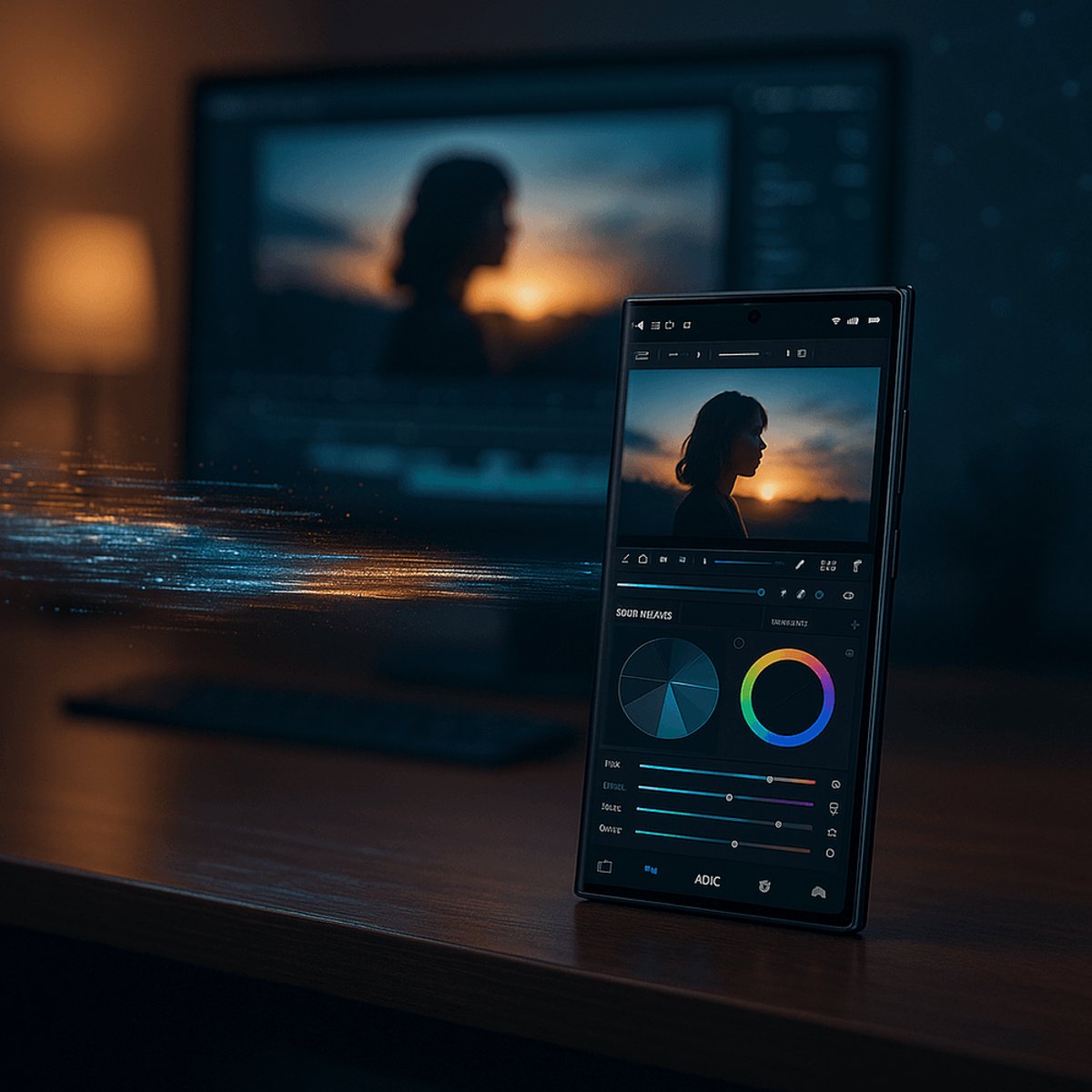
Samsung just opened up its mobile video playbook. The company released its APV (Advanced Professional Video) codec as open source alongside the Galaxy S26 Ultra launch in March, marking a rare move to standardize compression tech across the industry. The IETF-approved codec cuts file sizes by over 10% while maintaining near-lossless quality through multiple editing rounds - directly challenging Apple's ProRes dominance in professional mobile workflows.
Samsung is betting that giving away its video technology will help it win the creator economy. The company's newly released APV codec, which debuted on the Galaxy S26 Ultra in March, represents a strategic shift - instead of keeping proprietary tech locked down, Samsung open-sourced the entire standard to encourage industry adoption.
The move comes as mobile video creation explodes beyond traditional professionals. "As more expert-level users such as YouTubers and influencers emerge, we wanted to lower the barriers to entry for video production, which has traditionally required access to professional equipment," Sunmi Yoo from Samsung's Visual Solution Team told Samsung Newsroom in an exclusive interview.
APV tackles a fundamental problem with conventional video codecs - they lose data every time you compress and re-edit footage. Traditional workflows see noticeable quality degradation after just a few editing passes. Samsung's approach preserves image data through YUV 4:2:2 color sampling, delivering what the team calls "visually lossless" quality even after multiple rounds of editing. At the same quality level, APV shrinks file sizes by more than 10% compared to similar codecs.
But bringing a standardized codec to market required navigating entirely different challenges than lab development. "Moving from standardization to commercialization was a challenge on a completely different level," explained Junseang Min, also from the Visual Solution Team. The team had to solve for real-time processing of UHD and 8K video within the thermal and power constraints of mobile devices.
The numbers reveal the scale of the challenge - UHD 30fps footage recorded in APV can reach up to 6GB per minute. That kind of sustained data throughput pushed Samsung to coordinate across business units. The team partnered with Samsung's Memory Business to validate portable SSD models, running more than nine test cycles across all recording resolutions on the Galaxy S26 Ultra to ensure stable data transfer under high-load conditions.
The technical implementation also demanded system-level optimization for thermal management. Samsung worked directly with chipset manufacturers to ensure the silicon could handle APV encoding without throttling performance. Beyond hardware, building an ecosystem meant coordinating with editing tool developers and video player companies to support the new format.
Samsung's open-source gambit mirrors the Internet Engineering Task Force's formal standardization of APV, but the real test comes from adoption. "No matter how advanced a technology is, if it isn't widely used, it becomes obsolete," Yoo said. The three-year development process included close collaboration between Samsung's MX business and Samsung Research to ensure Android standard support.
The Galaxy S26 Ultra ships with four built-in cinematic LUTs (Look-Up Tables), allowing users to apply film-like color grading directly in-camera. Samsung also developed a dedicated pro kit in collaboration with camera accessory specialists, unveiled at the March Galaxy Unpacked event. "It laid the foundation for Galaxy to be utilized in professional video production workflow," Min noted.
The timing aligns with broader industry shifts. As Apple continues pushing ProRes for iPhone Pro models and mobile creators demand desktop-class tools, Samsung's open approach could accelerate codec adoption across Android devices. The company is explicitly targeting professional environments - Yoo mentioned looking forward "to the day when Galaxy S26 Ultra is even used in film production environments."
For Samsung, the APV release represents both a technical achievement and strategic positioning. By standardizing the codec and releasing it as open source, the company is trying to define the next generation of mobile video standards rather than compete in a fragmented ecosystem. Whether that bet pays off depends on how quickly third-party developers, competing device makers, and professional tools adopt the format.
The Visual Solution Team isn't done yet. "We plan to continue advancing the codec so that both users and creators can find even greater value in Galaxy-based video editing," Yoo said. The roadmap includes expanding ecosystem partnerships and further optimization for everyday users creating cinematic content without professional equipment.
Samsung's APV codec release signals a shift in how device makers approach proprietary technology in the creator economy. By standardizing through IETF and releasing as open source, Samsung is trading short-term licensing revenue for long-term ecosystem influence. If the codec gains traction across Android devices and professional editing tools, it could establish Samsung as the architect of mobile video standards - positioning the Galaxy line as the default choice for serious creators. But if adoption stalls, the company risks fragmenting an already crowded codec landscape. The next 12 months will reveal whether Samsung's open bet disrupts Apple's ProRes grip on professional mobile workflows.