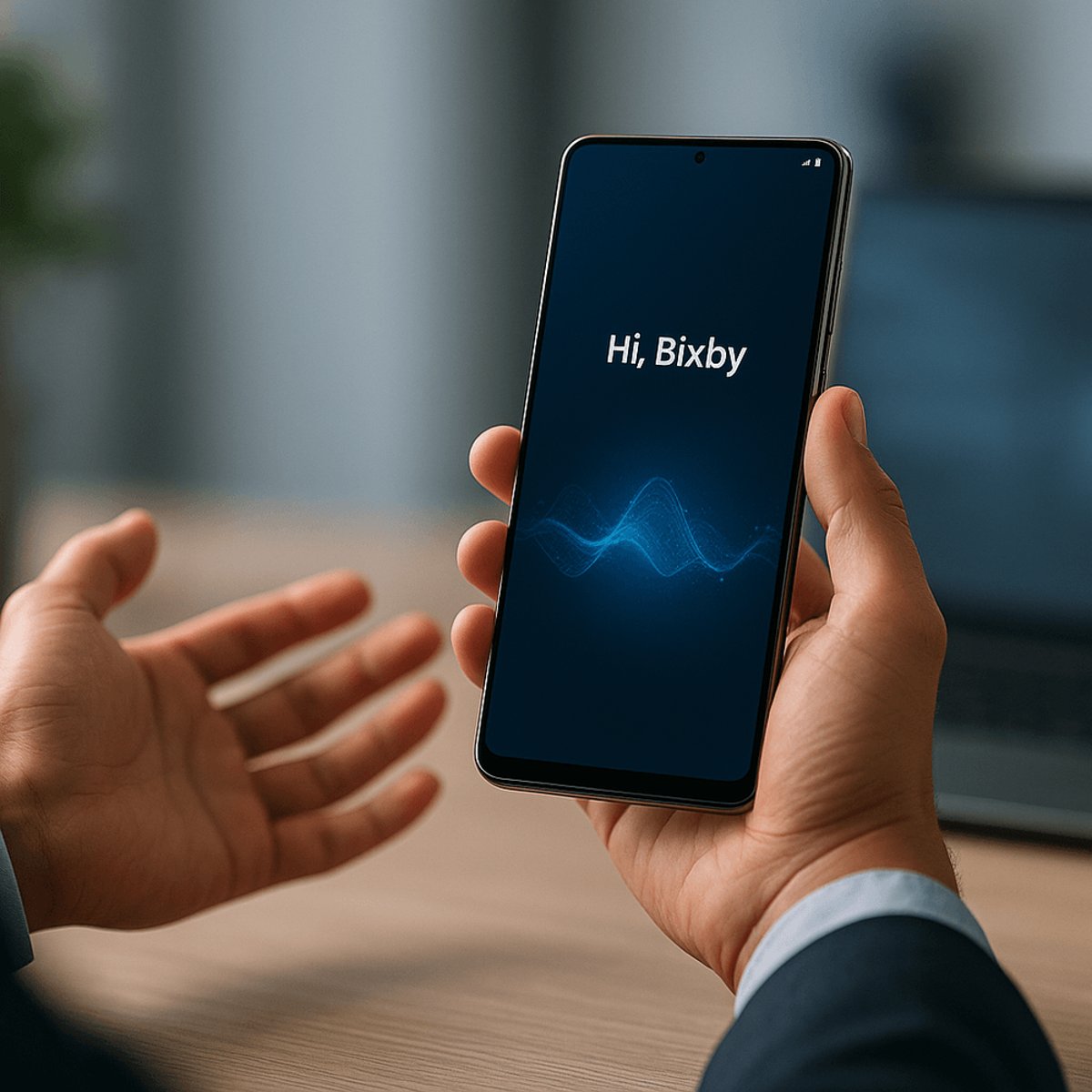
Samsung just fired back in the AI assistant wars. The company's redesigned Bixby now operates as a full conversational device agent, letting Galaxy users control their phones through natural language without memorizing commands or menu structures. The upgrade, rolling out in One UI 8.5 beta across six markets, adds real-time web search capabilities directly into Bixby's interface - a direct shot at Google Assistant and Apple's Siri as the battle for mobile AI supremacy heats up.
Samsung is making its biggest bet yet on conversational AI. The Korean tech giant just opened beta access to a completely revamped Bixby assistant built to operate as what the company calls a "conversational device agent" - tech speak for an AI that actually understands what you mean, not just what you say.
The timing couldn't be more deliberate. As Apple doubles down on Siri improvements and Google bakes Gemini deeper into Android, Samsung's betting that natural language device control will become the defining feature of premium smartphones. "Since we introduced our first AI phone in 2024, we've been committed to making them easier to use so more people can benefit from AI," Won-Joon Choi, Samsung's COO for Mobile Experience, told Samsung Newsroom.
What separates this Bixby from its predecessors is context. Users can now speak to their Galaxy devices like they're talking to a tech-savvy friend, not barking commands at a voice menu. Instead of memorizing that "Keep Screen on While Viewing" exists somewhere in Settings, you just say "I don't want the screen to time out while I'm still looking at it." Bixby translates intent into action, finds the right toggle, and flips it.
The system goes beyond simple command execution. When users ask diagnostic questions - "Why is my phone screen always on when it's inside my pocket?" - Bixby analyzes current device settings and surfaces relevant solutions like Accidental Touch Protection. It's troubleshooting that adapts to how people actually think about problems, not how engineers structured menu hierarchies.
This contextual awareness represents a fundamental shift in how voice assistants operate on mobile devices. Traditional assistants required users to learn their vocabulary and phrasing patterns. Samsung's flipping that dynamic by training Bixby to understand the vocabulary users already have. The technology builds on advances in large language models that can parse intent from messy, conversational requests.
But device control is only half the equation. Samsung's also tackling one of voice assistants' most persistent pain points: getting kicked out to a web browser every time you ask a question that needs current information. The new Bixby includes real-time web search capabilities that display results directly in its own interface. Ask "Find me hotels in Seoul that have swimming pools for kids" and you get search results without ever leaving the assistant.
It's a user experience play that keeps people engaged with Bixby rather than treating it as a glorified browser launcher. Amazon's Alexa pioneered this approach on smart speakers, but implementing it smoothly on mobile devices where screen real estate matters has proven trickier for most assistants.
The feature requires location permissions when relevant to queries, though Samsung promises the data gets deleted immediately after generating responses. It's a privacy consideration that reflects growing user sensitivity around AI assistants' data appetites, especially after years of controversies around voice recording retention.
Samsung's rolling out the updated Bixby through its One UI 8.5 beta program in six markets: the US, UK, Germany, India, Korea, and Poland. The company's promising broader expansion but hasn't committed to specific timelines or which Galaxy devices will receive the upgrade beyond beta participants.
Language support remains a potential friction point. Bixby currently recognizes 13 languages including multiple English dialects, but Samsung acknowledges "not all accents, dialects and expressions are recognized." That's a diplomatic way of saying the natural language processing still has limits - users with heavy accents or using regional slang might find themselves falling back on more structured commands.
The competitive stakes here run deeper than feature parity. Samsung's entire AI phone strategy, launched in 2024, rests on making advanced AI capabilities accessible enough for mainstream users. If people don't actually use AI features, they won't factor into purchase decisions. A Bixby that finally feels intuitive could become a genuine differentiator in a market where hardware specs have largely plateaued.
Apple faces similar pressure to make Siri more conversational and contextually aware, while Google's Pixel line leverages tighter integration between Android and its AI models. Samsung's disadvantage - not controlling its mobile OS - becomes an advantage if it forces the company to make Bixby's interface significantly better than competitors to win user attention.
Analysts will be watching whether this Bixby reboot gains traction beyond Samsung's core Galaxy user base. Previous iterations never achieved the cultural penetration of Siri or Alexa despite Samsung's massive global smartphone market share. Natural language control could change that calculus if it delivers on the promise of making complex devices genuinely easier to use.
Samsung's Bixby reboot represents more than an incremental assistant upgrade - it's a strategic play to define what conversational AI should feel like on mobile devices. If the natural language understanding delivers on its promise and users actually adopt these features over muscle-memory menu navigation, Samsung could carve out meaningful differentiation in a smartphone market starving for genuine innovation. The real test comes when this exits beta and faces millions of Galaxy users with wildly different accents, use cases, and expectations. Success means finally making good on the decade-old promise that talking to our devices should feel natural, not like performing a technical ritual.