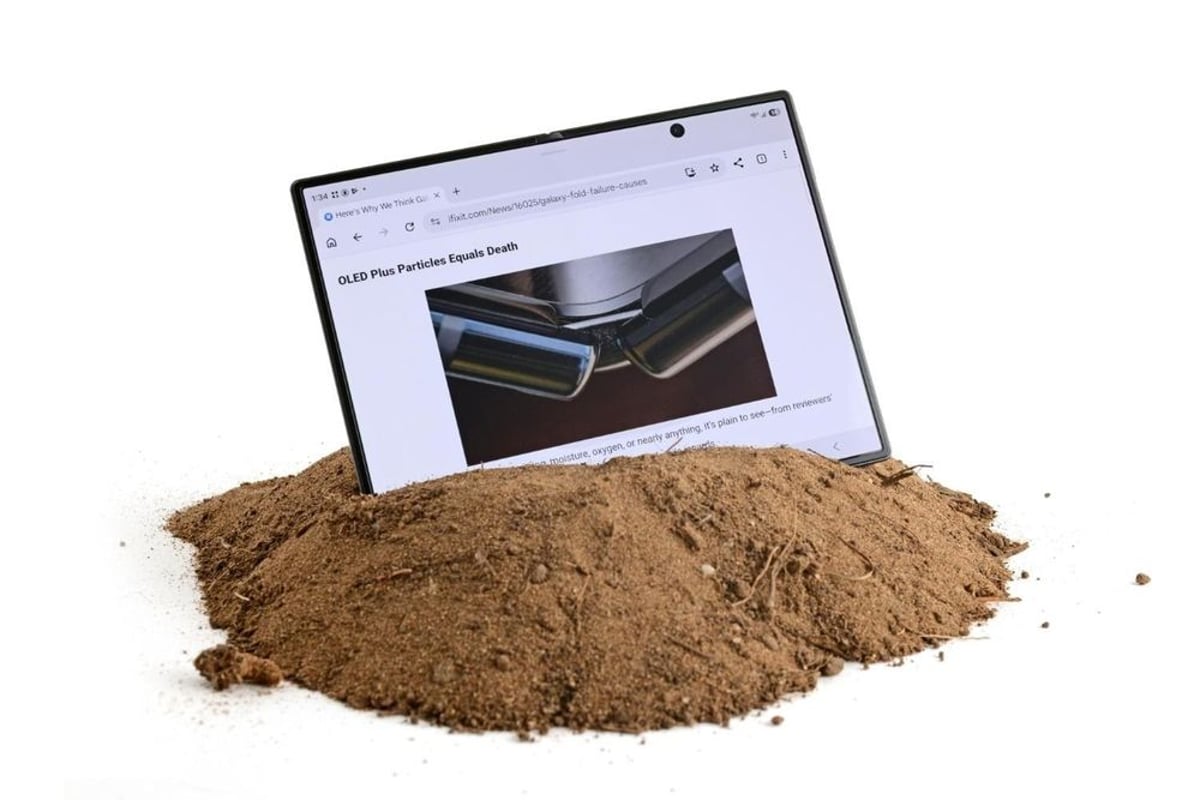
Samsung's latest flagship foldable is stumbling over the same problem that's plagued the series for years. The $1,900 Galaxy Z Fold 8 just earned a disappointing 4 out of 10 repairability score from iFixit, with the repair specialist's teardown exposing a critical weakness: pocket lint and sand can still wreak havoc on the device's complicated hinge mechanism. Despite eight generations of refinement, the phone's IP48 rating means it can't keep out particles smaller than 1 millimeter, and that's turning into an expensive liability for users.
Samsung launched its eighth-generation foldable with plenty of fanfare, but iFixit's latest teardown suggests the company still hasn't cracked the code on durability. The repair advocacy group put the Galaxy Z Fold 8 through its paces and came away unimpressed, assigning a provisional repairability score of just 4 out of 10.
The problem isn't new, but it's frustrating that it persists at this price point. According to iFixit's detailed teardown, the Z Fold 8's IP48 ingress protection rating sounds impressive on paper but reveals a critical gap in real-world protection. That "4" means the device can handle solid objects larger than 1 millimeter, but anything smaller - think fine sand, pocket lint, or everyday dust - can infiltrate the hinge assembly.
"After working the Fold 8 open and closed, the hinge started making truly awful crunching and grinding noises, and the phone stopped opening normally," iFixit reported. That's not the kind of performance you expect from a nearly $2,000 device, especially one that's supposedly been refined over eight iterations.
The hinge issue goes beyond just annoying sounds. Because Samsung has historically treated the hinge and inner display as a single replacement component, any hinge failure potentially means replacing a significant portion of the phone. That design choice might simplify Samsung's manufacturing process, but it creates a nightmare scenario for repair costs and sustainability.
This isn't Samsung's first rodeo with foldable durability concerns. The original Galaxy Fold famously delayed its launch in 2019 after early review units failed when debris entered the hinge. The company responded with protective caps and tighter tolerances, but clearly those measures haven't fully solved the fundamental challenge of creating a folding phone that can survive everyday environments.
Compare that to the broader smartphone market, where even mid-range devices now routinely ship with IP68 ratings, offering protection against dust and water immersion up to 1.5 meters for 30 minutes. Apple's iPhone lineup has maintained IP68 since the iPhone 12 series, and even budget-conscious manufacturers are hitting that standard. Samsung's foldables remain the outlier.
The repair complications extend beyond the hinge itself. iFixit's teardown reveals that accessing internal components requires navigating multiple layers of adhesive and delicate ribbon cables. The inner folding display remains particularly vulnerable, with any repair work risking damage to the screen's ultra-thin glass and protective layers.
What makes this especially concerning is the trajectory of the foldable market. Industry analysts project foldable shipments will reach 50 million units globally by 2027, with Samsung maintaining dominant market share. But if the company can't solve fundamental durability issues, competitors like Google with its Pixel Fold line and emerging Chinese manufacturers could capitalize on Samsung's weakness.
The economics of repair matter more than ever as device prices climb. At $1,900, the Z Fold 8 sits firmly in premium territory, yet its repairability lags behind conventional flagship phones. Right-to-repair advocates have long argued that manufacturers should design products with longevity and repairability in mind, not just sleek form factors.
Samsung hasn't publicly responded to iFixit's teardown, but the company has previously defended its foldable designs by pointing to improved durability testing and warranty programs. Those assurances ring hollow when independent testing shows the devices still can't handle basic environmental challenges like beach sand or workshop dust.
The timing is particularly awkward given Samsung's recent sustainability commitments. The company pledged to achieve net-zero carbon emissions by 2050 and has promoted device longevity as part of that strategy. But phones that fail after dust exposure don't align with those environmental goals, no matter how recyclable the materials might be.
Samsung's foldable ambitions are hitting the same wall they've faced for years. Eight generations in, the Galaxy Z Fold 8 still can't keep dust out of its most critical component, and the company's approach to repairs makes fixing these inevitable failures expensive and complicated. For a device commanding $1,900, that's not good enough. Until Samsung figures out how to build a truly dust-resistant hinge or makes the phone genuinely repairable, buyers are gambling that their pockets stay cleaner than the average beach vacation. The foldable future looks impressive in marketing videos, but iFixit's teardown shows it's still frustratingly fragile in the real world.