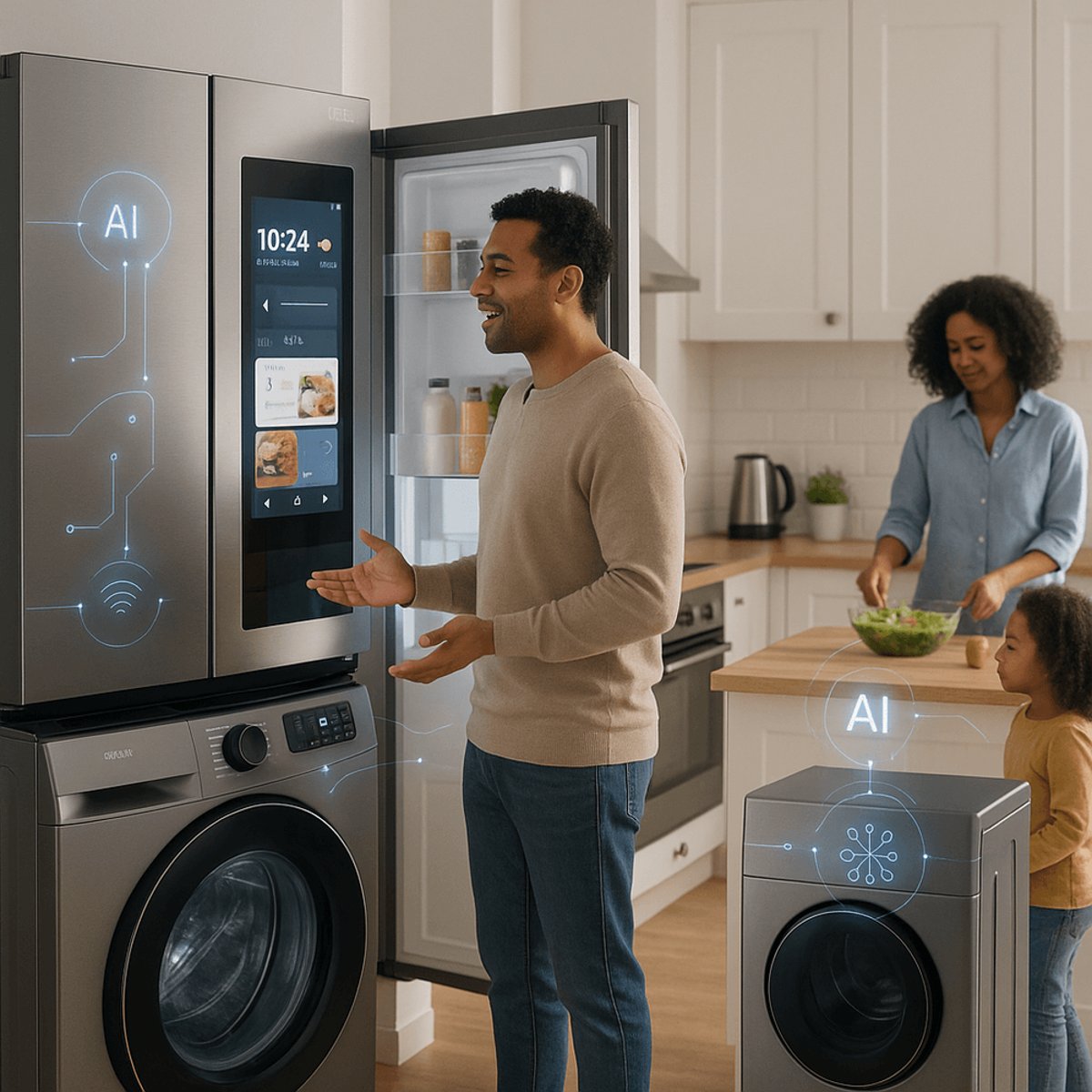
Samsung just laid out its audacious plan to eliminate household chores entirely. The Korean giant is tripling its AI appliance models from 300 to 1,030 by March 2025, powered by three core technologies that promise to make your home think and act for you. According to EVP Jeong Seung Moon, the company's "zero housework" vision isn't just marketing fluff - it's a technical roadmap.
Samsung just dropped a bombshell that could reshape how we think about household chores. In a rare deep-dive interview, Jeong Seung Moon, Executive Vice President and Head of R&D at Samsung's Digital Appliances Business, revealed the company's aggressive push to triple its AI appliance lineup - and the technical strategy behind what he calls "zero housework."
The numbers tell the story of Samsung's commitment. From roughly 300 AI appliance models in 2024, the company is scaling to around 1,030 models by March 2025. But this isn't just about flooding the market with smart gadgets. "Samsung's product development is focused on advancing the connection between AI and devices so that appliances can understand users and act on their behalf," Moon told Samsung Newsroom.
The technical foundation rests on what Samsung calls its three-pillar approach: Screens, Bixby, and Vision. It's this combination that Moon believes separates Samsung's Bespoke AI from the competition. Take the screens - they're not just displays but control hubs that connect to Samsung's SmartThings ecosystem, letting users manage entire homes from a refrigerator door. The connectivity push is already showing results: 91% of Samsung's Bespoke Four-Door Refrigerators sold globally now come Wi-Fi enabled, according to September 2025 data.
But it's the voice and vision capabilities that really showcase Samsung's ambitions. Bixby has been enhanced with a large language model specifically tailored for appliances, enabling natural conversation with your washing machine or oven. The newly introduced Voice ID feature takes this further - in shared households, appliances recognize who's speaking and tailor responses accordingly. "When a user asks, 'What's on my schedule?' Bixby will pull up their calendar, not someone else's," Moon explained.
The "wakeless" voice control represents Samsung's most ambitious technical leap. Users can operate appliances without saying "Hi Bixby" first - just walk up to your refrigerator and say "Open the left door," and it responds. Combined with features like Auto Open Door, it creates what Moon describes as "a truly seamless experience."
Vision technology brings the autonomous decision-making that Samsung believes will eliminate household chores. The Bespoke AI Family Hub refrigerator uses AI Vision Inside to automatically identify ingredients as they're placed inside, managing food inventory and recommending recipes. The system is evolving to send optimal cooking settings to connected kitchen appliances, removing the guesswork from meal preparation.
The laundry game gets similar treatment. Samsung's Bespoke AI Laundry Combo uses AI Opti Wash & Dry to detect fabric type, soil level, and weight after clothes are loaded. The system then automatically dispenses the right amount of detergent and selects appropriate wash and dry cycles. Even noise and vibration get smart treatment through AI Vibration Reduction Technology.
These aren't just incremental improvements - they represent a fundamental shift in how appliances operate. "Tasks that once required manual effort and user supervision can now be handled automatically," Moon noted, describing what he sees as a major shift in home management.
The competitive implications are significant. While Apple focuses on HomeKit integration and Google pushes Nest connectivity, Samsung is betting on end-to-end appliance intelligence. The company's vertical integration - controlling everything from chips to software to the physical appliances - gives it advantages that pure software players can't match.
Moon's vision extends well beyond the kitchen and laundry room. Samsung plans to expand Bespoke AI beyond homes to buildings, vehicles, and even ships, creating interconnected intelligent environments across industries. The company is working with domestic and global partners across hardware, software, and services to bring this vision to life.
The market timing couldn't be better. As AI capabilities mature and computing costs drop, the smart home market is primed for Samsung's integrated approach. The company's massive scale in appliance manufacturing gives it the ability to embed AI capabilities at price points competitors can't match.
Samsung's aggressive push into AI appliances represents more than just a product refresh - it's a bet that the future of home automation lies in appliances that think and act independently. With 1,030 AI models rolling out by March and technical capabilities that go far beyond voice commands, Samsung is positioning itself at the center of the connected home revolution. Whether consumers are ready for appliances that make decisions for them remains to be seen, but Samsung is clearly betting big that the era of "zero housework" is closer than most realize.