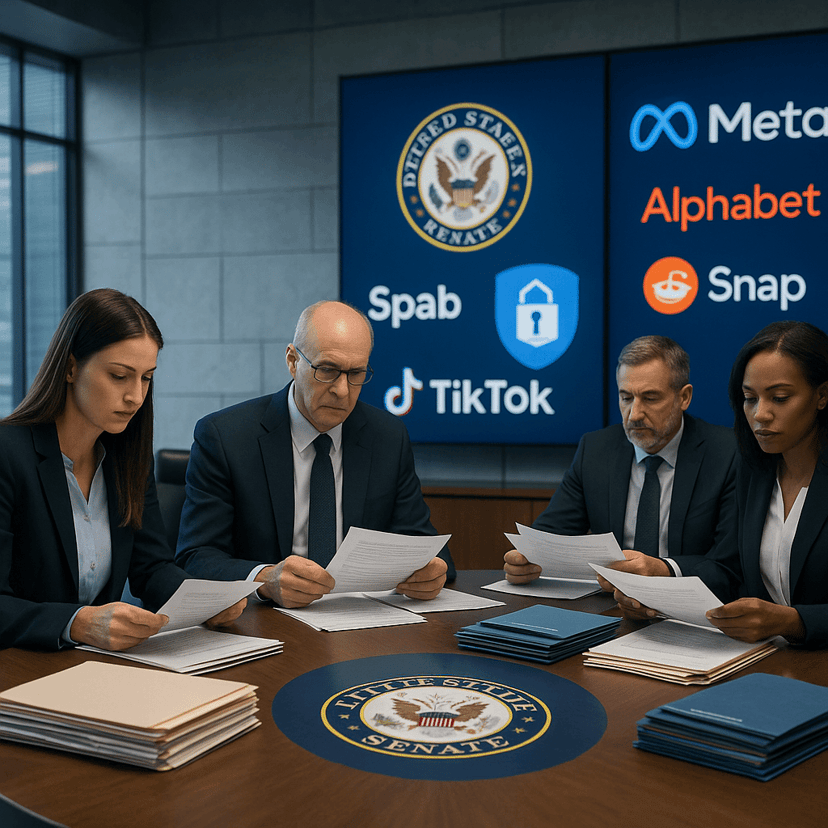
Silicon Valley's biggest AI players are mobilizing unprecedented political firepower ahead of the midterms. Andreessen Horowitz and OpenAI President Greg Brockman are among tech veterans pouring over $100 million into a new super-PAC network called Leading the Future that will target candidates who support strict AI regulations, according to The Wall Street Journal.
The AI industry just declared political war on regulation. Andreessen Horowitz and OpenAI President Greg Brockman are among the Silicon Valley heavyweights pumping more than $100 million into Leading the Future, a super-PAC network designed to torpedo candidates who might constrain the artificial intelligence boom, The Wall Street Journal reports.
The timing couldn't be more strategic. With midterm elections approaching and AI regulation battles heating up across state capitals, the tech industry is taking a page directly from crypto's political playbook. The new PAC network will deploy campaign donations and targeted digital advertising to advocate for AI-friendly policies while actively opposing candidates the group believes will stifle innovation.
This represents a massive escalation in Silicon Valley's political influence operations. Both Andreessen Horowitz and OpenAI were instrumental in pushing for a controversial 10-year moratorium on state-level AI regulations earlier this year. Though Congress ultimately struck down that ban, the industry's appetite for political warfare has only intensified.
"The AI industry continues to fight against a 'patchwork of regulations,' which they say would slow down innovation and put the U.S. at risk of losing the AI race to China," according to the original TechCrunch reporting. That narrative has become the rallying cry for Leading the Future's political strategy.
The PAC network isn't operating in a vacuum. It's explicitly modeling itself on Fairshake, the pro-cryptocurrency super-PAC that proved devastatingly effective in cementing Donald Trump's election victory. That success blueprint - combine massive Silicon Valley funding with sophisticated digital targeting - is now being weaponized for AI policy battles.
The alignment with the current administration runs deep. Leading the Future will generally support the policies championed by White House AI and crypto czar David Sacks, The Journal reports. This coordination between industry PACs and federal policy creates a feedback loop that could reshape how AI regulations develop across the country.
For OpenAI, the political investment makes strategic sense. The company has faced increasing scrutiny over safety practices and market dominance concerns. By backing candidates who favor light-touch regulation, OpenAI and its president Greg Brockman are essentially buying insurance against future oversight that could constrain the company's aggressive expansion plans.
Andreessen Horowitz brings a different but equally powerful motivation. The venture capital giant has billions invested across the AI ecosystem, from foundational model companies to application layer startups. Regulatory uncertainty threatens those portfolio valuations and exit opportunities, making political influence a natural defensive strategy.
The $100 million war chest positions Leading the Future among the most well-funded industry advocacy efforts in recent memory. That firepower will likely focus on swing districts where moderate candidates might be swayed by both campaign contributions and the threat of negative advertising campaigns funded by Silicon Valley's deepest pockets.
What makes this political mobilization particularly significant is its proactive nature. Rather than responding to regulatory threats after they emerge, the AI industry is now attempting to shape the political landscape before unfriendly candidates can even take office. This represents a maturation of Silicon Valley's political strategy, moving from reactive lobbying to offensive electoral influence.
The broader implications extend beyond AI policy. Leading the Future's success or failure will signal whether the crypto industry's political template can be successfully exported to other tech sectors. If effective, expect similar PAC networks to emerge around issues like data privacy, content moderation, and antitrust enforcement.
Silicon Valley's $100 million bet on Leading the Future represents more than just political spending—it's a fundamental shift toward preemptive electoral influence. By combining Andreessen Horowitz's venture capital muscle with OpenAI's industry credibility, the AI sector is attempting to lock in regulatory-friendly politicians before the oversight battles even begin. The success of this crypto-inspired strategy could determine whether artificial intelligence development remains largely self-regulated or faces the kind of government constraints that have historically constrained other transformative technologies. For an industry built on moving fast and breaking things, buying political insurance has become just another scaling strategy.