SpaceX is setting its IPO price at $135 per share, targeting a staggering $1.75 trillion valuation that would make it the seventh-largest company in the United States, according to a source familiar with the roadshow. The valuation would push Elon Musk's space venture above Tesla, which currently trades at roughly $1.6 trillion in market cap, marking a historic moment as the private rocket company finally goes public after years of speculation.
SpaceX just put a number on Wall Street's biggest question of the year. The rocket manufacturer is targeting a fixed price of $135 per share for its roadshow presentations, aiming for a $1.75 trillion valuation that would instantly make it one of America's corporate giants, according to a source familiar with the matter who spoke to CNBC.
The numbers are staggering. At $1.75 trillion, SpaceX would slot in as the seventh-largest company in the United States, sitting above Tesla, which currently commands a market cap around $1.6 trillion. It's a remarkable inversion - Elon Musk's space company, once the scrappy underdog burning through cash to prove reusable rockets could work, now valued higher than his electric vehicle empire that's been public since 2010.
The $135 share price represents the opening salvo in what's shaping up to be the most closely watched IPO since Facebook's rocky debut in 2012. But unlike Meta's social network, SpaceX comes to market with proven revenue streams that include a near-monopoly on commercial space launches, a growing Starlink satellite internet business that's already serving millions of customers globally, and billions in NASA contracts that stretch through the next decade.
Wall Street has been circling this opportunity for years. SpaceX's last private funding round in early 2025 valued the company at roughly $350 billion, meaning the IPO represents a 5x markup in just over a year. That explosive growth reflects Starlink's trajectory - the satellite constellation now generates an estimated $15 billion in annual revenue, according to industry analysts, with margins that would make any software company jealous.
But the valuation also raises eyebrows. At $1.75 trillion, SpaceX would be trading at multiples that dwarf traditional aerospace contractors like Boeing or Lockheed Martin, both of which trade below $200 billion. The company is essentially being priced as a tech platform rather than a hardware manufacturer, betting that Starlink's subscriber growth and SpaceX's launch cadence can justify the premium.
The timing makes strategic sense. SpaceX has demonstrated operational maturity that was missing even two years ago. The company launched 144 Falcon 9 missions in 2025, recovering and reusing boosters with assembly-line precision. Starship, the massive next-generation vehicle that Musk believes will take humans to Mars, completed its first operational cargo mission to lunar orbit last quarter. And Starlink achieved profitability in late 2025, transforming from cash incinerator to revenue generator practically overnight.
For Musk, the IPO solves multiple problems. It provides liquidity for early employees and investors who've been locked into private shares for years. It creates a currency for acquisitions as SpaceX looks to vertically integrate more of its supply chain. And critically, it gives the company access to public capital markets to fund the truly audacious stuff - Mars missions, deep space infrastructure, and whatever else Musk dreams up next.
But going public also means new scrutiny. SpaceX will face quarterly earnings calls, activist investors, and the constant pressure to hit guidance. The company's mishaps - and there have been spectacular ones, from exploding prototypes to launch pad fires - will play out under the harsh glare of public market expectations rather than the more forgiving private investment world.
The roadshow itself will be fascinating theater. Investment banks are reportedly presenting SpaceX as a rare "pick and shovel" play on the entire space economy, positioned to benefit whether the future involves satellite internet, space tourism, asteroid mining, or Mars colonization. The pitch emphasizes recurring revenue from Starlink subscriptions and long-term government contracts rather than one-off launch services.
Competitors are watching nervously. Amazon is racing to deploy its Project Kuiper satellite constellation, but it's years behind Starlink's head start. Blue Origin, Jeff Bezos's rocket company, has yet to reach orbit with its New Glenn vehicle. Chinese state-backed competitors are ramping up, but they can't access Western capital markets or customers due to national security restrictions.
The $1.75 trillion question is whether SpaceX can sustain this valuation long enough for fundamentals to catch up. The company needs to prove that Starlink can reach 10 million subscribers while maintaining pricing power, that Starship can transition from experimental vehicle to reliable workhorse, and that the commercial space market will expand fast enough to justify the premium.
Early indications suggest institutional appetite is strong. Sovereign wealth funds, pension managers, and mutual funds have reportedly been clamoring for allocation, viewing SpaceX as one of the few ways to gain exposure to the space economy through public markets. Retail investors, many of whom have followed Musk's career with cult-like devotion, are expected to flood trading platforms when shares start trading.
The IPO also has broader implications for the space industry. A successful SpaceX debut could unlock capital for smaller players, validating the investability of space infrastructure and services. A stumble, conversely, might freeze venture funding and set back the entire sector by years.
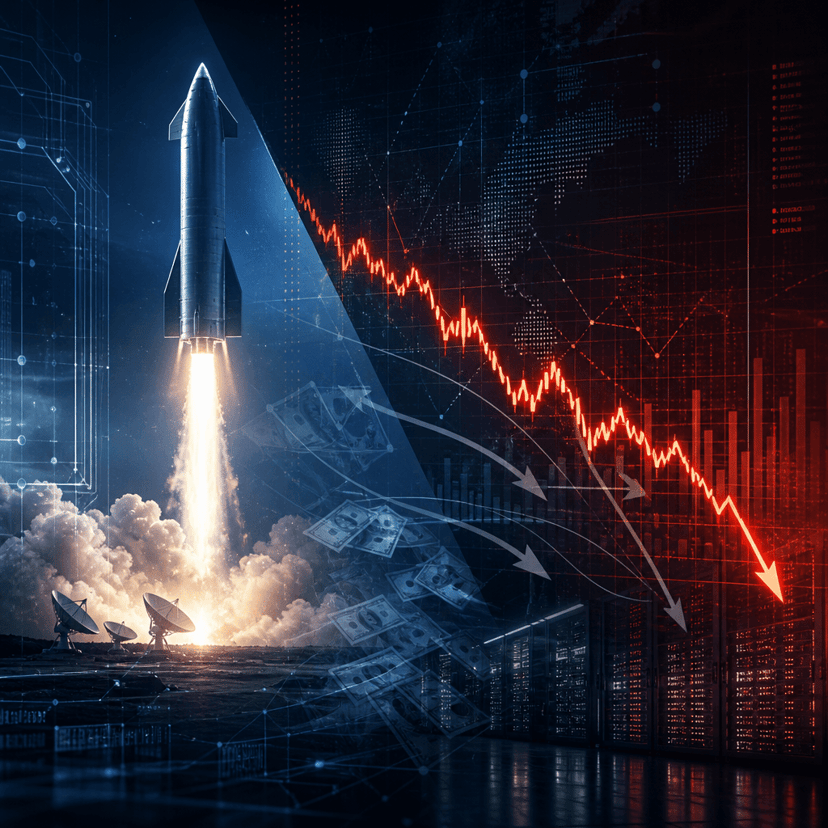
SpaceX's $135 IPO price and $1.75 trillion target valuation represent more than just another tech offering - they're a bet on humanity's expansion beyond Earth becoming a investable mega-trend. If the company can execute on Starlink's growth trajectory while proving Starship as a viable platform, the valuation might look prescient in a decade. But if launch cadence slips, Starlink subscriber growth stalls, or Musk's attention fractures across too many ventures, public market investors won't be as patient as private backers. The roadshow has begun, and the space industry's future may hinge on whether Wall Street buys what Musk is selling.