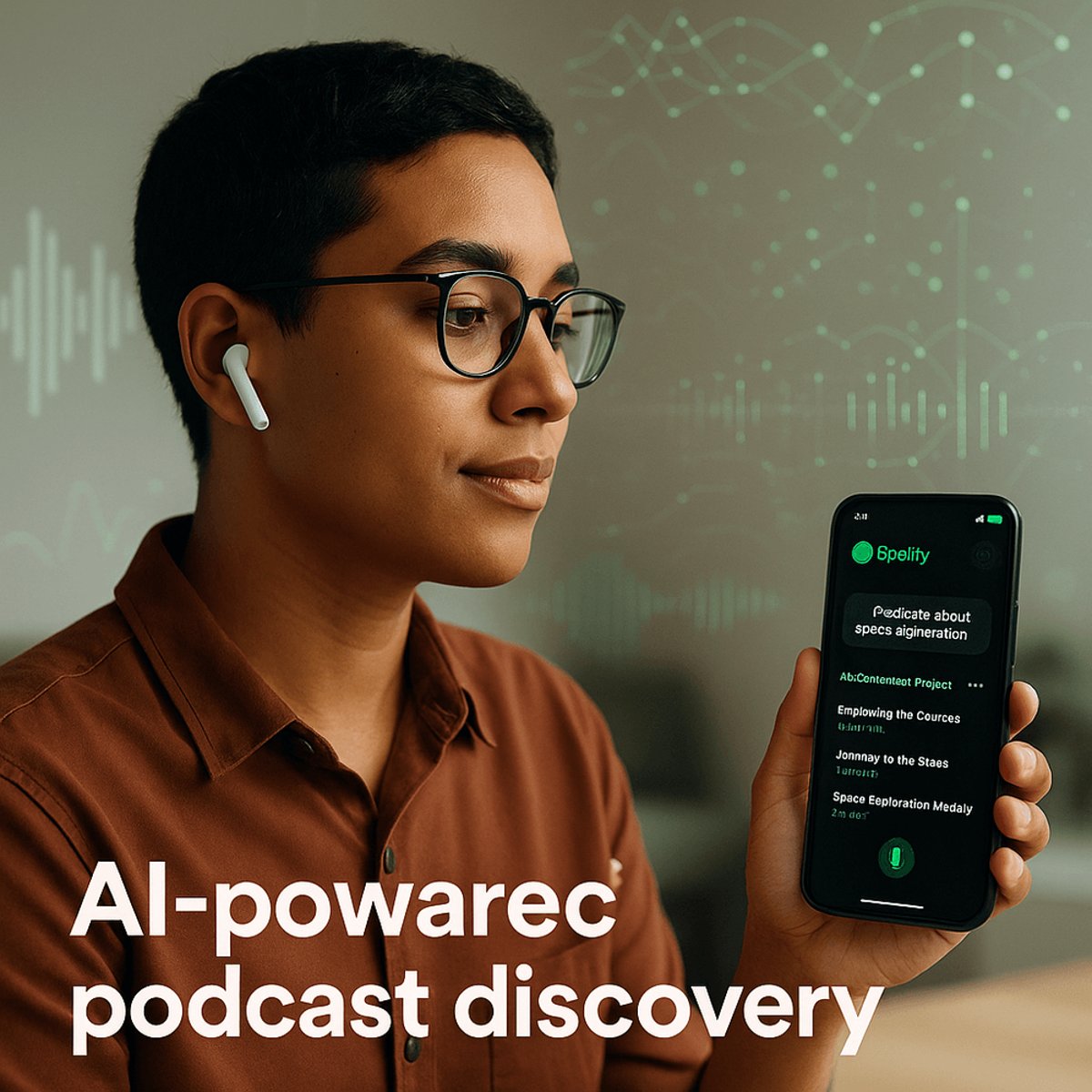
Spotify just extended its AI-powered playlist builder to podcasts, letting users type conversational requests like "true crime about cold cases" or "tech interviews with startup founders" to instantly generate custom listening queues. The expansion, rolling out now, marks the streaming giant's latest push to make podcast discovery as frictionless as its music recommendations - and signals how AI-driven curation is becoming table stakes in the audio wars.
Spotify is betting that the same AI magic that helps users find the perfect workout playlist can solve one of podcasting's thorniest problems: discovery. The company's natural language playlist feature, previously limited to music, now works for its sprawling podcast library - and the timing isn't coincidental.
The expansion arrives as Spotify doubles down on podcasts after investing billions in the format over the past five years. With more than 5 million shows in its catalog, the platform has a discovery problem that traditional browsing and search can't solve. Type "tell me about space exploration" into the new feature, and the AI instantly generates a playlist pulling from NASA interviews, astronomy deep dives, and SpaceX coverage - without users needing to know specific show names.
It's the same conversational interface that's made ChatGPT feel intuitive, applied to audio content. And it represents a fundamental shift in how streaming platforms think about curation. Where Apple Podcasts still relies heavily on editorial picks and category browsing, Spotify is automating the recommendation layer entirely.
The technology builds on Spotify's existing playlist AI, which launched for music last year and quickly became one of the platform's most-used features. That system analyzes listening history, metadata, and user preferences to understand intent behind prompts like "upbeat indie for a road trip." Extending it to podcasts required training the model to understand spoken content topics, formats, and episode structures - a technically different challenge than categorizing three-minute songs.
But the real competitive angle is retention. Spotify has been transparent about wanting podcast listeners to stick around longer and engage more deeply with its platform. The company's advertising business depends on it, especially as podcast ad revenue becomes a bigger piece of the puzzle. AI-generated playlists keep users from bouncing after one episode by serving up a continuous stream of relevant content.
YouTube has similar ambitions with its podcast push, but its recommendation engine still treats audio shows like video content. Apple, meanwhile, has been slower to embrace AI-driven discovery despite having the most mature podcast ecosystem. That leaves Spotify with a window to define what intelligent podcast curation looks like - and lock listeners into its interface.
The feature also plays into broader trends around AI in consumer apps. While enterprise AI grabs headlines with productivity tools and automation, companies like Spotify are quietly embedding intelligence into everyday experiences. Users don't need to understand how the model works or think about prompts - they just describe what they want to hear and get results.
There are obvious questions about editorial oversight and algorithmic bias. Will the AI favor shows from Spotify-exclusive creators like Joe Rogan or Alex Cooper? How does it handle controversial topics or misinformation? The company hasn't detailed content moderation policies for the playlist feature, which could become a flashpoint as usage scales.
What's clear is that Spotify sees AI curation as a competitive moat. The more users rely on prompted playlists, the harder it becomes to switch to competing platforms without losing that personalized discovery experience. It's the same lock-in strategy that made Netflix recommendations and TikTok feeds so sticky - applied to audio.
The feature is rolling out globally starting today, with no premium subscription required. That broad availability suggests Spotify wants rapid adoption to feed more data back into the model and improve accuracy. Every prompt helps the AI learn what listeners actually want versus what they think they're searching for.
For podcast creators, this changes the discovery game entirely. Success now depends partly on how well episode metadata, titles, and descriptions feed into Spotify's AI systems. It's not enough to rank in category charts - shows need to surface in relevant AI-generated playlists to reach new audiences.
Spotify's expansion of AI playlists to podcasts isn't just a feature update - it's a signal that intelligent content discovery is becoming the new battleground in streaming. While competitors still lean on manual curation and basic search, Spotify is building an AI layer that learns what listeners want before they fully articulate it. For users, it means less time hunting and more time listening. For the industry, it's a reminder that whoever controls the recommendation engine increasingly controls the audience. As the podcast catalog keeps exploding, the platforms that make discovery feel effortless will win the attention economy.