The biggest tech names just made Britain their AI battleground. Microsoft, Nvidia, Google, OpenAI, and Salesforce are collectively pouring over $40 billion into UK AI infrastructure - timed perfectly with President Trump's state visit. This isn't just about data centers; it's about positioning for the next phase of the global AI arms race.
The timing couldn't be more strategic. As President Trump touched down in Britain Tuesday evening for his state visit, America's tech titans unleashed the largest coordinated AI investment blitz Europe has ever seen. Microsoft kicked off the announcements with a staggering $30 billion commitment through 2028, immediately followed by Nvidia, Google, OpenAI, and Salesforce adding their own multi-billion dollar pledges.
"I haven't always been optimistic every single day about the business climate in the U.K.," Microsoft President Brad Smith admitted during a call with reporters Tuesday, referencing the company's bruising 2023 battle over its Activision-Blizzard acquisition. But the regulatory climate has shifted dramatically. "Just a few years ago, this kind of investment would have been inconceivable," Smith added.
The numbers tell a story of unprecedented scale. Microsoft's $30 billion will fund what the company calls the UK's "largest supercomputer," packing more than 23,000 advanced graphics processing units in partnership with British cloud firm Nscale. Not to be outdone, Nvidia announced its own £11 billion ($15 billion) investment, deploying 120,000 of its cutting-edge Blackwell GPU chips - the company's largest European deployment ever.
"This will truly make the U.K. an AI maker, not an AI taker," declared David Hogan, Nvidia's head of enterprise sales for Europe, during the announcement. The comment reveals the deeper strategic game at play - positioning Britain as a genuine AI powerhouse rather than just a consumer of American tech.
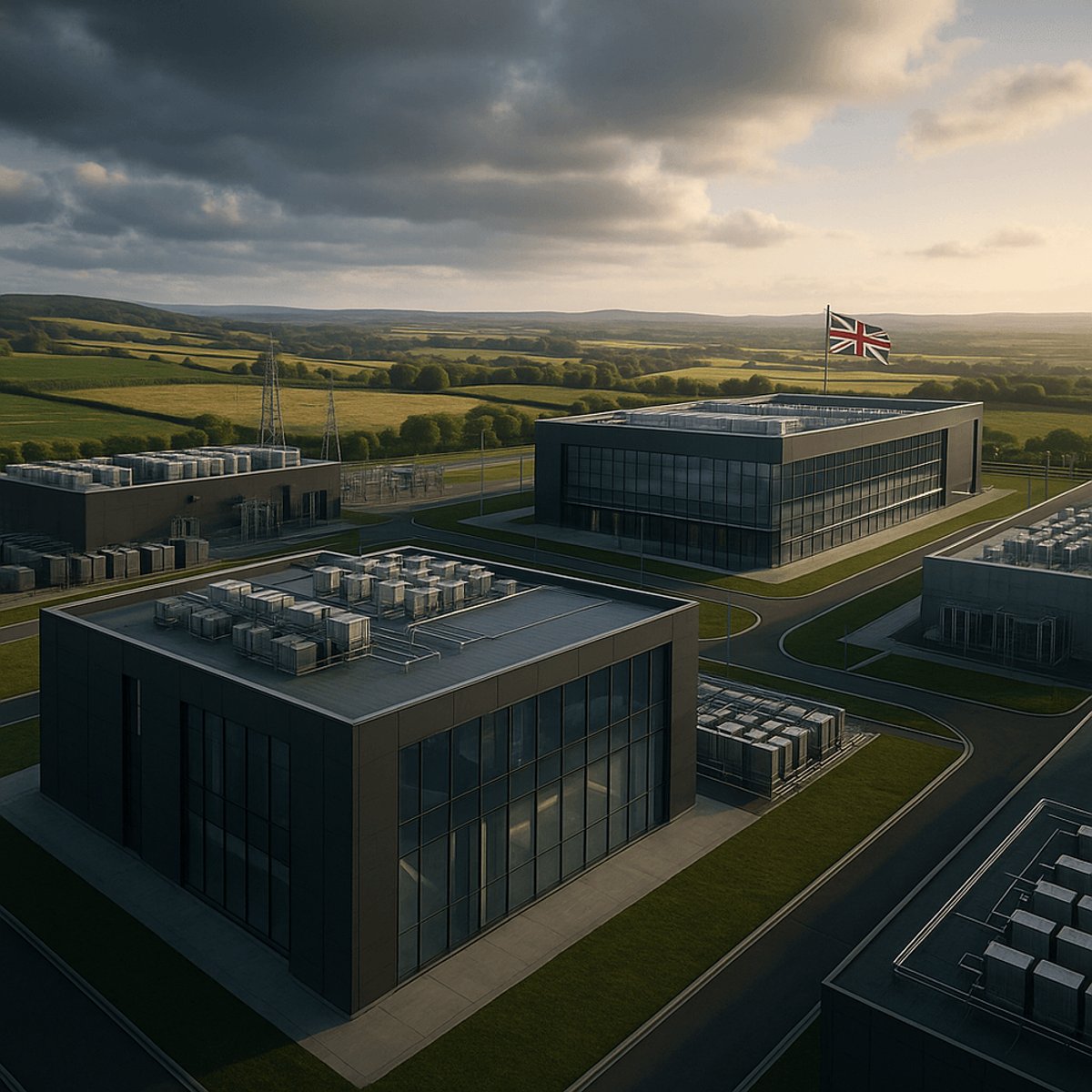
Google jumped in with £5 billion ($6.8 billion) for UK AI development, including a new data center in Waltham Cross that's projected to create 8,250 jobs annually. The facility will power Google's expanding AI services from Cloud to Search, meeting what the company describes as "growing demand" for AI-powered tools.
Meanwhile, OpenAI is bringing its massive Stargate project across the Atlantic with "Stargate U.K." - a dedicated British version of its joint venture with SoftBank and Oracle. The Microsoft-backed startup plans to deploy up to 8,000 GPUs initially, with expansion potential to 31,000 GPUs over time. The first major development targets Cobalt Park in Newcastle, spreading the AI wealth beyond London's traditional tech corridor.
Salesforce rounded out the investment spree by doubling its UK commitment to $6 billion, up from a previous $4 billion pledge in 2023. "We are doubling down on our long-standing commitment to the UK," CEO Marc Benioff said in the announcement.
The diplomatic backdrop adds crucial context. Prime Minister Keir Starmer faces mounting pressure to deliver economic wins after deputy Angela Rayner's exit over a tax scandal and a major cabinet reshuffle. These AI investments offer exactly the kind of high-tech, high-employment story Starmer needs. Trump and Starmer are expected to sign a new agreement Wednesday "to unlock investment and collaboration in AI, Quantum, and Nuclear technologies," according to a late Tuesday government statement.
But this isn't just about UK politics - it's about the global AI chess game. China's export restrictions on critical minerals and components have made supply chain diversification urgent for US tech companies. Britain offers English-speaking talent, friendly regulations, and crucially, geographic distance from potential Asia-Pacific conflicts.
The investment wave also reflects the maturing AI infrastructure market. Unlike the speculative investments of 2021-2022, these commitments come with concrete deployment timelines and specific chip allocations. Nvidia's 120,000 Blackwell chips represent real silicon, not promises.
For the UK, the timing couldn't be better. Brexit's economic disruptions are finally giving way to post-pandemic growth, and the country desperately needs high-value industries to replace traditional finance and manufacturing jobs. AI offers exactly that - high-skill, high-wage employment that can't easily be outsourced.
The competitive dynamics are already shifting. European rivals like Germany and France have watched Britain pull ahead in AI-friendly regulation and talent attraction. These mega-investments could cement the UK's position as Europe's undisputed AI capital, forcing Continental competitors to play catch-up.
What we're witnessing isn't just another investment cycle - it's the physical infrastructure of the AI economy being built in real time. The $40+ billion commitment transforms Britain from AI observer to AI architect. For American companies, it's insurance against supply chain disruptions and regulatory uncertainty. For the UK, it's a generational opportunity to lead the next wave of technological innovation. The real question now is whether European competitors can match this scale and ambition, or if they'll be relegated to watching from the sidelines as the Anglo-American AI alliance reshapes the global tech landscape.