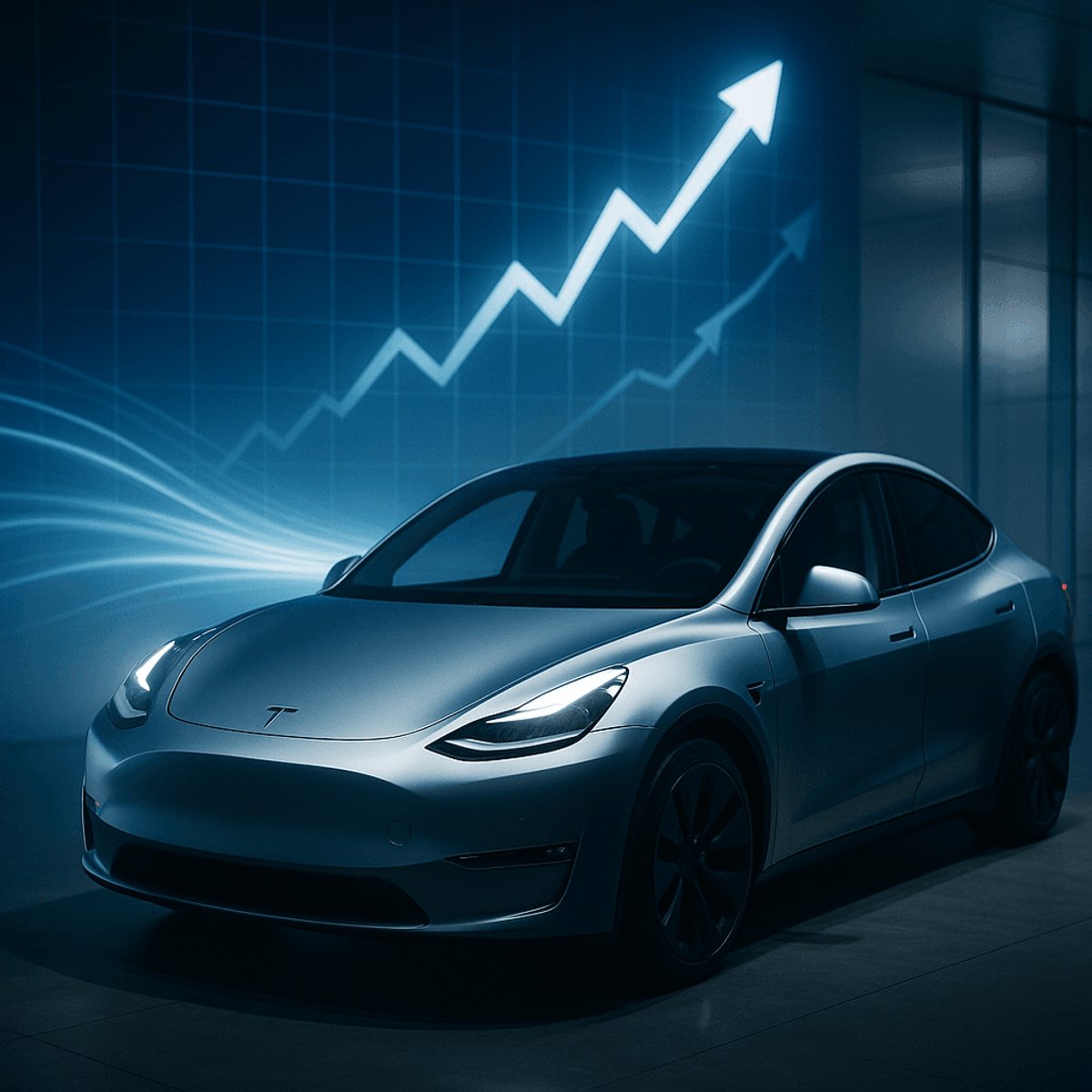
Tesla just pulled a classic Musk move - dropping a Full Self-Driving update while everyone's fixated on the company's mystery announcement teased for today. Shares jumped 5% Monday as speculation swirls around cryptic social media clips that could reveal anything from the long-promised budget model to the next-gen Roadster. With Tesla's auto sales in a multi-quarter slump, this timing feels deliberate.
Tesla announced a new version of its Full Self-Driving supervised technology Tuesday morning, but the timing feels like strategic misdirection. While investors parse cryptic teaser clips, the company quietly pushed out incremental tech updates - classic Elon Musk theater.
The real buzz started over the weekend when Tesla dropped a teaser clip on X featuring a spinning, logo-emblazoned component that could be anything from a wheel cover to a turbine. The clip ended with "10/7" - today's date. A second clip followed Sunday, showing vehicle headlights emerging from darkness.
Shares climbed 5% Monday as online speculation reached fever pitch. The smart money's betting on either the long-awaited budget model or the next-generation Roadster that Musk has dangled for years. But with Tesla, "something else" is always on the table.
The company hasn't released a new model since the Cybertruck started shipping in late 2023 - and that angular steel pickup never matched the popularity of the Model 3 sedan or Model Y SUVs. Eight voluntary recalls later, the Cybertruck feels more like a proof of concept than a mainstream hit.
Tesla's facing real pressure. Auto sales are in a multi-quarter slump, driven partly by consumer backlash against Musk's political rhetoric and an aging vehicle lineup. Competition from Volkswagen and BYD isn't helping. The company's desperately trying to shift investor attention to its future as a robotics and autonomous vehicle business.
Last October's "We, Robot" event in Hollywood showcased a sleek Cybercab concept - no steering wheel, no pedals, $30,000 price tag. As of Tesla's second-quarter earnings call, it still wasn't in production. The pattern's familiar: big promises, longer timelines.
Take the next-gen Roadster, promised at a 2017 event. Musk claimed in 2021 it would "fly," then said last year it was being redesigned with SpaceX. Still no production timeline.
Musk's been promising to turn existing Tesla EVs into robotaxis with software updates for about a decade. The company still uses human safety drivers in its robotaxi test vehicles, while competitors like Alphabet's Waymo and Baidu's Apollo Go already operate driverless fleets.
Then there's Optimus, Tesla's humanoid robot that Musk claims will handle factory work or babysit your kids. Meanwhile, companies like Agility Robotics and Unitree are already selling bipedal robots to actual customers.
After losing 36% of its value in the first quarter, Tesla stock has roared back, jumping 40% in Q3 and sitting 12% up for the year. Musk helped fuel that rally by purchasing about $1 billion of Tesla stock himself in mid-September - a rare show of confidence from the typically diversified billionaire.
Today's announcement timing is classic Tesla: drop the FSD update quietly while building maximum hype around the mystery reveal. Whether it delivers a genuine game-changer or another beautifully rendered concept remains the eternal Tesla question.
Tesla's playing its familiar game of incremental updates wrapped in maximum theater. The FSD release proves the company's still pushing autonomous tech forward, but today's mystery announcement will show whether Musk can finally deliver on years of promises. With sales slumping and competition intensifying, Tesla needs more than another concept car - it needs production reality. Whether that's a budget model that democratizes EVs or a flying Roadster that redefines impossible, the stakes couldn't be higher for a company trying to prove it's more than just Elon's latest obsession.