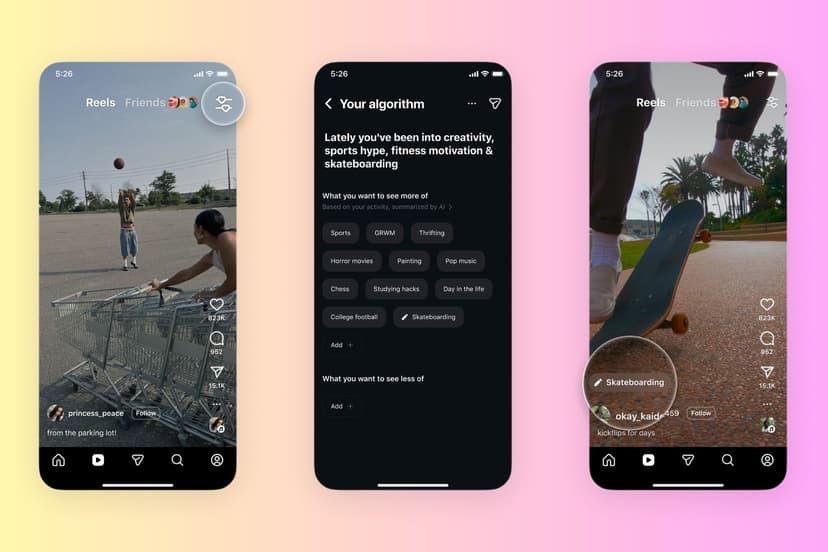
Meta just rolled out sweeping changes to Facebook's Reels algorithm, responding to user outcry over AI-generated spam and low-quality content flooding their feeds. The update lets users hit "Not Interested" to train the recommendation engine, while prioritizing fresher content and adding TikTok-style discovery features.
Meta is fighting back against the flood of junk content plaguing Facebook Reels. The company announced Tuesday a major algorithm overhaul that puts users back in the driver's seat, letting them actively dismiss unwanted videos and train their feeds.
The centerpiece feature is a simple but powerful "Not Interested" button that users can tap on any Reel. The system will learn from this feedback, adjusting future recommendations to avoid similar content. Users can also flag comments on videos, giving the algorithm even more signals about what they don't want to see.
This direct response mechanism addresses mounting user complaints on Reddit and other platforms about Reels feeds filled with what many describe as "scammy, annoying" content and "low-quality AI-generated videos." The frustration has been building for months as Meta's recommendation system struggled to filter out automated content farms.
The timing feels intentional. Just weeks after Meta launched "Vibes," a controversial AI-only video feed that critics labeled as "AI slop," the company is now giving users tools to actively curate their main Facebook experience. It's a clear acknowledgment that algorithmic recommendations alone aren't enough - users want agency.
The freshness factor gets a major boost too. Meta says the updated algorithm will surface 50% more Reels that were uploaded the same day users are scrolling. This tackles another common complaint - seeing viral but days-old content instead of what's happening right now. The shift mirrors TikTok's emphasis on real-time trends and could help Facebook compete for users' attention spans.
Meta's also borrowing successful features from its competitors and sister platforms. New AI-powered search suggestions will appear on Reels, similar to the gray recommendation chips at the bottom of TikTok videos. These prompts help users dive deeper into topics they're already engaging with, potentially increasing watch time and platform stickiness.
The "friend bubbles" represent another cross-platform pollination. Users will now see small profile pictures indicating which friends have liked specific Reels, mirroring a popular Instagram feature. Tapping these bubbles opens direct messages, turning passive content consumption into active social interaction.
Behind these user-facing changes lies Meta's broader content strategy tension. The company has invested heavily in AI content generation, seeing it as a way to create infinite, personalized feeds. But the Vibes experiment and user backlash suggest there's still a fine line between helpful AI curation and overwhelming AI creation.
The updated Save feature also gets streamlined, making it easier to collect favorite Reels and posts in one organized space. It's a small change but signals Meta's recognition that users want to actively curate their experience, not just passively consume algorithmic suggestions.
For creators, these changes could reshape content strategy. The emphasis on same-day content rewards consistent, timely posting over hoping older content goes viral. The "Not Interested" feedback loop also means creators who rely on clickbait or misleading content might see their reach decline more quickly.
The broader implications extend beyond Facebook. As social platforms grapple with AI-generated content at scale, user control mechanisms like these could become industry standard. YouTube, Twitter, and others are watching how direct feedback affects engagement and advertiser confidence.
Meta's Reels overhaul represents a crucial course correction in the AI content era. By giving users explicit control over their feeds while maintaining algorithmic personalization, Facebook is trying to thread the needle between automated efficiency and human agency. The success of these features could determine whether social platforms double down on AI-generated content or pivot toward more user-directed experiences. For the 3 billion Facebook users worldwide, it's a welcome return of choice in an increasingly algorithmic world.