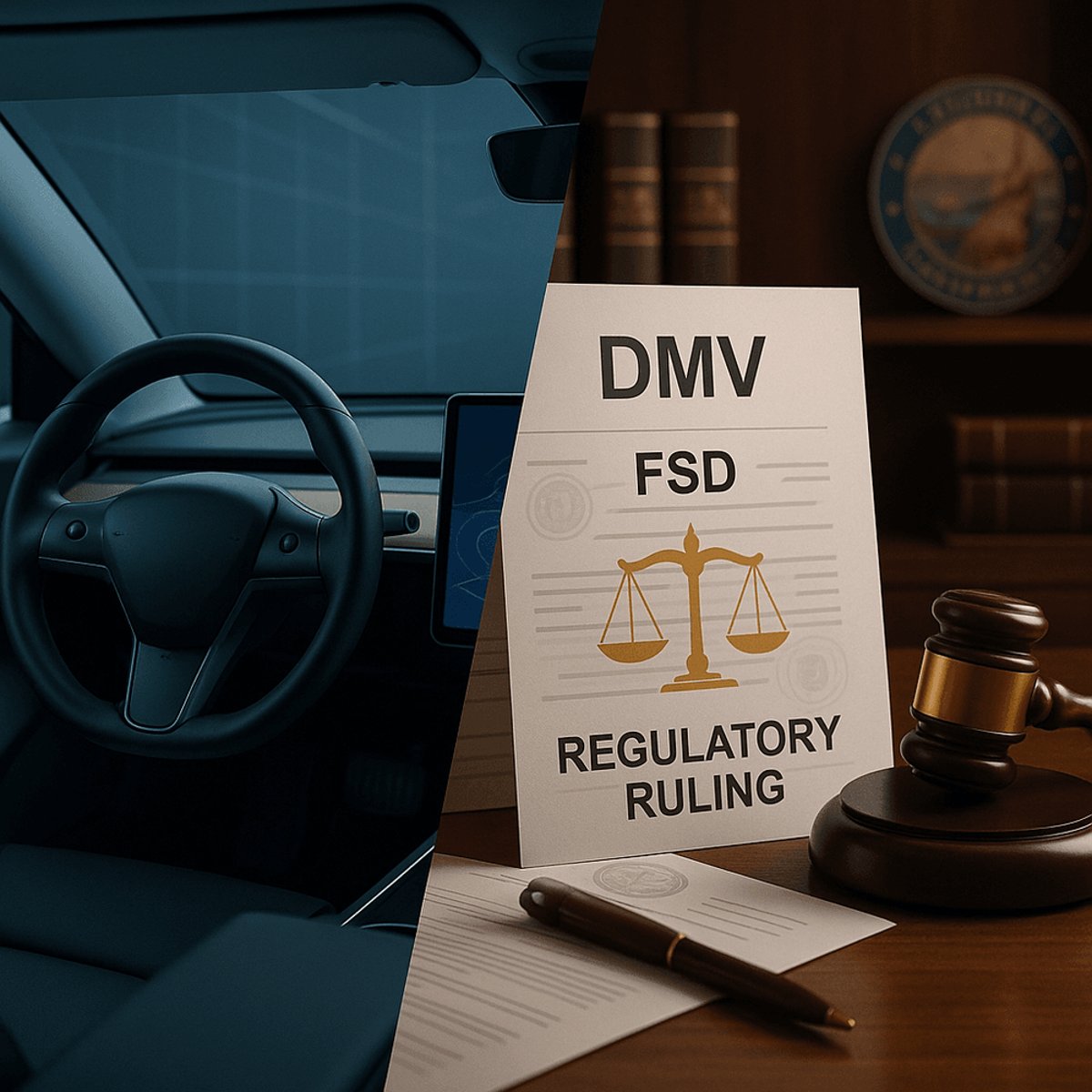
Tesla is taking California's Department of Motor Vehicles to court, filing a lawsuit to overturn a regulatory ruling that accused the electric vehicle maker of false advertising around its Full Self-Driving capabilities. The legal challenge marks an escalation in the ongoing battle over how autonomous driving features can be marketed to consumers, with significant implications for the entire auto industry's approach to AI-powered driver assistance systems.
Tesla isn't backing down from California regulators. The company filed suit against the state's Department of Motor Vehicles, challenging a ruling that found the automaker engaged in false advertising when promoting its Full Self-Driving system. The legal move puts one of the most contentious issues in automotive technology squarely in front of the courts.
The California DMV's original determination centered on whether Tesla's marketing materials overpromised what its driver assistance technology could actually deliver. The agency concluded that the company's promotion of features branded as "Full Self-Driving" and "Autopilot" misled consumers about the vehicles' autonomous capabilities. Both systems require active driver supervision and don't make Tesla vehicles fully self-driving, despite what the naming might suggest.
This isn't just a California problem for Tesla. The company has faced similar scrutiny from regulators and safety advocates nationwide over its marketing approach. The National Highway Traffic Safety Administration has investigated multiple crashes involving Tesla vehicles using Autopilot or FSD, with questions about whether drivers over-relied on the technology because they misunderstood its limitations.
Tesla's FSD package, which costs $12,000 upfront or $199 per month on subscription, includes features like automatic lane changes, navigation on city streets, and traffic light recognition. But the technology still classifies as a Level 2 driver assistance system, meaning the human driver remains fully responsible and must keep their hands on the wheel and eyes on the road. That gap between the "Full Self-Driving" branding and the actual capability has created regulatory headaches.
The lawsuit represents Tesla's most aggressive pushback yet against what it likely views as regulatory overreach. CEO Elon Musk has repeatedly defended the company's naming conventions, arguing that Tesla clearly communicates the need for driver attention in its user agreements and through in-car warnings. The company maintains that its safety data shows vehicles using Autopilot have fewer accidents per mile than those driven manually.
But California regulators aren't alone in their concerns. Consumer advocacy groups have called for clearer standards around how automakers can market advanced driver assistance systems. The confusion isn't academic - safety researchers worry that misleading branding could lead drivers to become dangerously complacent behind the wheel, treating assistance features as if they're full autonomy.
The automotive industry is watching this case closely. Other manufacturers including Ford, General Motors, and Mercedes-Benz offer their own advanced driver assistance systems with names like BlueCruise, Super Cruise, and Drive Pilot. How courts and regulators treat Tesla's marketing could establish precedents that ripple across the entire sector.
Tesla's legal strategy likely hinges on First Amendment protections and arguing that its disclosures adequately inform consumers about system limitations. The company may also point to its extensive safety warnings and the fact that drivers must acknowledge FSD's beta status before activating certain features. Whether those arguments convince a court remains to be seen.
The timing adds another layer of complexity. Tesla is pushing to launch more advanced autonomous features and has promised a robotaxi service, though timelines have repeatedly slipped. A legal defeat in California could hamper the company's ability to market future self-driving capabilities and potentially trigger similar actions in other states. A win, meanwhile, might embolden more aggressive marketing across the industry.
Financially, the stakes extend beyond potential fines or penalties. FSD represents a significant revenue stream for Tesla, with the company booking billions from the feature's sales. Any restriction on how it can be marketed or sold could dent both near-term revenue and the long-term vision Musk has articulated around autonomous vehicle technology creating a new business model for the company.
Tesla's lawsuit against California's DMV sets up a critical test case for how far automakers can go in marketing AI-powered driving features. The outcome will likely influence not just Tesla's business model but establish guardrails for an entire industry racing to bring autonomous capabilities to market. As vehicles become more automated, the legal and regulatory frameworks around how those capabilities are presented to consumers remain very much unsettled - and this case could provide some of the first clear answers. For now, the battle moves from regulatory agencies into the courts, where Tesla will have to convince judges that its marketing practices fall within legal bounds.